Jing'an looks like money on the main road and turns into a quiet lane village one street back. Here is how a local spends a day in it.
Good to know
- Good for: a whole unplanned day of coffee, lanes, a temple, a park and dinner, all walkable
- What you'll pay: the district is cheap to explore; a metro ride is 3 to 6 RMB and Jing'an Temple is 50 RMB per adult, so your real spend is coffee, lunch and whatever you stop for
- Make the most of it: see the temple before 10am when the light is good and the crowds are thin, then disappear into the lanes behind Nanjing West Road
Why Jing'an, and where it actually is
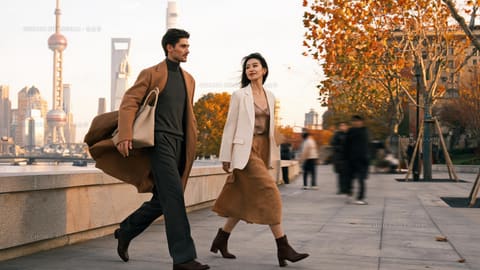
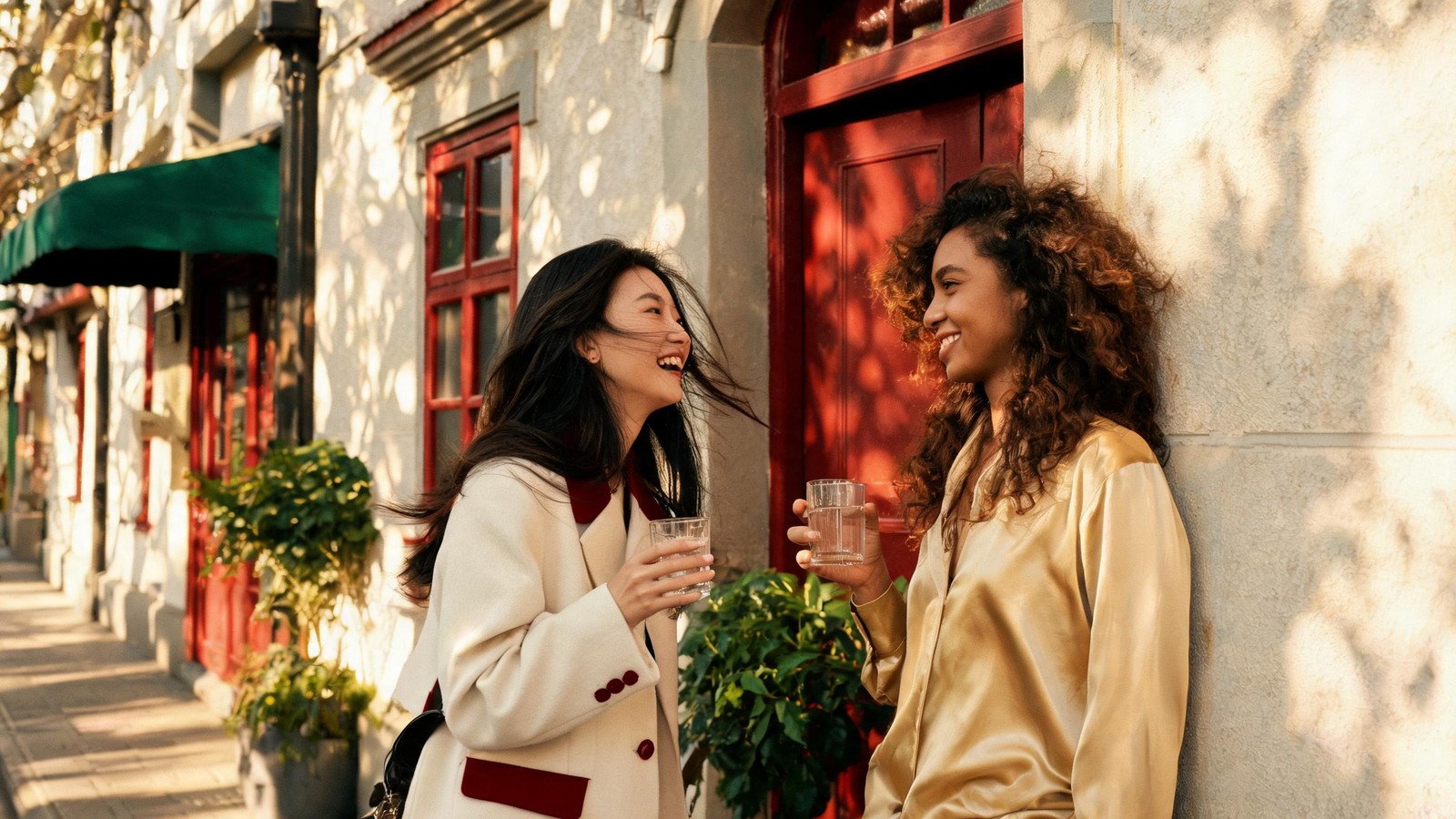
Most people meet Jing'an at its loudest point: the temple, the traffic, and the wall of designer malls on Nanjing West Road. That is the postcard, and it is genuinely striking, but it is also the least interesting thing about the neighbourhood. The good part is behind it. Turn off the main road and you are into plane-tree lanes, restored shikumen blocks, tiny wine bars, and old apartment buildings where someone's grandmother is drying laundry two floors above a natural-wine list.
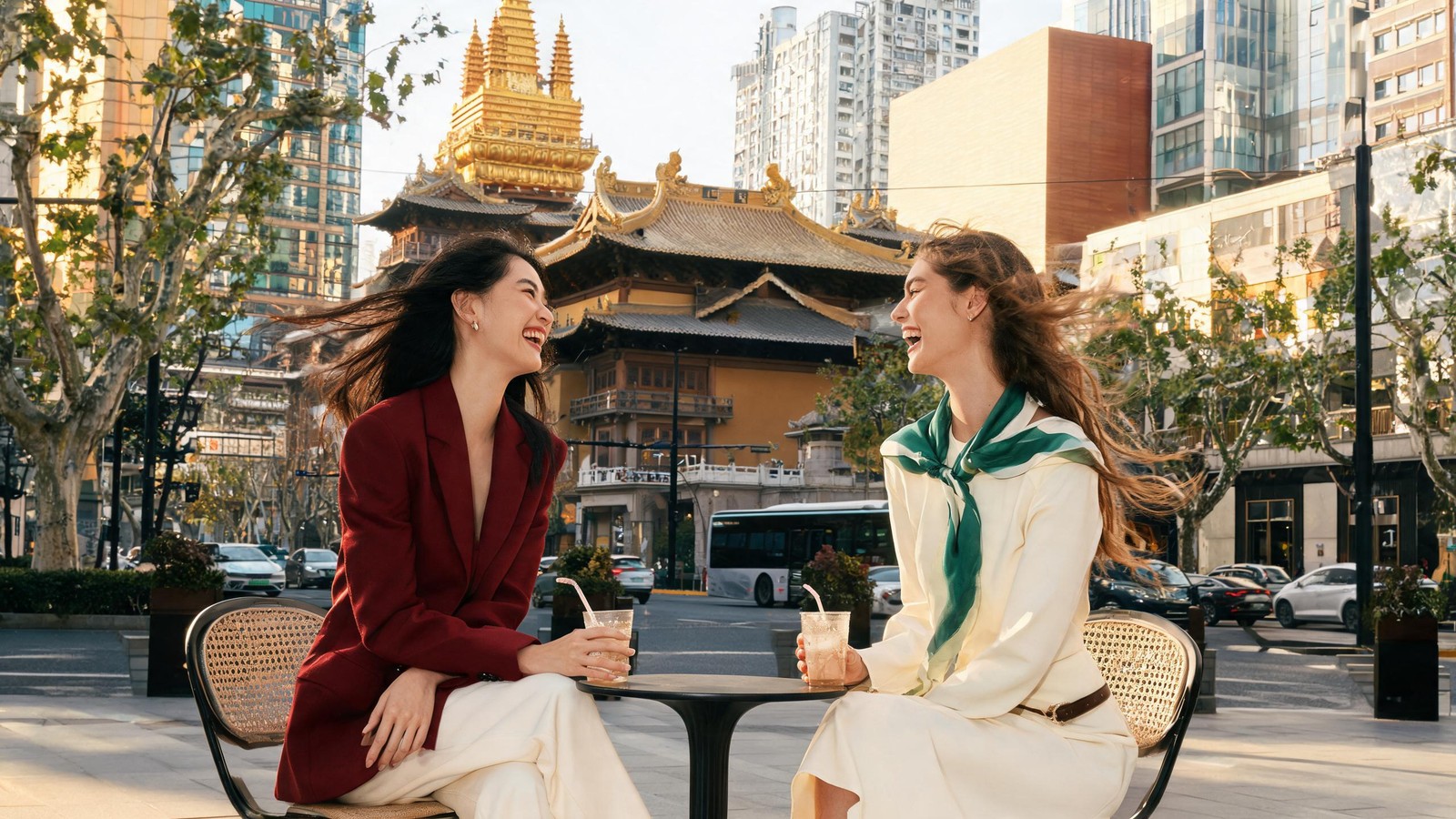
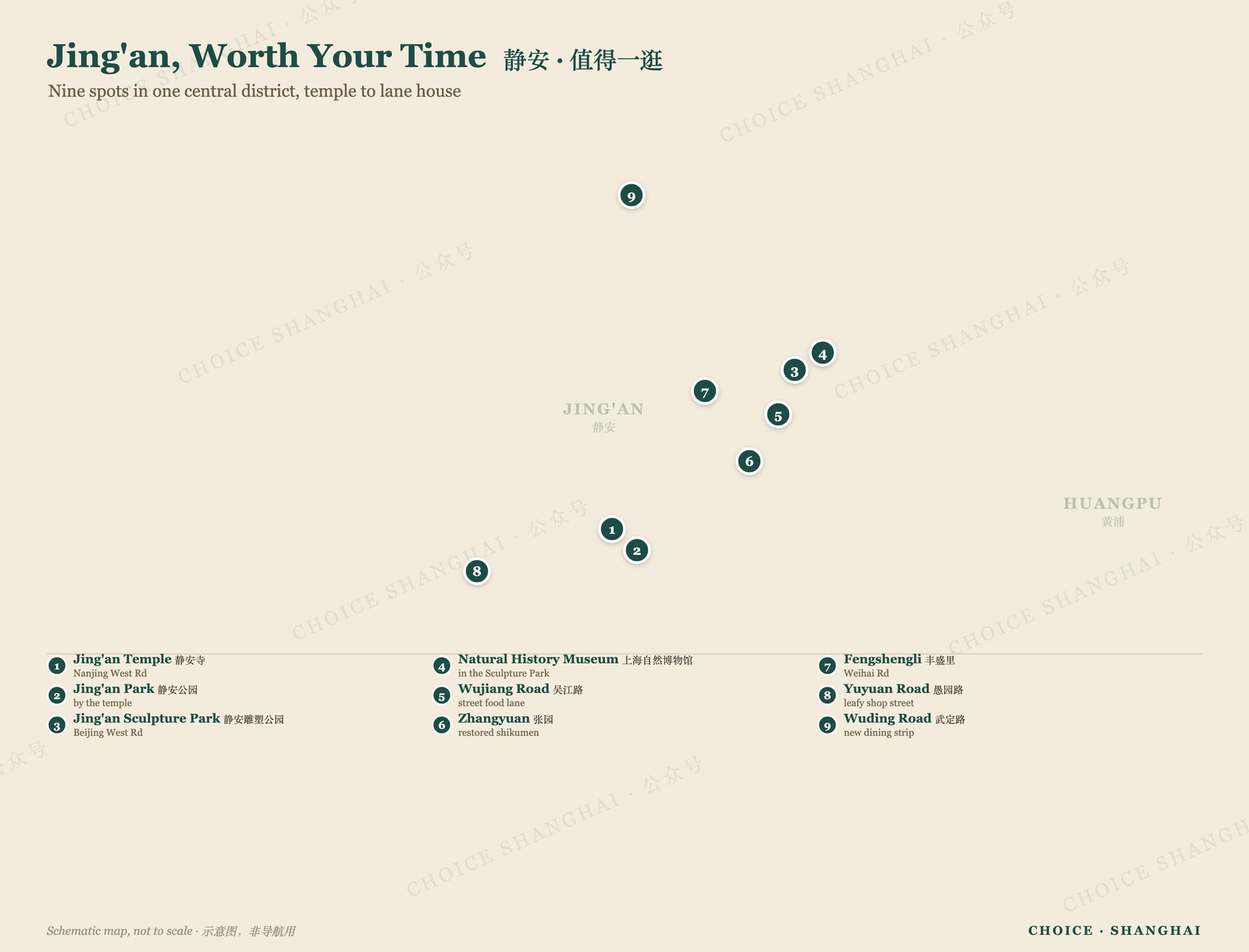
Officially the district stretches north across Suzhou Creek since it merged with old Zhabei back in 2015, so on a map it is bigger than you think. But when a local says "Jing'an" they usually mean the walkable core: the area around Jing'an Temple, the stretch of West Nanjing Road down to the Sculpture Park, and the grid of lanes hemmed in by Changde Road, Yuyuan Road, and Wuding Road. That is the part this guide lives in. If you are trying to understand where Jing'an ends and the tree-lined lanes of Xuhui around Wukang Lu and Anfu Lu begin, the honest answer is that the border is fuzzy and nobody polices it, so walk south until the streets get quieter and you will know.
Getting there: the metro does all the work
Jing'an is one of the most connected districts in the city, which is half the reason people choose to live here. You almost never need a taxi inside it. Two stations do the heavy lifting:
- Jing'an Temple station (Lines 2, 7 and 14): drops you at the temple and the western end of Nanjing West Road. Line 2 is the workhorse that runs to People's Square, Lujiazui and both airports.
- West Nanjing Road station (Lines 2, 12 and 13): the eastern end, closer to the Sculpture Park, the Natural History Museum and the Zhangyuan lanes.
- Changping Road (Line 7) is the quiet back door if you are staying in the northern lanes.
A single ride is RMB 3 to 6. If you would rather not decode the system on arrival, Choice has a separate getting-around guide that covers metro apps, Didi and the shared bikes that are genuinely the nicest way to cover Jing'an's flat, leafy blocks in spring and autumn.
A day in Jing'an, roughly
You can improvise the whole thing, but this is the rhythm that works.
Morning
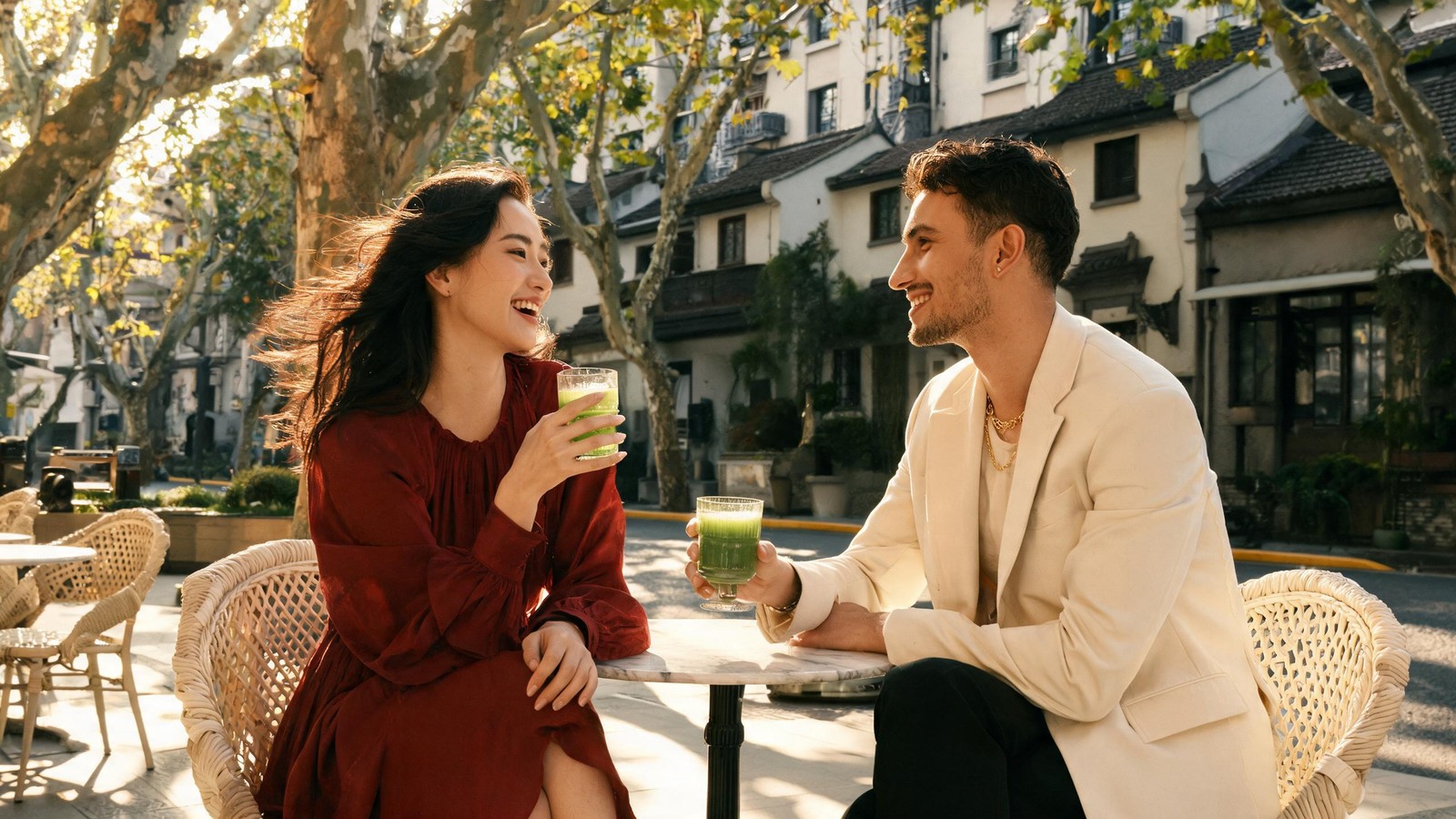
Start with coffee, then the temple, then the park. Jing'an Temple opens early and the light before 10am is the only time it is not shoulder-to-shoulder. Directly across the road is Jing'an Park, small but properly used by the neighbourhood: tai chi, ballroom dancers, retirees playing cards, and a pond that makes the traffic disappear. It is free and it is one of the more honest slices of local life you will get on the main drag.
Midday to afternoon
Walk east and duck into the lanes. This is where Jing'an rewards you. Then work your way toward the Jing'an Sculpture Park, a long green strip with rotating public art and the Shanghai Natural History Museum tucked into its eastern end. The museum is genuinely good, more design-forward than you expect, and a reliable move if the weather turns or you have kids. Entry is modest, in the region of RMB 30, and you will want a couple of hours.
Evening
Dinner in the lanes, then a drink. The neighbourhood has a real spread, from RMB 40 dumpling counters to tasting menus that will happily take four figures off you, so the evening bends to your budget. More on both below.
The Jing'an Temple: worth it, honestly?
Yes, but keep your expectations calibrated. The gold-roofed temple sitting in the middle of the shopping district is one of the great visual jokes of Shanghai, ancient faith wrapped in Prada, and it photographs beautifully from the street for free. Inside, the ticket runs around RMB 50 and buys you maybe twenty to thirty minutes: a large seated Buddha, a lot of gold leaf, and dense crowds most of the day. It is heavily restored rather than atmospherically old, so if you have limited time and you have already seen the Yu Garden temples, you can absolutely admire this one from the pavement and put the fifty kuai toward lunch. If you have never seen a working urban temple up close, go in, go early, and go quietly.
Where to eat in Jing'an
This is the district's real strength. Within a fifteen-minute walk you can get soup dumplings, a proper Yunnan spread, Cantonese, Japanese omakase, and modern European, and the price gap between the cheap end and the top end is enormous. A no-frills lane lunch for two lands around RMB 80 to 150. A nice sit-down dinner is more like RMB 300 to 600 a head, and the hotel restaurants clustered around the temple go up from there.
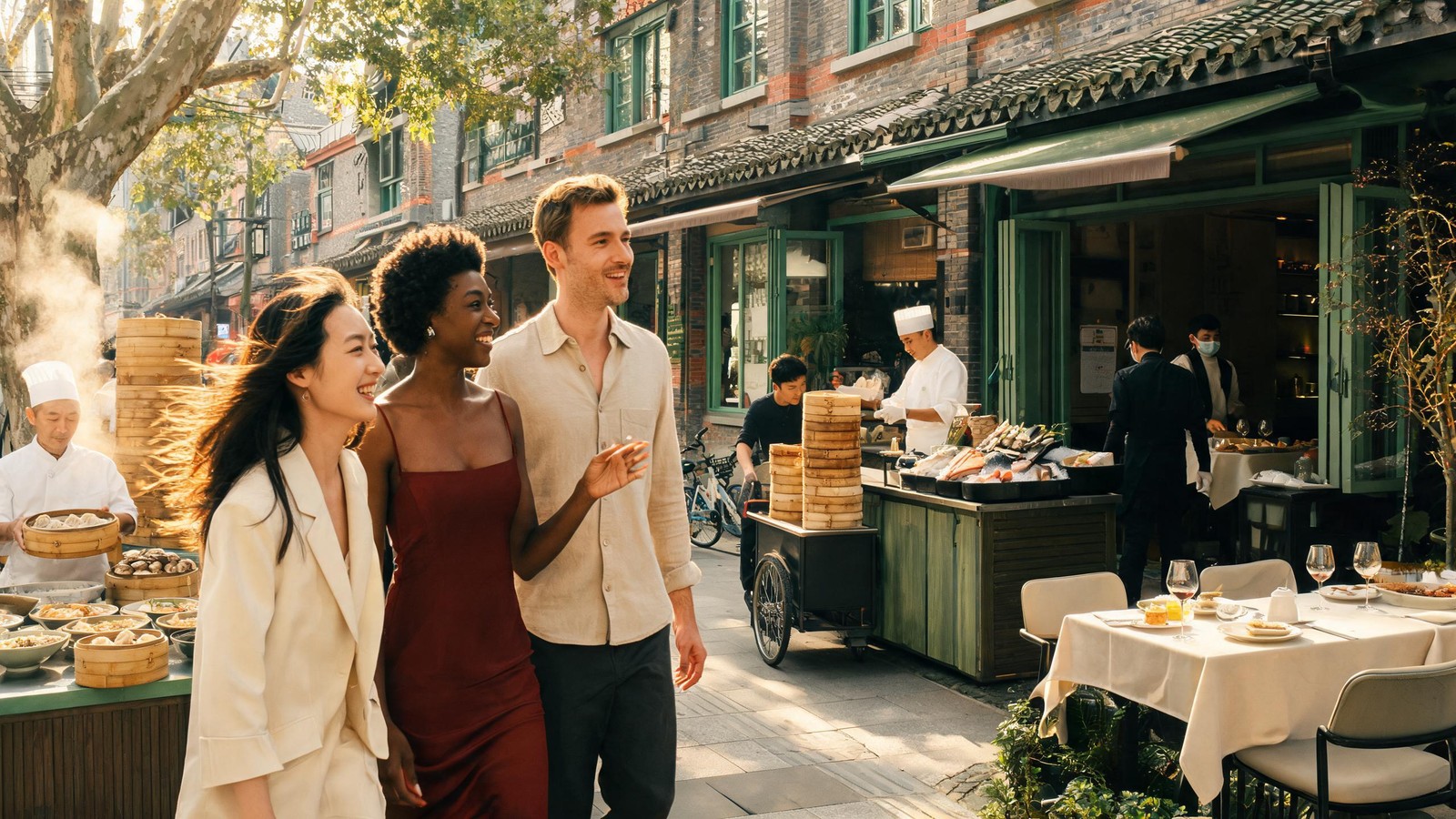
One thing to skip, or at least to know before you go: Wujiang Road, the pedestrian food street near West Nanjing Road station, is where every guide sends you and where the food has quietly become average and tourist-priced. There are one or two survivors worth the queue, but as a whole it is coasting on its reputation. The better eating is in the surrounding lanes, not on the signposted street.
For a wider net, Choice has a full where-to-eat guide and a go-to-value fine dining piece that both dip heavily into this district.
Coffee in Jing'an
Jing'an is arguably the coffee capital of a city that has become obsessed with coffee. Manner, the chain that started the RMB 15 flat-white revolution, was born in this part of town, and you are never more than a block from a decent espresso. Specialty independents are stacked into the lanes off Yuyuan Road and Wuding Road, most of them tiny, most of them serious about the beans. Expect RMB 15 to 25 for a standing-counter cup and RMB 30 to 45 for a sit-down flat white in one of the design-led spots.
If you want the citywide picture, our Shanghai coffee guide ranks the roasters and the working-friendly cafes across neighbourhoods.
Where to drink
Evenings in Jing'an split into two moods. There is the polished hotel-and-rooftop version, all glass and skyline, concentrated in the towers around the temple and up along Suzhou Creek where the newer luxury hotels have landed. And there is the lane version: small natural-wine bars, a few good cocktail rooms hidden behind unmarked doors, and neighbourhood spots where you can actually hear the person across the table. The lane version is the one worth planning around.
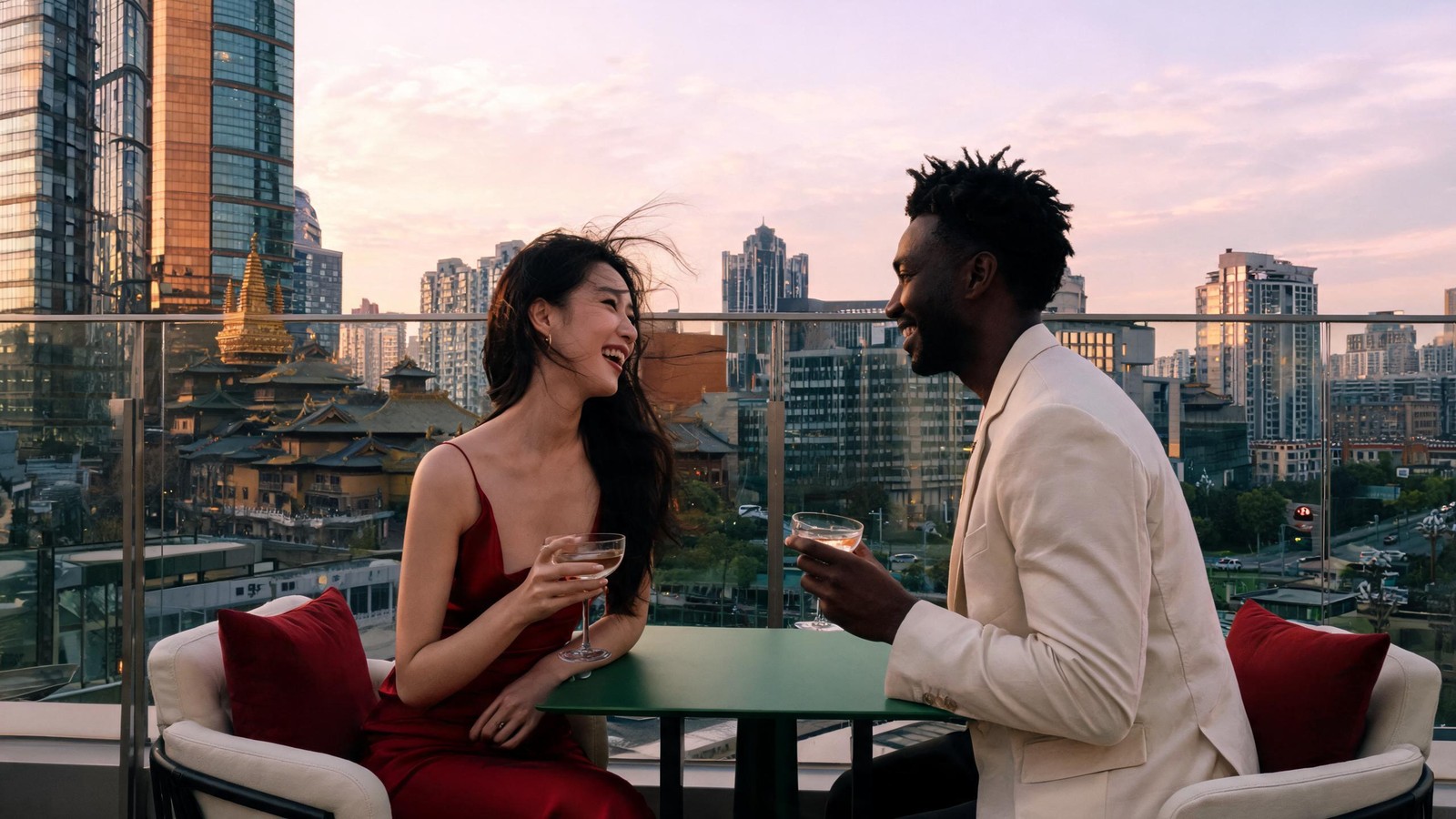
Cocktails at a serious bar run RMB 90 to 140. A glass of natural wine is more like RMB 70 to 110. The rooftops charge for the view, so treat those as one drink and a photo rather than a night.
Choice has dedicated rooftop-bars and speakeasy guides if you want to build a whole evening around one or the other.
Parks, lane houses and design shops
The part of Jing'an that turns a visit into a reason to move here is the wandering. A few anchors:
- Zhangyuan: the restored shikumen block near West Nanjing Road station, reopened as a heritage-meets-luxury retail and dining quarter. It is polished and commercial now, closer to an open-air mall than a living lane, but the architecture is real and the alleys are worth a slow loop even if you buy nothing.
- Fengshengli: a smaller restored lane near the temple, good for a coffee and a browse without the crowds.
- Yuyuan Road and Wuding Road: the unpolished, genuinely local version, where independent boutiques, vintage sellers, plant shops and one-room studios sit between old residential buildings. This is where you find the Shanghai that is not trying to sell itself to you.
For design and homeware, Jing'an punches above its weight, with a cluster of furniture, ceramics and concept stores around the lanes rather than in the malls.
Touristy vs worth it: the honest list
To save you the trial and error:
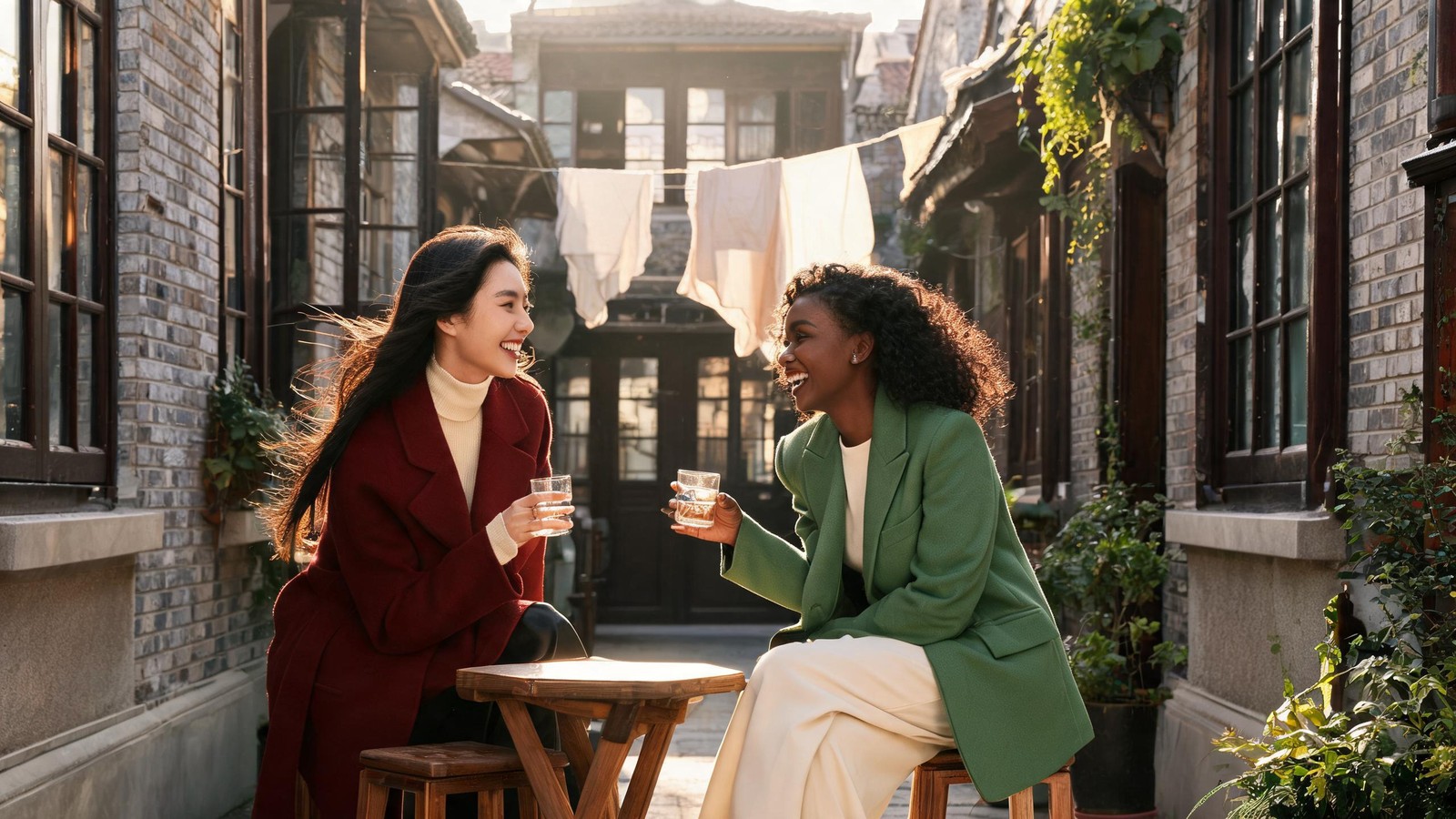
- Worth it: the lanes off the main road, an early temple visit, Jing'an Park at dawn, the Natural History Museum, and eating anywhere that is not on a signposted food street.
- Overrated: Wujiang Road as a food destination, queuing for the single most Instagrammed cafe when three quieter and better ones sit around the corner, and paying rooftop prices for a view you can get for the cost of one drink at the bar downstairs.
- Depends: the Nanjing West Road malls. Great for air-conditioning, clean bathrooms and a rainy afternoon; skippable if you did not come to Shanghai to shop the same brands you have at home.
Give Jing'an a full unhurried day and it does the thing the good neighbourhoods do: it stops feeling like a place you are visiting and starts feeling like somewhere you could live.
Jing'an Temple, and the Apple Store steps across the road
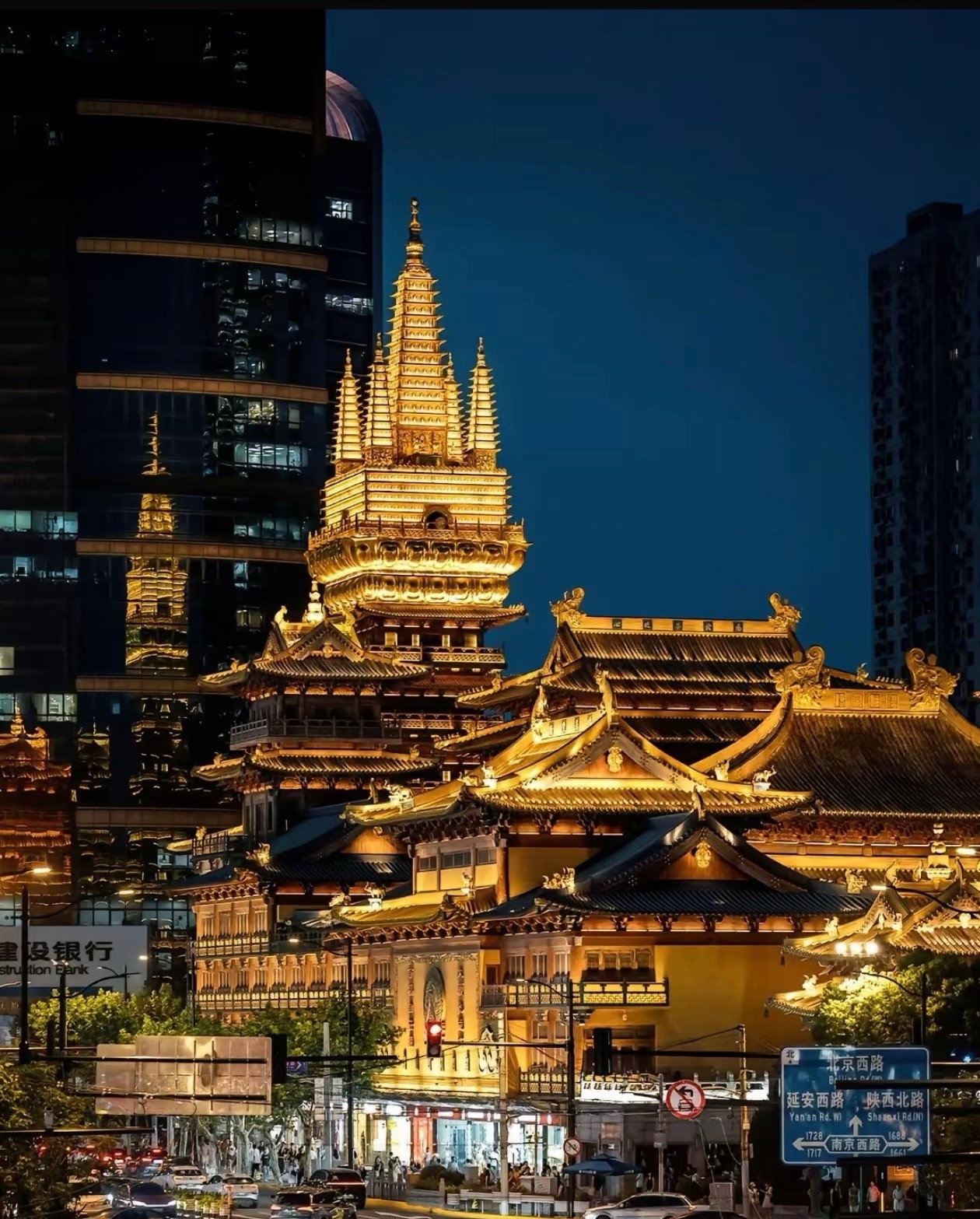
The temple is 50 RMB per adult. It is small and genuinely beautiful, but you can see all of it in about fifteen minutes, so go in knowing that: worth it if you want the gold roofs up close and a quiet moment, easy to skip if you are short on time or counting every kuai.
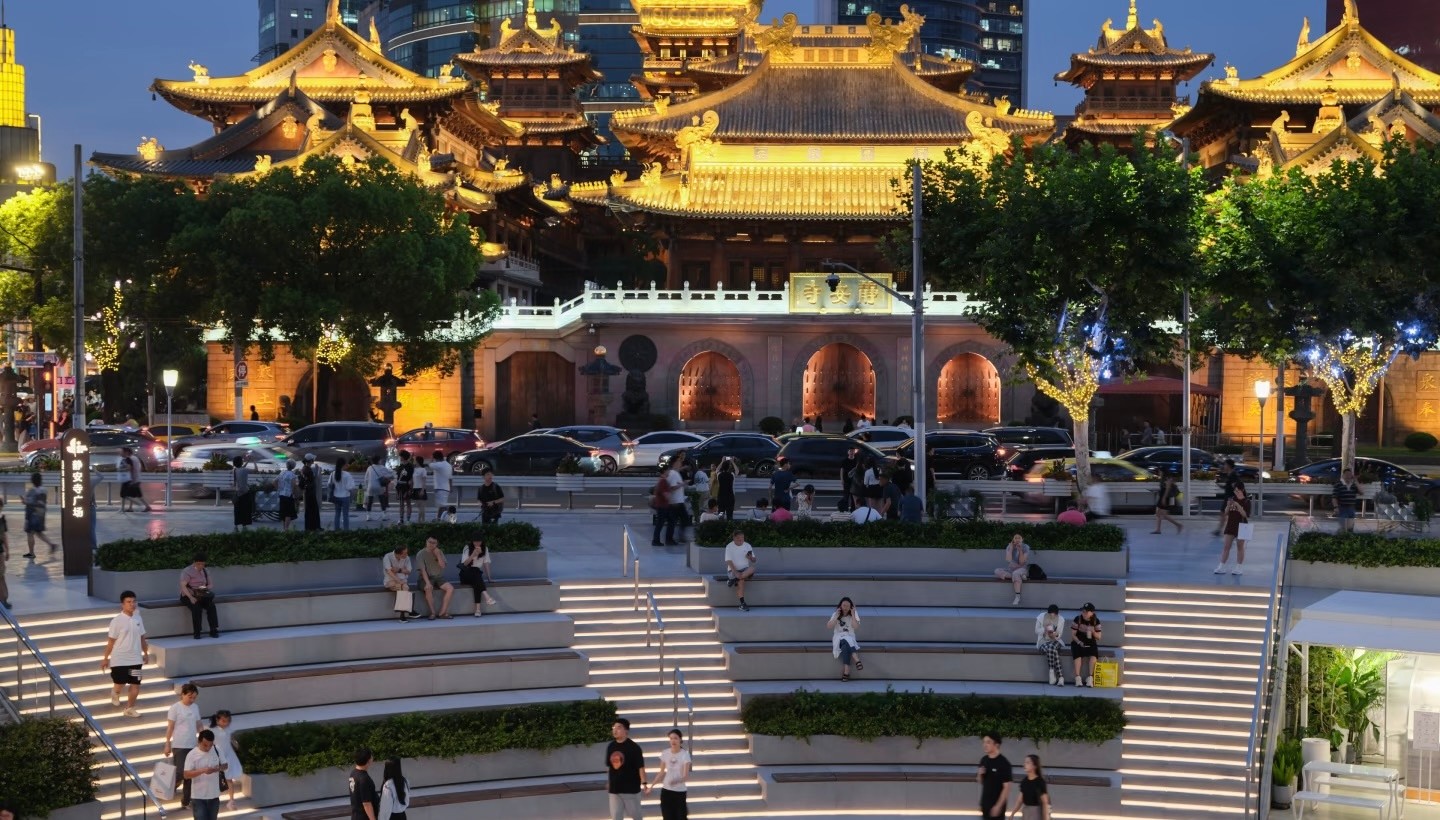
Here is the local move most visitors miss. Directly across the road is the new Apple Store, built as a wide circle of pale stone steps in an almost Roman style. Sit on the steps and the whole temple opens up in front of you, gold roofs against the towers, and it costs nothing. It is one of the nicest free spots in Jing'an to photograph the temple without paying to go in or queuing at the gate.
Mencius wrote 天时不如地利,地利不如人和, good timing matters less than good ground and good ground less than people in harmony; a neighbourhood earns your time only when its streets and its people meet you halfway.
Is Jing'an worth visiting in Shanghai?
Yes, especially if you like walkable neighbourhoods over big-ticket sights. Jing'an gives you the temple and the luxury shopping spine on the main road, then a whole grid of quiet lanes behind it full of coffee, small restaurants and boutiques. It is one of the most rewarding areas in the city for simply wandering, and it is exceptionally easy to reach by metro.
How do I get to Jing'an by metro?
Take Line 2, 7 or 14 to Jing'an Temple station for the temple and the western end of Nanjing West Road, or Line 2, 12 or 13 to West Nanjing Road station for the Sculpture Park and the Zhangyuan lanes. A single ride costs RMB 3 to 6, and once you are in the district almost everything is walkable or a short shared-bike ride.
How long should I spend in Jing'an?
A full day is ideal and easy to fill: coffee and the temple in the morning, lanes and a museum in the afternoon, dinner and a drink in the evening. If you are tight on time, a focused half-day covering the temple, Jing'an Park and one lane loop for coffee and lunch gives you the essence.
Is Jing'an Temple worth the entry ticket?
It depends on your time. The temple looks spectacular from the street for free, and the interior visit of around RMB 50 buys you a short, crowded look at a heavily restored complex. Go inside if you have never seen a working urban temple up close and can get there early; otherwise admire it from the pavement and spend the money on lunch.