
For two weeks in mid to late October, Shanghai smells of warm sugar and apricots, and that is osmanthus.
For about two weeks in mid-to-late October, the whole of Shanghai turns edible. Osmanthus (桂花) comes into bloom, and the scent, somewhere between apricot jam and warm brown sugar, finds you before you find it, slipping over garden walls and ambushing you at red lights. The place to stand right in the middle of it is Guilin Park (桂林公园) in Xuhui, free to enter and home to around a thousand osmanthus trees and the city’s osmanthus festival. Then you eat it: candied osmanthus (糖桂花) draped over cold lotus root, stirred into red-bean soup, foamed on top of a seasonal latte. Here is where to chase the bloom, and what to eat before it slips away for another year.
When Shanghai starts to smell sweet
Some years it arrives like a rumour, a stray thread of sweetness on the night air that turns your head on the street; then, almost overnight, it is everywhere. Osmanthus season in Shanghai runs from roughly mid-October into early November, and the scent peaks in the last two weeks of October. It plays hard to get: a warm autumn holds the flowers back, and in some recent years the trees only gave in during the final days of the month. The bloom is short and the smell is the entire event, so the rule is simple, when it hits the air, go that week. You will meet a small cast: 金桂 (golden, the deepest, headiest of them), 银桂 (pale and shy), 丹桂 (burnt orange) and 四季桂, the show-off that flowers on and off much of the year. This is a different autumn from the red and gold leaves, which peak a few weeks later and which we map in our guide to where the autumn leaves turn in Shanghai.

Guilin Park: the osmanthus capital
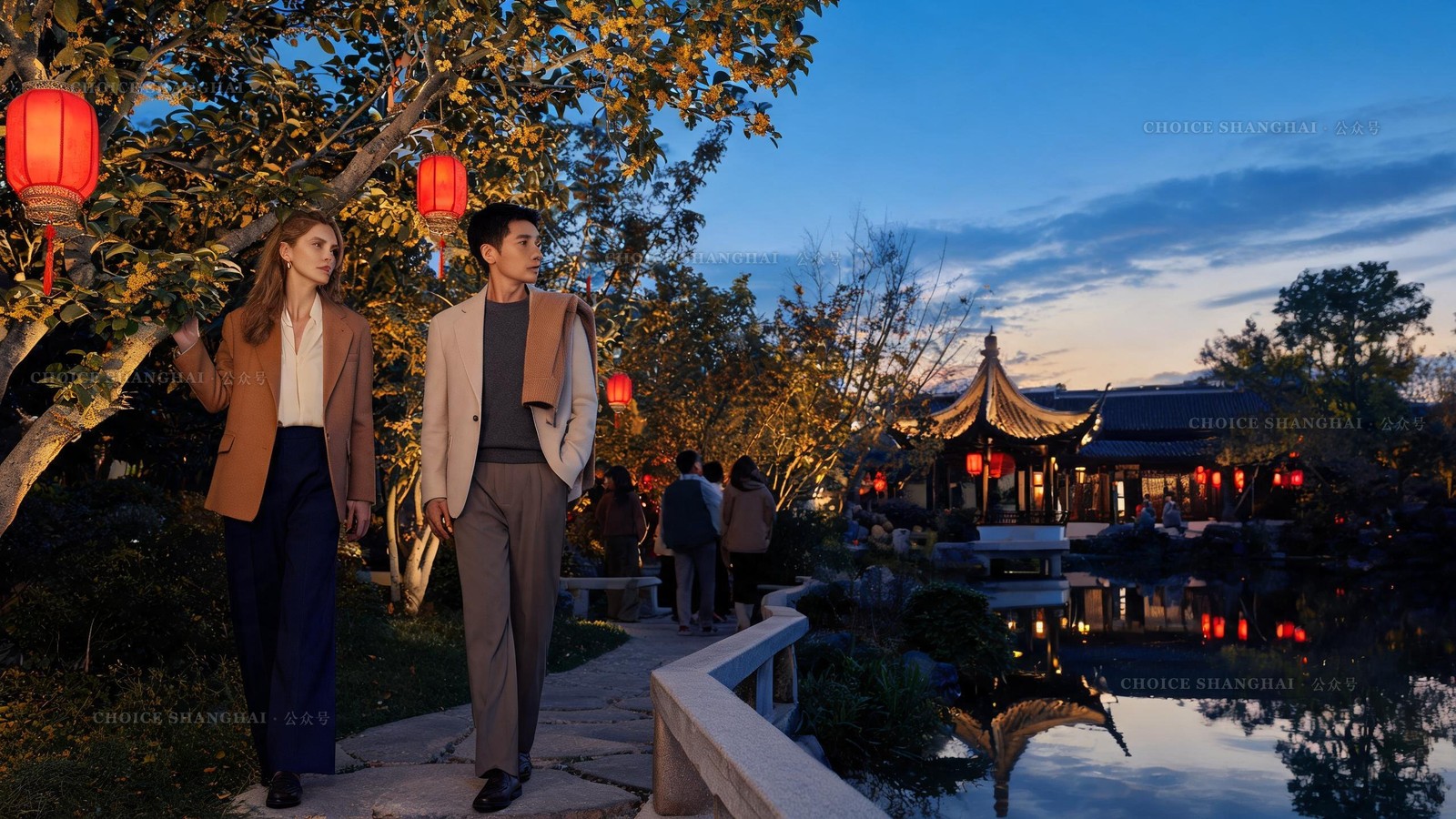
Guilin Park (桂林公园) in Xuhui is the one name every local presses on you for osmanthus, and it earns the hype: around a thousand trees in more than twenty varieties, threaded through a 1930s Jiangnan garden of dark ponds, piled rockeries and tiled pavilions, free to walk into. Since 1991 it has thrown the city’s osmanthus festival, 唐韵中秋 (Tang-dynasty Mid-Autumn), which lands squarely over the Mid-Autumn and National Day holidays with lanterns, tea and costumed performers after dark. The park reopened in July 2026 from a long restoration, so this season it is freshly glowing. Come on a weekday morning if you can: the scent pools thickest in warm sun, and the weekend festival crowds are no joke.
Two more gardens for a quieter bloom
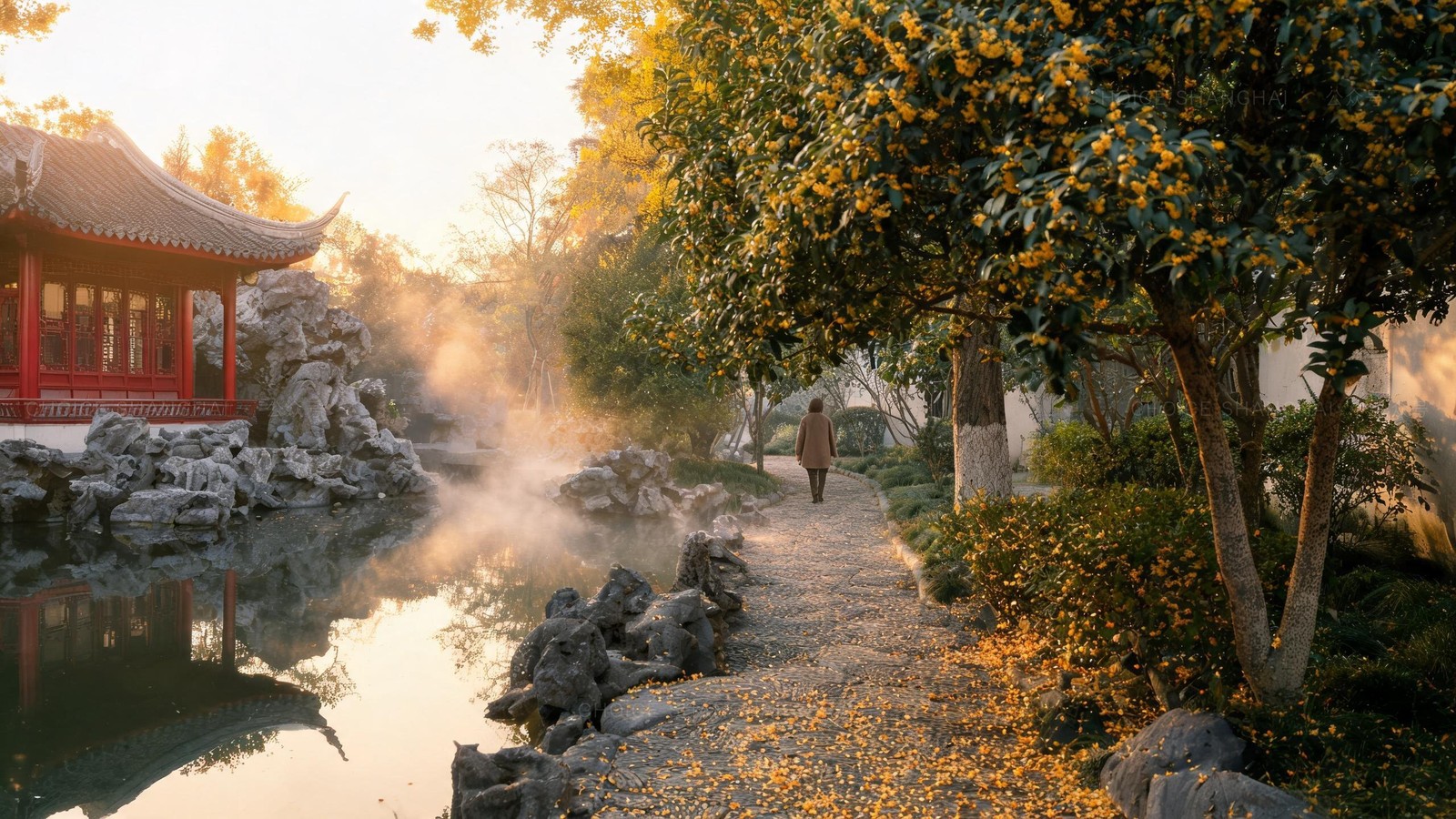
If you want the scent without the festival throng, two gardens out of the centre pay back the metro ride. Gucun Park (顾村公园) in Baoshan is famous for its spring cherry blossoms, but in autumn it turns vast and hushed, osmanthus scattered through it and space to actually breathe; entry is ¥20 (USD 3). Qushui Garden (曲水园) in Qingpu, one of Shanghai’s five surviving classical gardens and laid out in 1745, is tiny, free, and at its loveliest when its osmanthus opens in early November, a beat behind the city centre. The table below is the quick version.
| Garden | District | Entry | Getting there | Why go |
|---|---|---|---|---|
| Guilin Park 桂林公园 | Xuhui | Free | Metro 15, Guilin Park stn | The festival, ~1,000 trees |
| Gucun Park 顾村公园 | Baoshan | ¥20 (USD 3) | Metro 7, Gucun Park stn | Big, calm, late bloom |
| Qushui Garden 曲水园 | Qingpu | Free | Metro 17, Qingpu New City | A 1745 classical garden |
You rarely have to go far, though. The big inner-city parks carry the scent too, and half the pleasure is catching it on an ordinary walk home without planning a thing. We round up the season’s prettiest routes in our guide to five Shanghai citywalk routes for an autumn afternoon.
How to eat osmanthus while it lasts
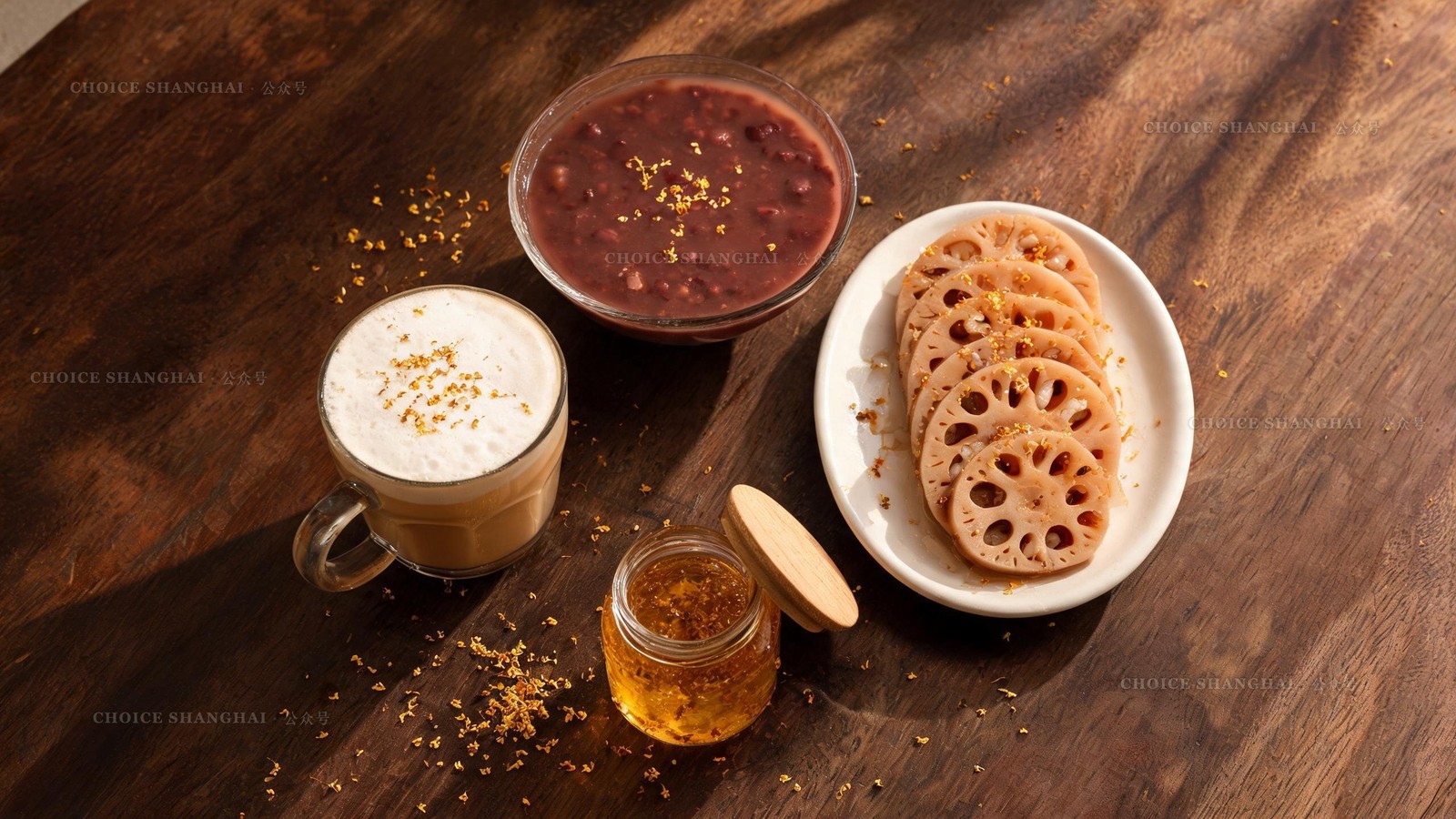
Half the season is edible, because osmanthus is a flavour as much as a perfume, and for a few golden weeks it gets into everything. The classic is candied osmanthus (糖桂花), a glistening amber syrup spooned over 桂花糖藕, cold glutinous-rice-stuffed lotus root sliced into sticky coins, or melted into warm 糖芋艿 (taro in sweet soup) and 桂花赤豆汤 (osmanthus red-bean soup). Reckon on about ¥10 to 25 (USD 1.50 to 4) a bowl at a Jiangnan dessert counter, and less at the stalls in any wet market. Cafes across the city bolt a seasonal osmanthus latte onto the board for exactly this stretch, so scan the specials wherever you get your coffee. And buy a small jar of the syrup before the trees finish, it is the easiest way to keep a little of October alive in your fridge until spring. These same weeks are peak hairy crab season, so an osmanthus wander and a crab lunch are made for each other.
As Confucius said, watching a river, 逝者如斯夫,不舍昼夜, so it all flows on, never resting, day or night. Osmanthus gives you two weeks; take them.
Good to know
- Good for: a free, drunk-on-scent autumn afternoon; a seasonal sugar hunt; a slow date or a solo wander
- What you'll pay: nothing at Guilin Park and Qushui Garden; ¥20 (USD 3) at Gucun Park; a few yuan for a bowl of osmanthus sweets
- Make the most of it: go the week you first smell it, pick a warm sunny morning, and take home a jar of 糖桂花 syrup before the trees finish
When does osmanthus bloom in Shanghai in 2026?
Osmanthus in Shanghai blooms from roughly mid-October into early November, with the strongest scent in the last two weeks of October. A hot autumn can delay the peak to the end of the month, so follow your nose: when you first catch the smell on the street, that is the week to go.
Where is the standout place to see osmanthus in Shanghai?
Guilin Park (桂林公园) in Xuhui is the top spot, with around a thousand osmanthus trees and the city's annual osmanthus festival, free to enter. For a quieter bloom, try Gucun Park in Baoshan (¥20, about USD 3) or the 1745 Qushui Garden in Qingpu, which flowers a little later and is also free.
What osmanthus food should I try in Shanghai?
Start with 桂花糖藕 (candied-osmanthus lotus root) and 桂花赤豆汤 (osmanthus red-bean soup) at a Jiangnan dessert counter, and a seasonal osmanthus latte from almost any cafe during the bloom. Buy a small jar of 糖桂花 syrup to spoon over desserts at home after the season ends.
Is the Guilin Park osmanthus festival free?
Yes, entry to Guilin Park is free, and the osmanthus festival over the Mid-Autumn and National Day period is included. Some evening performances or ticketed activities may cost extra, but simply walking in to see and smell the trees costs nothing. Weekday mornings are far calmer than festival weekends.
Words, maps and research by the Choice Shanghai team. Please credit us and tag our 公众号 if you share.