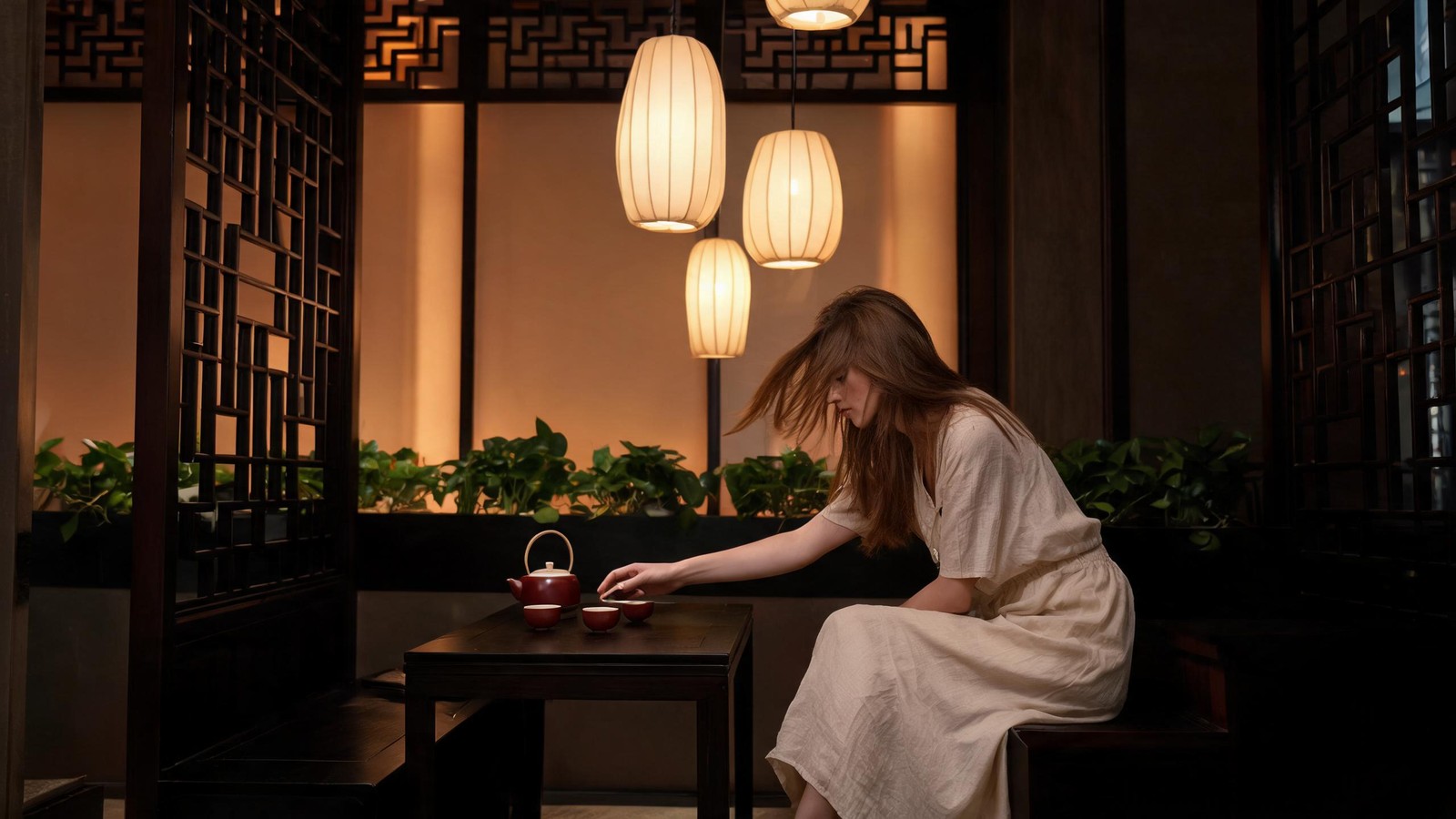
An hour of massage in Shanghai runs from about 90 RMB to 450 depending entirely on which kind of room you walk into, and the cheapest is often the one you remember.
An hour of massage in Shanghai costs 70 to 120 RMB (about US$10 to US$18) at a blind-massage parlour, around 300 (about US$45) at a mid-range chain, and 280 to 450 (about US$42 to US$67) at a Western-facing day spa. Book through Dianping rather than walking in and you will usually pay 20 to 30 percent less. You stay fully clothed for tuina and blind massage.
The confusing part is not the price. It is that "massage" here covers five genuinely different things, sold in five different kinds of room, and the cheapest one is frequently the hour you will remember.
What does a massage in Shanghai cost?
Wider than newcomers expect, and the expensive end is not the skilled end.
The gap between the 90 RMB (US$13) room and the 400 RMB (US$60) room is mostly lighting, robes, tea and the fact that someone will speak English to you. The hands are often equally good at both ends, and sometimes firmer at the cheap one.
Which type should I actually book?
- Blind massage (盲人按摩). Staffed by visually impaired therapists trained in Chinese therapeutic technique, and where your money goes furthest. Plain rooms, strong hands, no atmosphere whatsoever. You keep your clothes on.
- Foot massage (足浴). The neighbourhood default: a reclining chair, a bucket of hot water, an hour on your feet and lower legs, often with a shoulder section thrown in. Ideal after a day of walking and easy to do without any Chinese.
- Tuina (推拿). Therapeutic rather than relaxing, working along the same lines as acupuncture. If something specifically hurts, this is the one. Our guide to TCM clinics in Shanghai covers the medical end, and physiotherapy covers the injuries tuina cannot fix.
- Oil massage at a day spa. Dragonfly, Subconscious Day Spa and Yu Massage are the chains most foreign residents settle on: English-speaking reception, robes, quiet rooms, online booking that works.
- Hotel spa. Chuan Spa at The Langham in Xintiandi and its peers are a different purchase, closer to a small holiday than a massage. Worth it occasionally, hard to justify weekly.
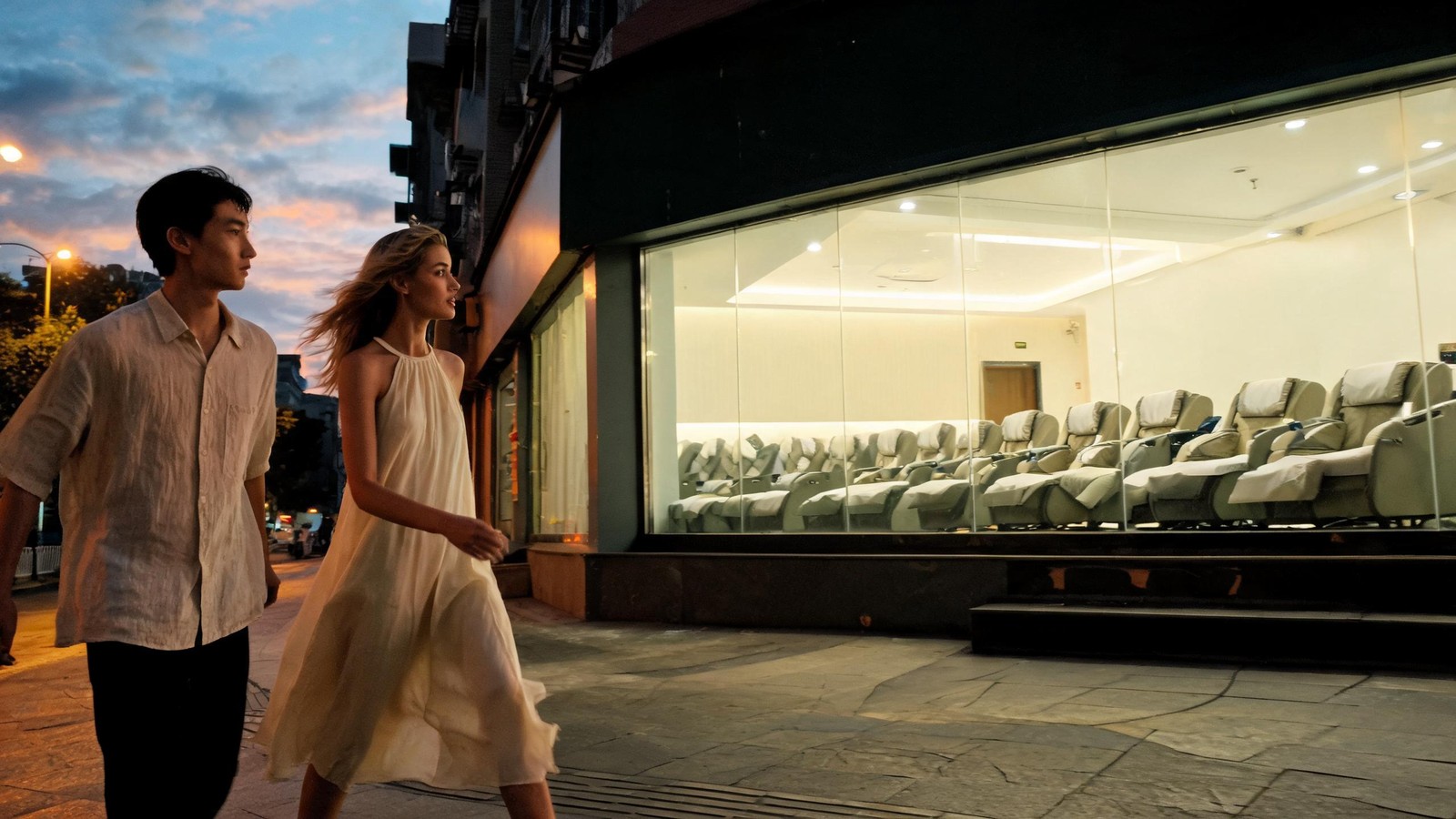
How do I know a place is legitimate?
This is the question everyone has and nobody asks out loud, so here it is plainly. Legitimate places look legitimate, and the signals are consistent:
- An open frontage you can see into from the street, with the lights on.
- A posted price list with times and treatments, near the door.
- A real presence on Dianping with hundreds of reviews, photographs and bookable vouchers.
- Staff in uniform and a reception desk that takes your booking.
- Normal opening hours. Most close by midnight or 1am.
Anywhere with covered windows, pink lighting, no price list and no online listing is not offering what this guide is about. Walk on. You will not offend anyone and nobody will chase you down the street.
How do I book and pay?
Dianping is the whole game. Search 按摩 or 足浴 near you, sort by rating, and buy the voucher (团购) before you go: the app price is routinely 20 to 30 percent under the counter price for exactly the same hour, and you pay in the app. Our guide to using Dianping in English walks through it, and you will want Alipay or WeChat Pay linked to a card first.
Weekend evenings book out at the good places. A Tuesday at 3pm, you can walk in anywhere.
What actually happens when I get there?
You keep your clothes on for tuina, foot and blind massage; you are given loose cotton pyjamas at spas, and for oil massage you undress to underwear under a towel. Shoes come off at the door. Tea appears, usually twice.
Two phrases carry the entire hour. 轻一点 (qīng yī diǎn) means lighter, 重一点 (zhòng yī diǎn) means harder. Say the first one early if you need to, because Chinese massage is properly firm and politely enduring forty minutes of it is a rite of passage nobody needs. Tipping is not expected anywhere, and a good therapist will simply ask you to book them by name next time.
Which one is for you
- If your shoulders hurt and you want value, book blind massage and go every week.
- If you have walked ten kilometres sightseeing, book a foot massage near your hotel tonight.
- If a specific injury is the problem, book tuina, or see a physiotherapist instead.
- If you want quiet, English and a robe, book Dragonfly, Subconscious or Yu Massage.
- If you are celebrating something, book a hotel spa and make an afternoon of it.
Good to know
- Blind massage is 70 to 120 RMB an hour and frequently the firmest hands you will find.
- Buy the Dianping voucher first. Same hour, 20 to 30 percent less.
- Clothes stay on for tuina, foot and blind massage.
- 轻一点 means lighter. Say it early.
- No tipping, anywhere.
- 盲人按摩性价比很高,大众点评先买团购券再去,推拿足浴都不用脱衣服,不用给小费。
The Classic of Filial Piety opens with 身体发肤,受之父母, that our body and skin are a gift from our parents. Whether you spend seventy or four hundred, the hour on the table is really an hour of caring for that gift.
How much is a one-hour massage in Shanghai?
About 70 to 120 RMB (US$10 to US$18) at a blind-massage parlour, 88 to 160 (US$13 to US$24) for a neighbourhood foot massage, roughly 300 (US$45) at a mid-range chain and 280 to 450 (US$42 to US$67) at a Western-facing day spa.
Do I have to take my clothes off?
Not for tuina, foot massage or blind massage, which are all done fully clothed or in loose cotton pyjamas the venue provides. Only oil massage involves undressing, under a towel.
Is blind massage in Shanghai any good?
It is where a lot of long-term residents end up. The therapists are trained in Chinese therapeutic technique and the rooms are plain, so you pay for hands rather than for interiors.
Do I need to speak Chinese to book a massage?
No. Dianping vouchers are bought and redeemed in the app, and the two phrases for lighter and harder cover the session. Day spas have English-speaking reception.
Should I tip after a massage in Shanghai?
No. Tipping is not part of the culture here and refusing to accept one is normal. Book the same therapist again instead.