
You do not need a course.
You do not need a course. You need about fifty words, and roughly a dozen of them do the heavy lifting: 不要辣 (bú yào là, no spicy), 买单 (mǎi dān, the bill), 师傅 (shī fu, how you talk to a driver), 多少钱 (duō shao qián, how much), and 听不懂 (tīng bù dǒng, I don't understand). Learn those and you stop miming at the noodle shop this week. A translate app is free, and a wrong-guess dish is ¥40 (~USD 6) of chili oil you did not want, so the phrases below pay for themselves the first time you use them. Here is the honest part most guides skip: your tones will sometimes betray you, and a few locals will still blink at your go-to bú yào là. When that happens, show the characters. That is the whole trick.
Good to know
- Good for newcomers and busy long-termers who want to live here comfortably, not pass an exam or sit through a class.
- What you'll pay nothing. The phrases are free, a translate app is free, and saying 不要辣 before they cook saves you a ¥40 (~USD 6) bowl you cannot eat (as of 2026).
- Make the most of it screenshot the tables, keep the characters on your phone, and point when your mouth fails you. Pointing plus one word beats a perfect sentence nobody caught.
This is the opposite of our guide to learning Mandarin properly, where we list the city's Mandarin schools (GoEast, LTL, Mandarin Garden and more) and what each one actually costs. That one is for fluency. This one is for Tuesday.
What do I say so my noodles aren't on fire?
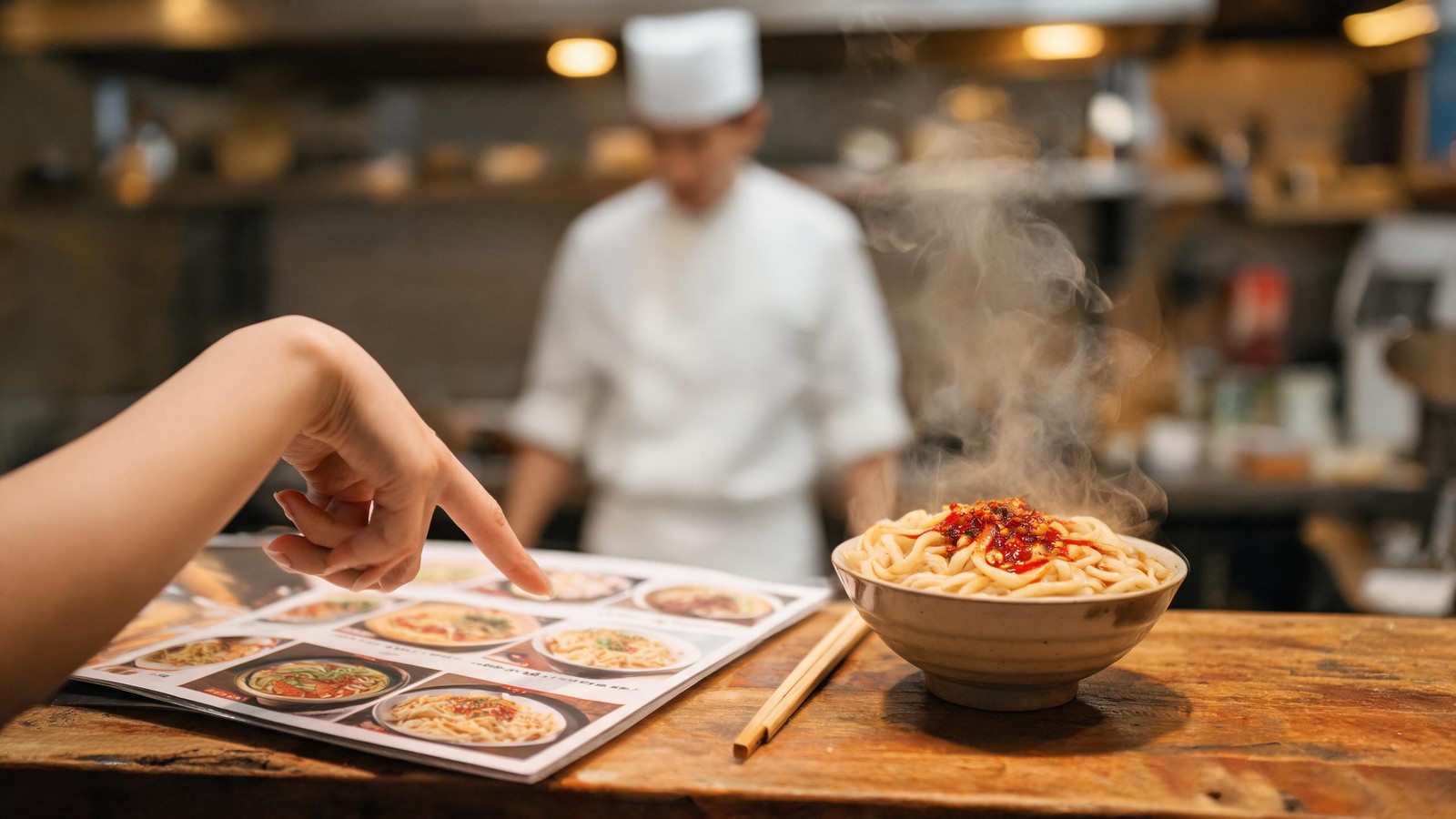
Ordering is where survival Chinese earns its keep, because the damage is immediate and edible. The single most useful food phrase in this city is 不要辣 (bú yào là): no spicy. If you can take a little, say 微辣 (wēi là), mild. Want to murder the cilantro that ambushes everything? 不要香菜 (bú yào xiāngcài).
When you cannot name the dish, point at the picture or the next table and say 这个 (zhè ge), this one. To get the bill, say 买单 (mǎi dān) or just mime signing your hand in the air, which every server on earth understands. Leftovers worth saving? 打包 (dǎ bāo), box it up.
| Say this | Sounds like | When to use it |
|---|---|---|
| 不要辣 | bú yào là | No spicy. Say it before they cook. |
| 微辣 | wēi là | A little spicy is fine. |
| 不要香菜 | bú yào xiāngcài | Hold the cilantro. |
| 这个 | zhè ge | This one, while pointing. |
| 买单 | mǎi dān | Bring the bill. |
| 打包 | dǎ bāo | Box up the leftovers. |
If you want to actually browse menus and reviews before you go, our guide to using Dianping in English pairs perfectly with these six words.
Getting a taxi or Didi to go where you actually mean
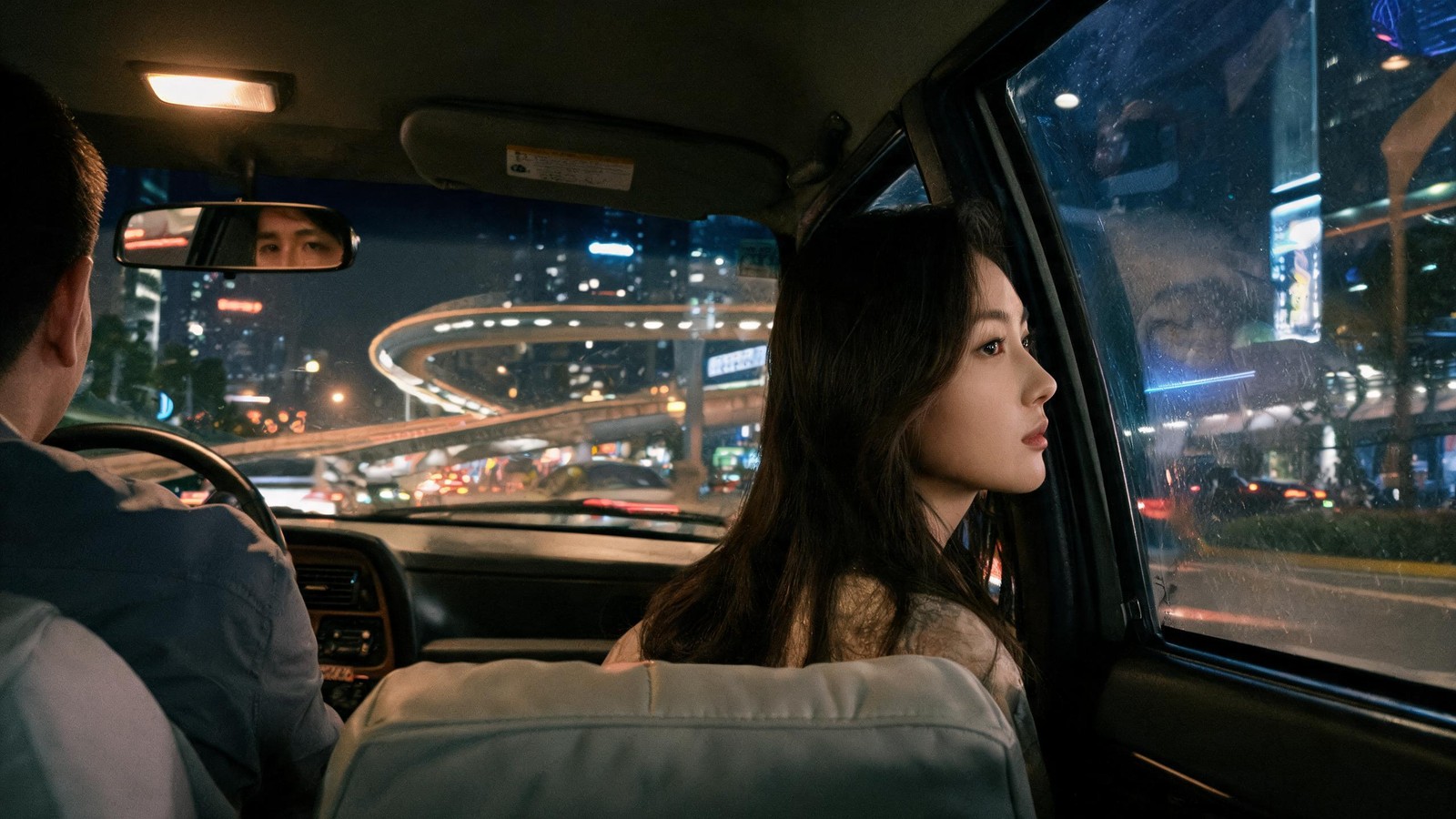
First, address the driver as 师傅 (shī fu). It literally means master, it is warm and respectful, and it instantly marks you as someone who has been here a minute. Then the three words that steer any ride: 停一下 (tíng yí xià, pull over), 到了 (dào le, we're here), and 前面 (qián miàn, up ahead) while you point.
Honestly, Didi does most of the work now, since you type the destination and the app routes it. Where phrases matter is the last hundred meters, when the pin is wrong and the driver wants to know where exactly. That is when 前面停 (qián miàn tíng, stop up ahead) saves you a lap around the block.
| Say this | Sounds like | When to use it |
|---|---|---|
| 师傅 | shī fu | How you address any driver. |
| 停一下 | tíng yí xià | Pull over here. |
| 到了 | dào le | We've arrived, let me out. |
| 前面 | qián miàn | Up ahead (point as you say it). |
| 谢谢师傅 | xiè xie shī fu | Thanks, driver, as you get out. |
For reference, a Shanghai taxi starts at ¥14 (~USD 2) for the first 3 km by day and ¥18 (~USD 3) at night (as of 2026), so a short hop is cheap enough that a wrong turn costs pennies, not panic. To read maps and pins in English while you learn, keep our Amap in English guide handy.
Deliveries, couriers, and the doorbell you can't answer
Your phone rings, a courier is speaking fast, and you understand nothing. Two phrases handle ninety percent of it. 放门口 (fàng ménkǒu) means leave it at the door, which ends most calls instantly and happily. If they need to confirm you are home, 到了吗 (dào le ma) asks has it arrived.
The nouns worth knowing: 外卖 (wàimài) is food delivery, 快递 (kuàidì) is a parcel. When a WeChat voice message defeats you, long-press it and hit convert to text, then let the app translate. You will notice most drivers would genuinely rather text than talk, so a typed 放门口,谢谢 (leave at the door, thanks) is often smoother than any phone call.
The pharmacy words for when you feel awful

The 药店 (yàodiàn, pharmacy) is one of the great quiet mercies of life here: they are everywhere, open late and easy to use, and the person behind the counter can hand you something useful the moment you name the symptom. Open with 我不舒服 (wǒ bù shū fu), I feel unwell, then point at the part that hurts and add the word.
Basic cold and fever medicine runs about ¥15 to ¥30 (~USD 2 to 4) (as of 2026), and you rarely need a prescription for the everyday stuff. If it is serious, that is a 医院 (yīyuàn, hospital), not a pharmacy, and you should go.
| Say this | Sounds like | What it means |
|---|---|---|
| 我不舒服 | wǒ bù shū fu | I feel unwell (your opener). |
| 感冒 | gǎn mào | A cold. |
| 发烧 | fā shāo | Fever. |
| 拉肚子 | lā dù zi | Upset stomach. |
| 头疼 | tóu téng | Headache. |
| 过敏 | guò mǐn | Allergy (show them to what). |
How much? and the polite art of too expensive
Two phrases open every market and small shop: 多少钱 (duō shao qián, how much) and 有没有 (yǒu méi yǒu, do you have). When the number is silly, smile and say 太贵了 (tài guì le, too expensive), then 便宜一点 (piányi yì diǎn, a bit cheaper). Bargaining lives at street stalls and fabric markets, not in supermarkets or chains, where the price is the price and haggling just reads as odd.
Almost everything is paid by scanning, so 扫码 (sǎo mǎ, scan the code) is the word you will hear at every counter. Cash still works, but expect a small pause while someone hunts for change. For the bigger picture on what things actually cost here, our Shanghai cost of living guide has the real numbers, and if you would rather shop from your sofa, the Taobao in English guide skips the haggling entirely.
The ten words that get you out of almost anything
If you memorize one block, make it this one. 不好意思 (bù hǎo yì si) is the softest, most useful phrase in the language: excuse me, sorry to bother, coming through, my bad, all in one. 听不懂 (tīng bù dǒng) honestly ends the awkward loop where someone keeps talking and you keep nodding. And 帮帮我 (bāng bang wǒ), please help me, turns strangers into allies faster than you would believe.
| Say this | Sounds like | When to use it |
|---|---|---|
| 不好意思 | bù hǎo yì si | Excuse me / sorry / coming through. |
| 听不懂 | tīng bù dǒng | I don't understand. |
| 多少钱 | duō shao qián | How much is this? |
| 洗手间在哪 | xǐ shǒu jiān zài nǎ | Where's the toilet? |
| 帮帮我 | bāng bang wǒ | Please help me. |
| 救命 | jiù mìng | Help! Real emergencies only. |
And keep the emergency numbers in your phone: 110 police, 120 ambulance, 119 fire, all free to dial. Shanghai's 110 line offers support in eight languages including English (source: english.shanghai.gov.cn, 2024), so you are never as stranded as you feel. Once you can trade a few of these phrases, you will find people warm up fast, which is half the fun of actually meeting people here.
The catch nobody admits: your tones will betray you
Here is the truth other guides dodge. Mandarin is tonal, and the same syllable at the wrong pitch is a different word. Your confident bú yào là might land as noise if the tones wobble, and a tired shopkeeper will not always do the guesswork for you. This is not your fault and it is not a reason to quit. It is a reason to carry a plan B.
The plan B is simple: show the characters. Keep this page or a note with 不要辣, 买单, 放门口 on your phone and turn the screen around. Point. Use your translate app's camera on any menu or label. Pinyin without tone marks is a rough map, not the territory, so when speaking fails, let the writing do the talking. Nobody has ever been mad at someone politely holding up a phone that says thank you.
Confucius opened the Analects with it, 学而时习之,不亦说乎, to learn something and put it to use in season, is that not a pleasure. Every phrase you try on a taxi driver or a fruit seller comes back warmer than the textbook promised.
How do you say no spicy in Chinese?
不要辣, pronounced bú yào là. Say it before they cook, not after. For only a little heat, use 微辣, wēi là, which means mild.
What is the most useful Chinese phrase in Shanghai?
不好意思, bù hǎo yì si. It covers excuse me, sorry, and pardon me all at once, and it softens every interaction from squeezing onto the metro to flagging a waiter. Runner-up: 听不懂, tīng bù dǒng, I don't understand.
Can I actually get around Shanghai without speaking Chinese?
Yes, mostly. Metro signs, Didi, and payment apps are usable in English, and translate apps fill the gaps. But about a dozen spoken phrases turn a stressful day into an easy one, especially at small restaurants, markets, and pharmacies where English is thin.
How do you ask for the bill in a Chinese restaurant?
买单, mǎi dān, or 结账, jié zhàng. If the words do not land, mime signing your name in the air, which every server understands instantly.
Will taxi drivers in Shanghai understand English?
Usually not much, which is why Didi is your friend, since you type the destination. Learn 师傅 (shī fu) to address the driver and 到了 (dào le) and 停一下 (tíng yí xià) to stop, and you are covered for the parts the app cannot do.