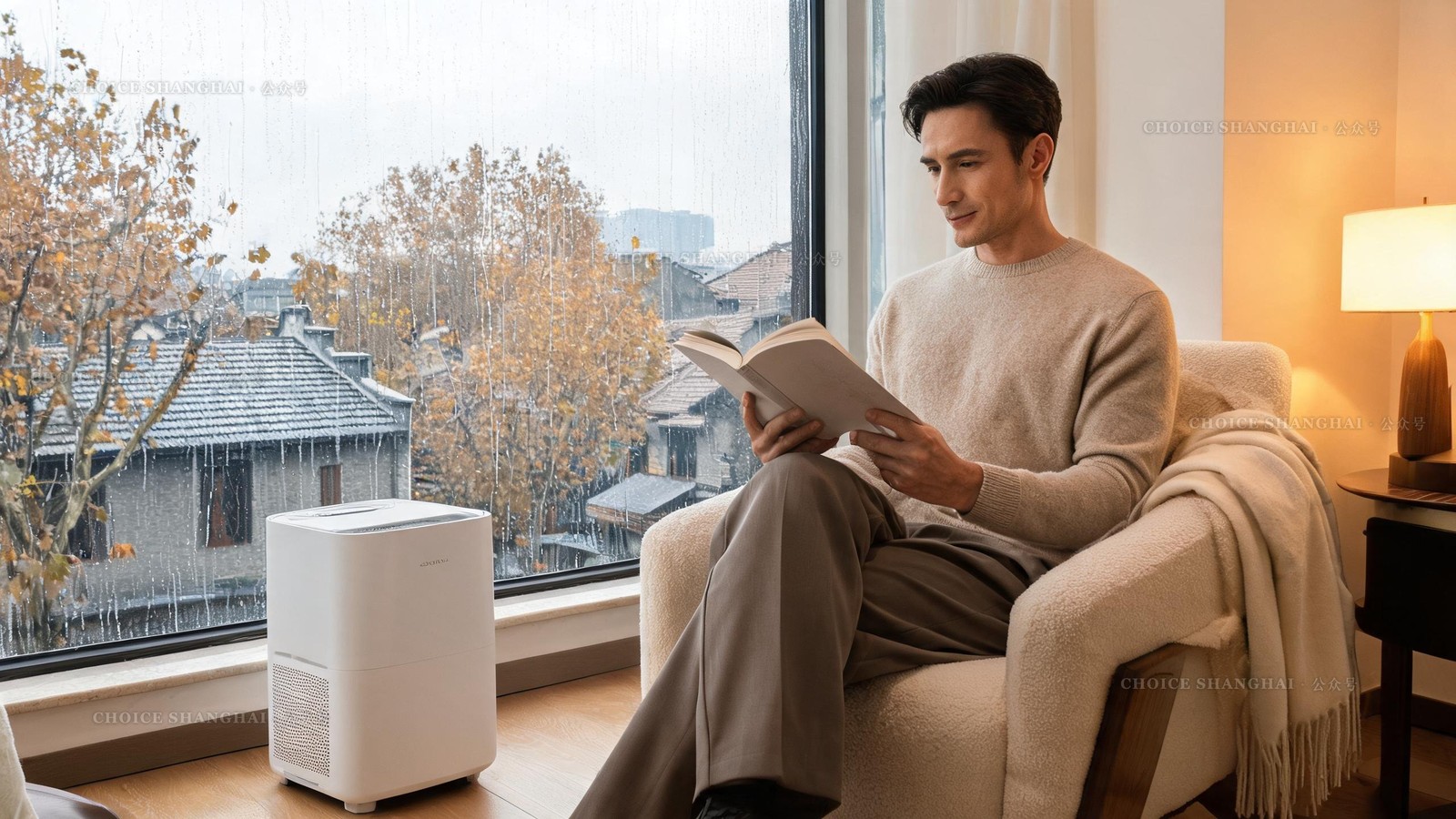
Shanghai flats go damp twice a year, in the June plum rains and the cold-wet winter.
Shanghai flats go damp twice a year, in the June plum rains and again through the cold-wet winter, because almost none have central heating and indoor humidity sits at 70 to 90 percent for weeks. The fix is a dehumidifier (¥500 to ¥1,500, about USD 75 to 224), a handful of ¥10 moisture boxes, and some airflow. If mould is already spreading across walls or a ceiling, that is usually structural, and the repair is your landlord's job, not yours. Here is how to keep a flat dry and who pays when it is not.
Why Shanghai flats get damp, and when
Shanghai's damp is a climate problem, not a cleaning failure. The city sits in a humid subtropical zone, so from the plum-rain weeks in June through the grey winter, outdoor humidity hangs high and indoor air has nowhere dry to go. With no central heating to warm and dry the rooms, moisture settles on cold walls, inside wardrobes and under beds, and north-facing rooms and ground floors get it worst. Left alone it shows up as a musty smell first, then spots on leather, then mould on the wall. Catching it early is the whole game.
The cheap kit that actually keeps a flat dry
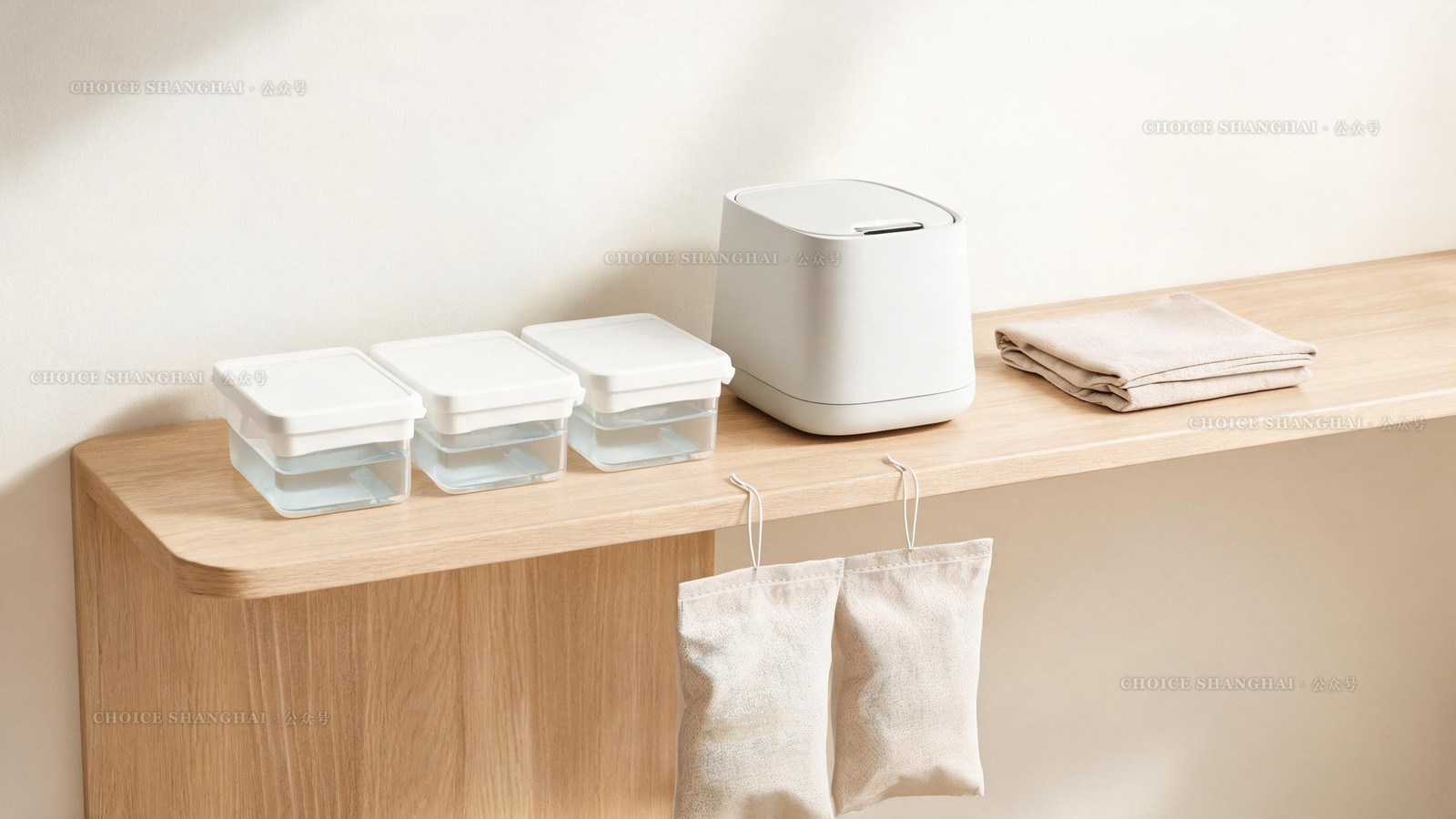
You do not need to spend much to win this. A proper electric dehumidifier is the one real purchase, and the cheap absorbers mop up the corners it cannot reach. Run the dehumidifier in the room you sleep or work in, keep doors shut to trap the dry air, and empty the tank daily in the damp weeks. Here is what each piece costs and does.
All of it is a quick Taobao order. The dehumidifier is the line that matters; the rest totals under ¥100 (about USD 15). Converted at about 6.7 RMB to the US dollar, October 2026.
How to stop mould on clothes, shoes and walls
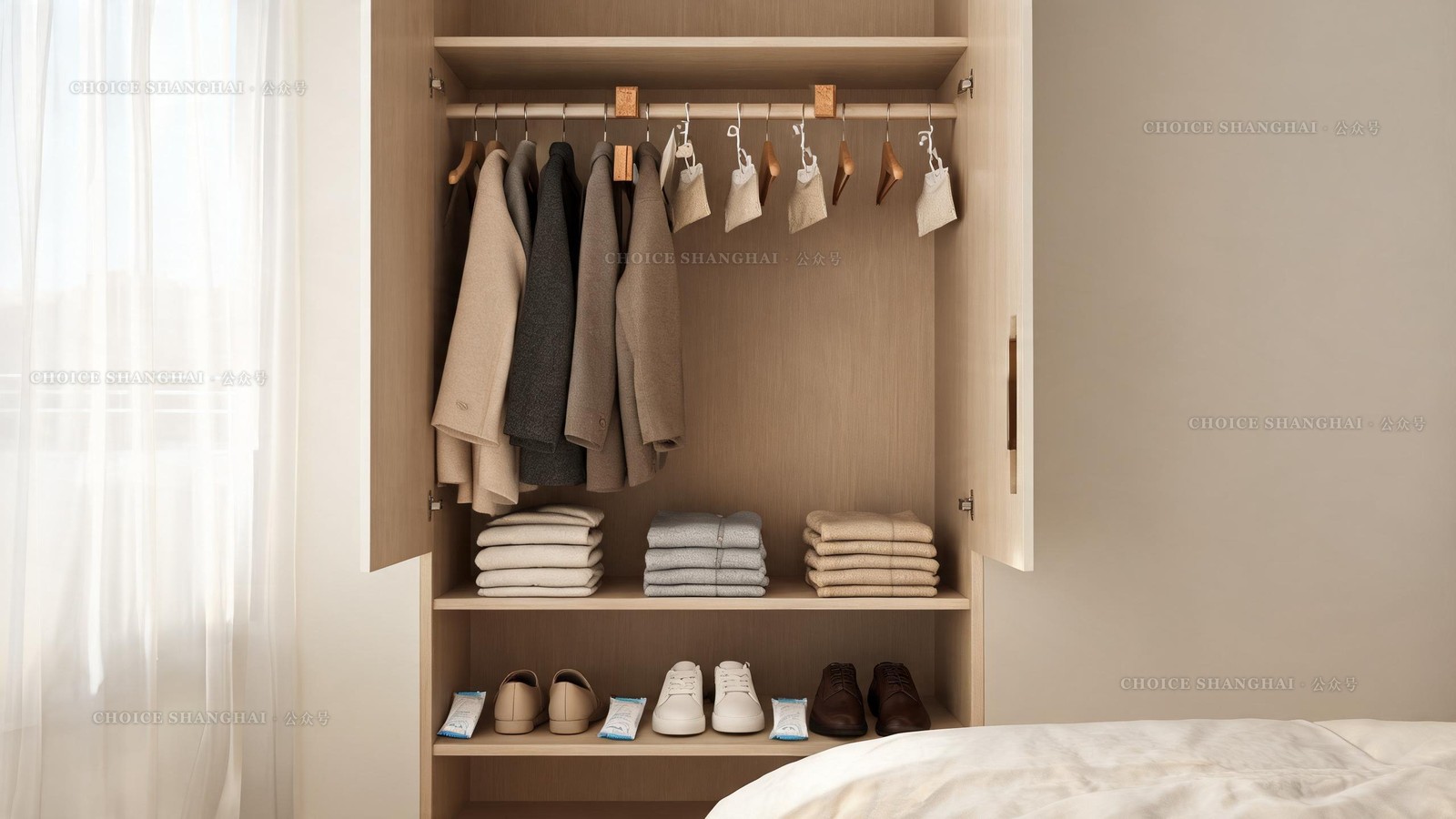
Mould grows where damp air sits still, so the fix is movement and dryness. Do not push wardrobes or beds flush against an exterior wall; leave a few centimetres so air can pass behind them. Tuck a moisture box in each wardrobe and a hanging pouch among the coats, keep shoes off the floor with a desiccant pack inside each pair, and open the windows for ten minutes on any dry hour. Wipe condensation off cold windows and tiles before it feeds the grout. For the clothes that still come out of storage smelling musty, a wash-and-press run sorts it, and our guide to laundry and dry cleaning in Shanghai covers the where. Keeping the room warm helps too, because warm air holds the damp at bay better than cold.
When the damp is the landlord's problem, not yours
There is a clear line between condensation you manage and water that should not be there. Surface damp from humidity is a tenant's day-to-day job. But active leaks, water seeping through a wall or ceiling (渗水), a failed bathroom seal, or mould spreading structurally across plaster are repair problems, and under a standard Shanghai lease the landlord owns them. Photograph it the day you see it, send the photos to your landlord and the building's property-management (物业) team in writing, and ask for a repair in a dated message. Keep it on the record rather than only over a call. If the landlord stalls on a genuine repair, our guides to renting without getting burned and how to complain and actually get results cover your next moves.
Good to know
- Good for: anyone in a Shanghai flat facing their first plum-rain June or cold-wet winter, especially in a north-facing or ground-floor room.
- What you'll pay: ¥500 to ¥1,500 (USD 75 to 224) for a dehumidifier, plus under ¥100 (USD 15) for boxes, pouches and desiccant packs.
- Make the most of it: run the dehumidifier in one closed room, leave a gap behind furniture on exterior walls, and photograph any real leak for the landlord the day you spot it.
Why is my Shanghai apartment so damp?
Shanghai sits in a humid subtropical climate, so indoor humidity runs 70 to 90 percent through the June plum rains and the grey winter, and with no central heating to dry the air, moisture settles on cold walls, in wardrobes and under beds. It is normal for the city and manageable, not a fault with your specific flat.
How do you get rid of damp in a Shanghai flat?
Run an electric dehumidifier (¥500 to ¥1,500, about USD 75 to 224) in a closed room, back it up with ¥10 moisture boxes (about USD 1.50) in wardrobes and under beds, and air the flat for ten minutes on dry hours. That combination holds humidity down enough to keep mould from taking hold.
Who pays to fix mould in a rented Shanghai apartment?
Surface condensation you manage yourself, but active leaks, water seeping through walls or ceilings, and structural mould are the landlord's repair responsibility under a standard Shanghai lease. Photograph it, report it to the landlord and property-management team in writing, and ask for a dated repair.
How do I stop my clothes and shoes going mouldy in Shanghai?
Keep air moving and the wardrobe dry: hang a desiccant pouch among coats, drop a moisture box on the shelf, keep shoes off the floor with a desiccant pack in each pair, and do not push the wardrobe flush against an exterior wall. Air it on dry days rather than leaving it shut for weeks.
As the Book of Changes puts it, 穷则变,变则通, when a thing reaches its limit it must change, and the change opens a way through; the Shanghai damp is not beaten so much as outlasted, one dry habit at a time.
Words, maps and research by the Choice Shanghai team. Please credit us and tag our 公众号 if you share.