Most medicine in Shanghai is sold over the counter, no prescription needed, and a box costs 10 to 30 RMB.
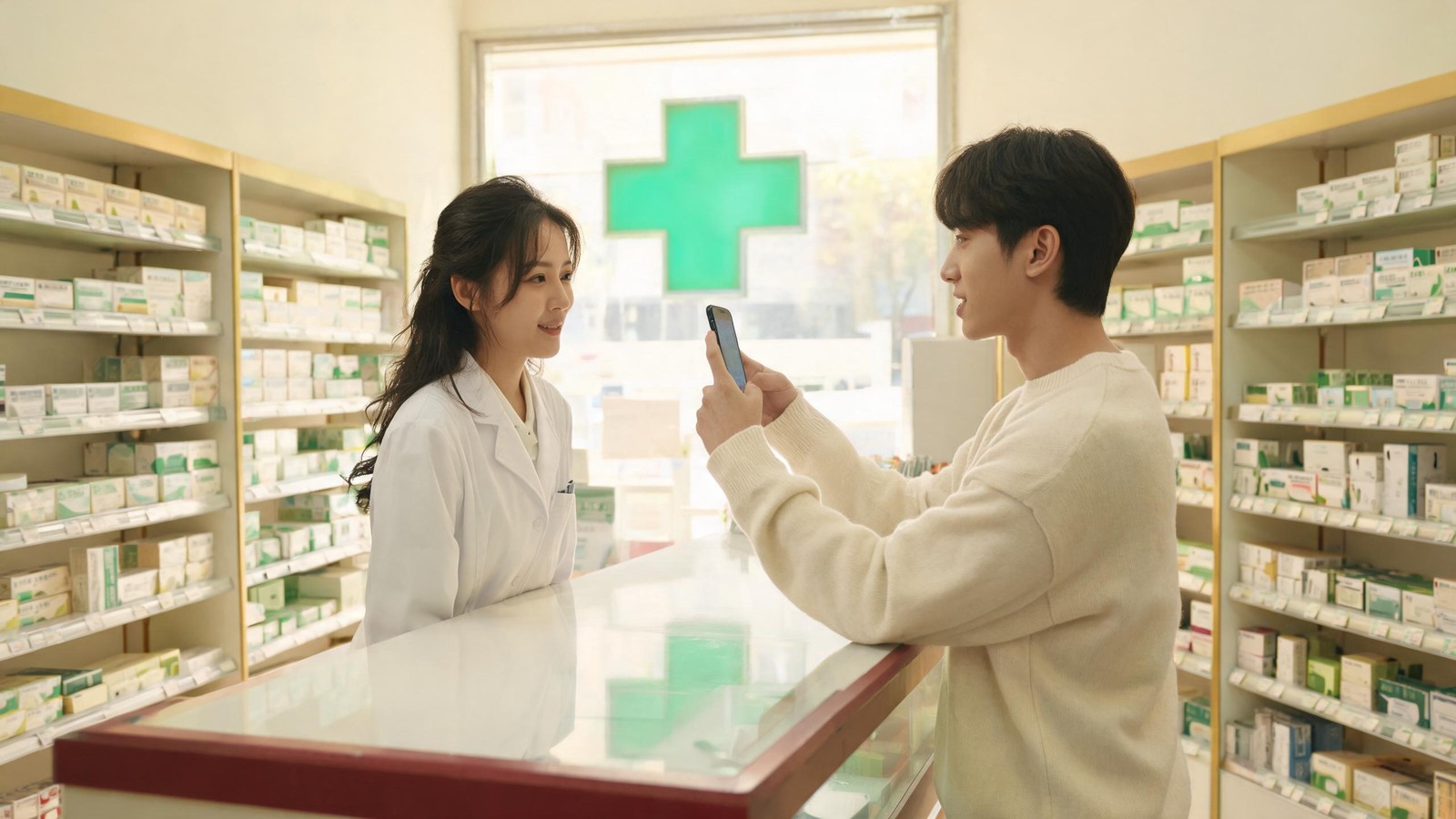
Walk into any Shanghai pharmacy with a green cross sign and show the active ingredient written in Chinese. Painkillers, cold remedies, allergy tablets and stomach basics are all over the counter, no prescription and no Chinese needed, and a box usually costs 10 to 30 RMB. Antibiotics and anything containing pseudoephedrine are the exceptions.
The first time I caught a cold here I stood in a pharmacy pointing at my own throat like a mime with stage fright. The pharmacist was kind, the charade eventually worked, and I walked out with what I needed for 18 kuai. The systematic version below takes about five minutes.
How do I find a pharmacy in Shanghai?
Look for the green cross. Pharmacies (药店, yàodiàn) are everywhere, and the big licensed chains are the ones to use: Yifeng (益丰大药房), Laobaixing (老百姓大药房), Guoda (国大药房), Huashi (华氏大药房) and the heritage TCM house Leiyunshang (雷允上). Chains keep consistent stock, display their licence, and occasionally have staff with some English.
Skip the small unbranded shops in touristy corners. Wherever you buy, the expiry date follows 有效期至 ("valid until") on the box, in year-month format.

Do I need a prescription?
Not for most everyday medicine. Painkillers, cold and allergy remedies and stomach basics are over the counter, no questions asked. But antibiotics, asthma inhalers and chronic medications such as blood pressure pills need a prescription written by a licensed doctor in China. This is the part that catches newcomers out: a prescription from your doctor at home is not valid here.
Bring your passport or residence permit anyway. Anything containing pseudoephedrine sits behind the counter rather than on the shelf, and the pharmacist has to check your ID and log the sale.
To get an ongoing medication re-issued, book a consultation at a public hospital or an international clinic and bring your records. It is more straightforward than it sounds once you are registered, and our step-by-step guide to seeing a doctor in Shanghai walks through the booking.
What does medicine actually cost in Shanghai?
Less than you are bracing for. Domestic generics are the cheap end of the shelf and they are the same molecules you buy at home, so most pharmacy runs land between 10 and 30 RMB. Imported brands sit on the same shelf at three to five times the price, which is the single easiest place to overpay.
Prices are set per store rather than nationally, so two branches of the same chain can differ by a few kuai. It is rarely worth the walk.
How do I ask for what I need without Chinese?
Show the pharmacist the generic name, the active ingredient, not your home brand. Panadol and Advil draw blank looks; the compound name in characters gets an immediate nod. Save these to your phone:
- Paracetamol / acetaminophen: 对乙酰氨基酚
- Ibuprofen: 布洛芬
- Loratadine (allergies): 氯雷他定
- Oral rehydration salts (for the inevitable bad-oyster day): 口服补液盐
- Montmorillonite powder (the standard stomach fix here): 蒙脱石散
For children, ask for the suspension (混悬液) rather than tablets, and say the child's age and weight; dosing here is by weight and the pharmacist will point at the line on the box. Check the active ingredient with a translate app before you pay, and write down any allergies rather than saying them out loud.
What can I not buy in a Shanghai pharmacy?
A few things every newcomer assumes will be waiting on the shelf are not, and the rules behind them are national, not a quirk of one shop.
- Cold medicine with pseudoephedrine is sold from behind the counter only. Under the national rules on ephedrine-containing compound preparations, the pharmacy must check and record your ID, and you cannot buy more than two of the smallest package size in one visit.
- Codeine cough syrups are controlled psychotropic medicines here and need a prescription. Do not expect the over-the-counter bottle you know from home.
- ADHD stimulants such as methylphenidate are tightly controlled and cannot be refilled at a retail pharmacy. If you take one, sort out a plan with a doctor before you run low, not after.
- Melatonin is sold as a health supplement rather than a medicine, so look for it in the supplement aisle or on a delivery app instead of asking at the medicine counter.
If you are moving here with a regular prescription, bring the original packaging plus a copy of the prescription, and check the rules for your specific medication before you fly.
Can I get medicine delivered?
Yes, and it feels like magic at 2am. Meituan and Ele.me both run pharmacy sections that deliver over-the-counter medicine around the clock, usually within the hour, and JD does the same. Legitimate sellers handle OTC products only, so treat anything advertising prescription drugs online without a prescription as exactly what it looks like.
Where can I go in person late at night?
Yifeng runs 24-hour branches across the city, and hospital pharmacies attached to 24-hour emergency departments never close. On the international side, Shanghai East International Medical Center has a 24-hour pharmacy with pharmacists who work in English and Chinese. For anything that is past a pharmacy problem at 3am, our guide to emergencies and 120 is the one to have saved.
What about insurance and receipts?
Everyday pharmacy purchases are cheap enough that most people just pay. If your plan reimburses medication, ask for a fapiao (发票, the official receipt) at the counter and keep the box. If you pay Chinese social insurance, your medical insurance card works at any pharmacy marked 医保定点, which covers a slice of the cost directly at the till; what you pay into the system and get back explains the rest. Whether a private plan covers pharmacy costs at all depends on the tier, and our health insurance guide sets out what each one actually pays for.
Good to know
- Green cross means licensed. Big chains only: 益丰, 老百姓, 国大, 华氏.
- Show the active ingredient in Chinese, never the home brand name.
- Carry ID. Pseudoephedrine cold medicine is logged against it, two packs maximum.
- Domestic generic over imported brand saves you three to five times the price.
- 常用药基本都是非处方药,拿着中文成分名去药店就行,抗生素和含麻黄碱的感冒药要带证件。
The Classic of Filial Piety reminds us 身体发肤,受之父母, your body, to the last hair, is a gift from your parents. A counter that hands over medicine so freely asks one thing back, that you treat the body you were given with a little care.
Can I bring my own prescription medicine into China?
Reasonable personal quantities of most medications are fine, but some substances that are routine elsewhere are controlled here. Check the current rules for your specific medication before flying, and carry the original packaging plus the prescription.
Are Western brands sold in Shanghai pharmacies?
Some international brands appear on chain shelves, but stock varies by store and you pay several times the generic price for the logo. Leading with the active ingredient name works regardless of whose box it is.
Do pharmacists in Shanghai speak English?
Occasionally some basics in the big chains, but do not count on it. Written ingredient names plus a translate app cover the gap comfortably.
How much does a box of painkillers cost in Shanghai?
Around 11 to 22 RMB for a box of 24 domestic ibuprofen capsules. Imported brands of the same drug cost several times that.
What if it is more than a pharmacy problem?
Pharmacists here will usually tell you straight when something needs a doctor. For anything persistent, painful or worrying, go and get looked at; it is faster and cheaper than you probably expect, including dental care in English.
Where can I find a pharmacy in Shanghai?
Look for the green cross. Pharmacies are everywhere, and the big licensed chains like Yifeng, Laobaixing, Guoda, and Huashi are the ones to use. They keep consistent stock and have all the license details.
Do I need a prescription for medicine in Shanghai?
Most everyday medicine is over the counter, no prescription needed. But antibiotics, asthma inhalers, and chronic medications require a prescription from a licensed doctor in China. A prescription from your home country is not valid.