
Forget the food and the skyline, you already expect those.
The differences that actually get you, moving to Shanghai from Europe or the US, are not the food or the skyline. They are the daily mechanics: you pay for everything by phone, the city stays open past midnight, almost anything reaches your door in about half an hour, and you quietly recalibrate what safe feels like. None of this is better or worse, just different, and most of it you stop noticing within a month. But in your first weeks these are the things that make you text someone back home going, you would not believe this. Cheat sheet first, then the six that get everyone.
If you are still working out what a month here actually costs, our honest cost-of-living breakdown pairs well with this.
Your phone quietly becomes your wallet, keys and ID
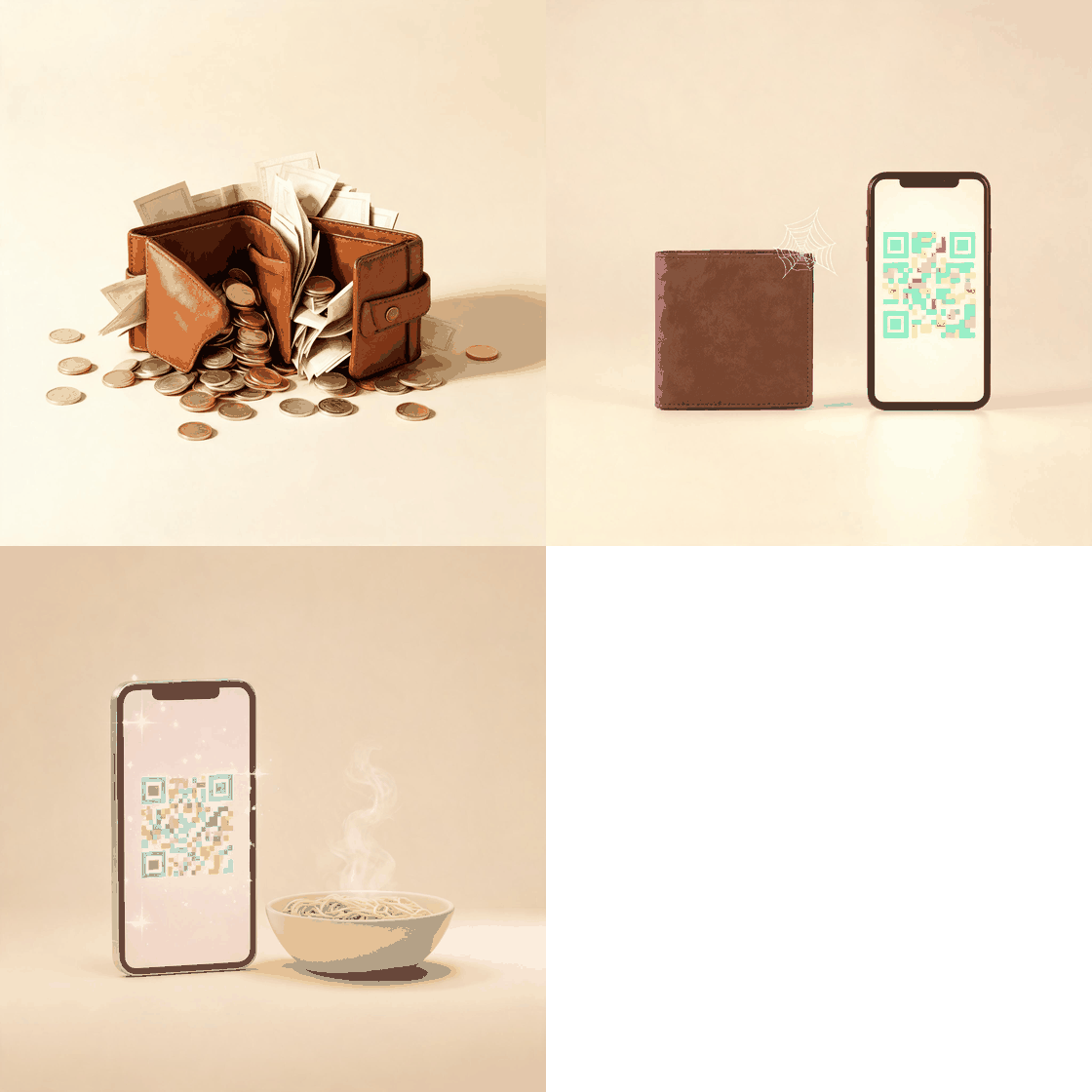
This is the first thing that rewires you. Almost everything is paid by scanning a QR code through WeChat or Alipay, from the metro turnstile to the fruit seller to the busker on the corner. Cash is legal and practically useless: hand a big note to a street vendor and watch them sigh. Splitting dinner is not a maths problem either, everyone just scans the same code.
The habit goes deep fast. Within a month you leave the house with a phone and nothing else, no wallet, no keys card, no cash. The one real catch: a dead battery means you cannot pay for the taxi home, so a power bank stops being a nerd accessory and becomes survival gear. Fun proof of how far it goes, even temple donation boxes and wet-market grannies have a printed QR taped to the stall.
You stop planning your life around opening hours
The Western reflex of I should run to the shop before it closes simply dies. Almost anything you can name arrives at your door in about half an hour, at almost any hour: a single bottle of water, cold medicine at 2am, a phone charger, a hotpot for one, a plumber, your laundry back clean. Meituan, Ele.me and Sherpa's turn the whole city into room service.
And the city itself stays awake. Restaurants and malls run till 10pm or later, dinner at 8 or 9 is normal, and Sunday is a full shopping day, not a ghost town. You can get a foot massage at midnight and nobody blinks. After a while the old instinct to rush before things close just quietly switches off.

You quietly recalibrate what safe feels like
This is the one that changes how you move through a city. People leave a phone on a cafe table to hold their seat and come back to find it exactly where they left it. People walk home alone at 1am without a second thought. Kids ride the metro by themselves. Night markets are full of families at 11pm.
Street crime is genuinely low, and it is worth being honest about the trade behind it: this is a heavily monitored city, cameras on every corner, and most newcomers make their peace with that within a few weeks and stop noticing. Whatever you make of that trade, the felt result is a level of everyday ease that takes people from Europe and the US by surprise, usually pleasantly.

Everything lives in an app, until suddenly it does not
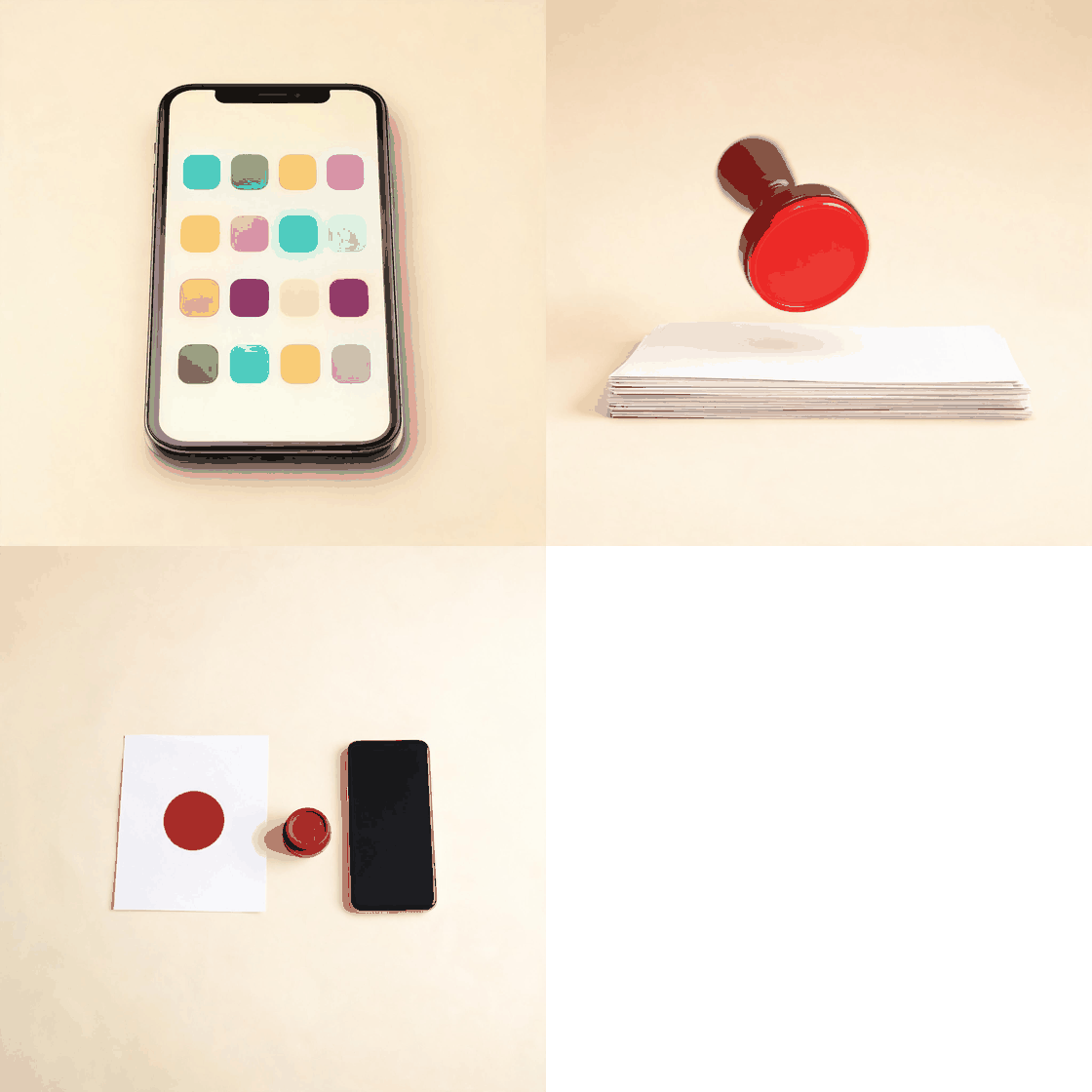
Half your life runs through mini-programs inside WeChat and Alipay: book a hospital slot, pay the electricity bill, top up the metro, unlock a shared bike, order your coffee ahead, even report something lost. It is often faster and smoother than the same task back home.
Then you hit the other half. When something needs a physical counter, a visa, your residence registration, the red company chop on a document, the system turns rigid: the exact paper, in the exact order, no improvising and no let me speak to your manager. App-fast and counter-strict live right next to each other, and knowing which world you are standing in saves a lot of pain. If you are wrangling the counter side, our visa guide walks the steps.
You start monitoring things you never thought about at home
A couple of small daily habits appear that you never had back home. The tap water meets the national standard at the treatment plant, but almost nobody drinks it straight, the weak link is old building pipes and rooftop tanks, so you boil it or run it through a cheap filter and move on. You also keep a weather app that happens to show air quality, mostly out of habit.
Neither is the horror story the internet sells. As of August 2026, Shanghai's 2025 average PM2.5 was about 26.3, summers are genuinely clean, and the few hazy days cluster in winter. Both just become background routines, like glancing at the forecast. The full answers live in our tap-water and air-quality guides.

Your whole life runs through group chats
Community here is digital first, and warmer than that sounds. Your compound has a WeChat group, your building has one, your kid's class has one, your floor has one, your regular noodle place has one. You end up in twenty of them, and that is how you find a same-day plumber, borrow a drill, learn the water is being shut off tomorrow, or give away a sofa in an hour.
A neighbour you have never actually met will help you carry a fridge up the stairs because you are both in the compound group. Coming from a place where you might not know the names of the people next door, it is a genuine, and genuinely lovely, adjustment.
The small ones that add up
- Water comes hot. Restaurants pour warm or hot water by default, iced water is the odd request, and half the city carries a tea thermos.
- You do not tip. Not in restaurants, taxis or salons, and trying to can cause polite confusion. We wrote the whole no-tipping rule down.
- Small is not small. A neighbourhood mall is enormous, and one metro line can move more people in a day than some countries' entire networks.
Good to know
- Good for: anyone moving to Shanghai from Europe or the US, or visiting long enough to live like a local rather than a tourist.
- Set up first: mobile payment, WeChat Pay or Alipay linked to a card, before almost anything else. It quietly unlocks this entire list.
- Always carry: a power bank. A dead phone here is a dead wallet, dead keys and dead metro card at once.
- Week-one wins: install a delivery app and a translation app on day one, and you are most of the way to functional.
Is it hard to adjust to daily life in Shanghai coming from the West?
The practical side is usually easier than people expect, not harder, payments, delivery and getting around are smoother than back home. The real adjustment is mental: learning to trust that the app really will handle it, and getting used to a city that never makes you plan ahead.
Do you need to speak Chinese to handle everyday life?
For daily logistics, no. Payment, delivery and transport apps carry you a surprisingly long way, and a translation app fills the gaps. Chinese mainly changes your social life and the counter-bureaucracy days, so it is worth starting, but you will not be stranded without it.
What is the first thing to set up when you arrive?
Mobile payment. Link a card to WeChat Pay or Alipay and most of the differences on this list start working in your favour. Very little else runs smoothly until that one does.
Is Shanghai safe to walk around at night?
By the standards most newcomers are used to, yes, notably so, including alone and late. It is a heavily monitored city, which is part of the reason, whatever you make of that trade the day-to-day feeling is one of unusual ease.
The differences stop being differences the day you catch yourself doing them without thinking.