No, not straight from the tap, but the fix is easy: boil it or run it through a cheap filter.
Shanghai's tap water leaves the treatment plant meeting China's national drinking-water standard, but almost nobody here drinks it straight from the tap, and neither should you. Boil it or filter it first. The water itself is treated to a high standard; the weak link is everything between the plant and your glass, the old building pipes and rooftop storage tanks. Boil it, run it through a cheap filter, or order bottled, and you are completely fine.
Good to know
- The one-line answer do not drink it straight from the tap; boil it or filter it, then it is safe.
- Why the treated water is fine leaving the plant, but your building's ageing pipes and rooftop tank can add taste and sediment on the way up.
- What it costs from the price of an electric kettle to about ¥30 a bottle for delivered water, so clean drinking water is cheap either way.
Can you drink Shanghai tap water straight from the tap?
Not the way you might at home. The city's tap water is treated to meet China's GB 5749 drinking-water standard, so at the source it is genuinely clean. Locals still do not drink it unboiled, and that habit is the tell: almost every Shanghai home has an electric kettle or a hot-water dispenser running all day. Your stomach is also not used to the local water, so even where a resident would be fine, a new arrival can get an upset day out of it. Treat straight-from-the-tap as a no, and you skip the whole question.
So what is actually wrong with it?
Usually nothing at the reservoir, and quite a lot in the last hundred metres. Shanghai has spent years upgrading its water plants, and the treated supply is monitored closely. What it then travels through is often decades-old building plumbing and, in many older blocks, a rooftop storage tank that is not always cleaned on schedule. That is where a metallic taste, the occasional bit of sediment, and a faint chlorine smell come from. It is a building problem, not a city problem, which is exactly why a simple filter or a kettle solves it.

Boil, filter or bottled: what people here actually do
Three habits cover almost everyone, and most households mix them.
- Boil it. The default. An electric kettle kills anything microbial and is what generations of Shanghai homes rely on. Boiled and cooled water, kept in a flask or the fridge, is your everyday drinking water.
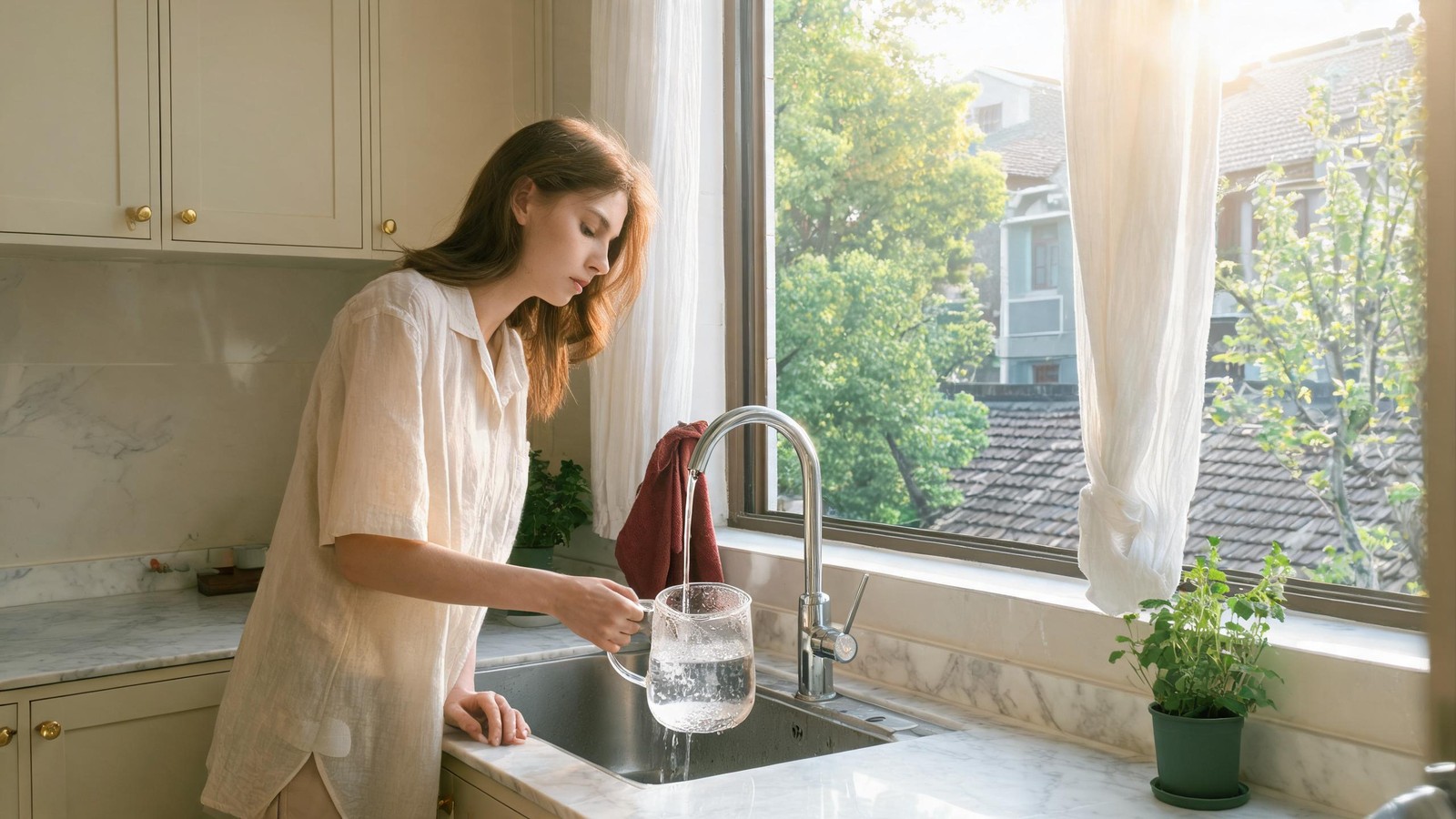
- Filter it. A carbon pitcher takes out the taste and most sediment for daily use; an under-sink reverse-osmosis unit goes further and gives you water you can drink cold from a dedicated tap. Filtering plus boiling is belt-and-braces, and plenty of families do both.
- Order bottled. The blue 18.9-litre 桶装水 barrels on a dispenser are a Shanghai fixture. You order refills by app or a WeChat group, they arrive the same day, and you never think about it again.
Is it safe for brushing teeth, ice, coffee and cooking?
Mostly yes, with common sense. Brushing your teeth with tap water is fine; just do not gulp it. Cooking is fine too, because anything you boil, from rice to soup to pasta, is boiled water by the time you eat it. For coffee and tea you are boiling or near-boiling the water anyway, so a filter is about taste, not safety. The one to watch is cold, unboiled tap water in things like homemade ice or a cold-brew: use filtered or boiled-then-cooled water for those.
What about baby formula?
Be stricter here. For an infant, use water that has been brought to a rolling boil and cooled, or bottled water, and follow the formula tin's own instructions on temperature. A reverse-osmosis filter or boiled-and-cooled bottled water are the usual choices for Shanghai parents. If you are setting up a nursery, our guide to having a baby in Shanghai covers the rest of the kit.

As Laozi wrote, 上善若水, the highest good is like water, which nourishes everything without contending. Give it a moment on the boil and it asks nothing else, quietly doing what water has always done.
Can you drink Shanghai tap water if you boil it first?
Yes. Bringing it to a rolling boil kills bacteria, viruses and parasites, which is exactly why boiling is the standard Shanghai habit. Let it cool, keep it in a flask or the fridge, and it is your everyday drinking water. Boiling does not remove a metallic taste from old pipes, though, so many people boil and keep a filter for flavour.
Do you need an expensive water filter in Shanghai?
No. For most homes a kettle plus a ¥150 to ¥400 carbon pitcher handles both safety and taste. An under-sink reverse-osmosis system is a nice upgrade if you want cold drinking water on tap or have a baby, but it is a preference, not a requirement. Spend the money on convenience, not on fear.
Is bottled water delivery worth it in Shanghai?
For many people, yes. A dispenser is ¥150 to ¥400 and refill barrels are roughly ¥20 to ¥45 each, ordered by app or a building WeChat group and delivered the same day. It is the least-effort option and popular with families and busy households; the trade-off is the plastic and the wait for a refill if you run dry.
Will Shanghai tap water scale up my kettle?
Somewhat. Shanghai water is moderately hard, so you will see limescale build up in a kettle or on a shower head over time. It is harmless to drink but worth descaling your kettle every month or two with a little white vinegar or citric acid, and a filter reduces how fast it collects.
Filtering your water is one of a handful of small daily shifts you pick up here. Our guide to what actually feels different about living in Shanghai vs the West covers the rest.