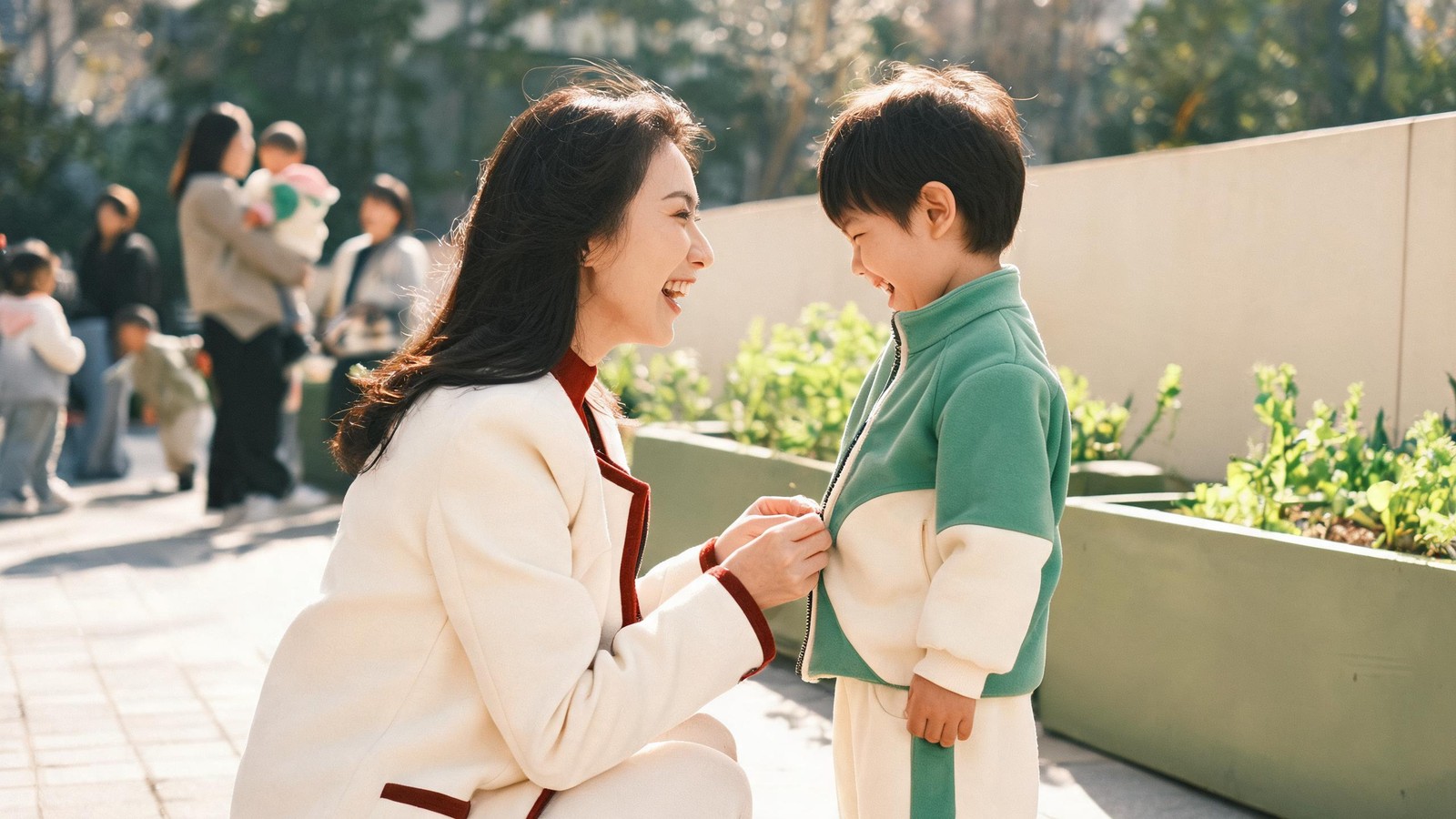
Foreign families in Shanghai have three pre-school routes: public, private bilingual, and foreign-passport international.
Foreign families in Shanghai have three kindergarten routes: public kindergartens, which are inexpensive and taught in Chinese; private bilingual kindergartens in the middle; and foreign-passport international kindergartens, where annual fees commonly run into the low hundreds of thousands of RMB. Entry is age-banded, not test-based. For the 2026 intake the city's online registration window ran from 22 to 29 April, with document verification from 7 to 29 May, and children born between 1 September 2022 and 31 August 2023 were the eligible cohort.
What are my kindergarten options as a foreign family?
Shanghai kindergarten covers roughly ages three to six, in three year groups: 小班 (small class, about age three), 中班 (middle class) and 大班 (big class, the pre-primary year). The choice is really about language and money.
- Public kindergartens (公办幼儿园). Run by the district, taught in Mandarin, and heavily subsidised, with monthly fees that are a small fraction of the private options. Foreign children can and do attend, subject to the district's admission order, which puts local household registration and property first (the same order that lets expat kids into public primary school later). Immersion is total, which is wonderful at three and hard at five.
- Private and bilingual kindergartens (民办幼儿园). The broad middle. Mixed Chinese and English teaching, a range of curricula, fees that vary enormously by district and reputation.
- Foreign-passport international kindergartens. The early-years sections of the international schools, open only to children holding non-Chinese passports. English-medium, international curricula, and priced accordingly. Recent published fee analyses put pre-kindergarten and kindergarten years at the established foreign-passport schools in a band of roughly 200,000 to 280,000 RMB a year before extras.
If your child is already school-age, or you are planning ahead, our international school admissions guide covers the primary and secondary end of the same decision.
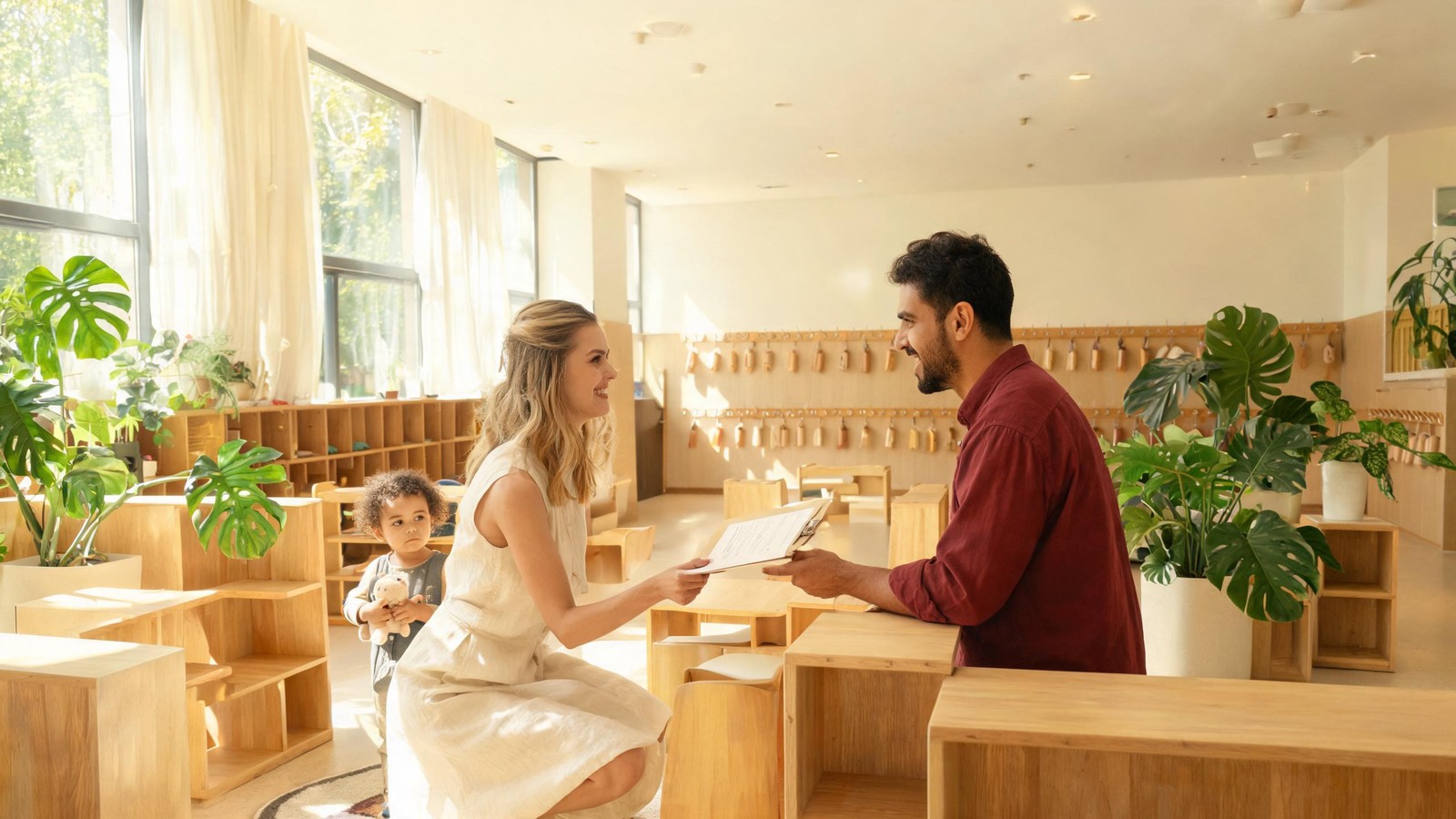
What are the admission criteria for an international pre-school in Shanghai?
Passport category first, everything else second. A foreign-passport school cannot admit a child who does not fall into one of its permitted categories, and this is not something an interview, a donation or an appeal can move. Check which category you are in before you fall in love with a campus.
The categories these schools admit under are:
- A child on a foreign passport accompanying a parent who works in Shanghai on a valid work and residence permit.
- A child born overseas to Chinese-national parents now living and working in Shanghai, evidenced by the overseas birth certificate.
- A child of Hong Kong, Macau or Taiwan residents living and working in Shanghai.
- A returning Chinese family where the whole family holds foreign permanent residency, usually with a requirement that the child studied abroad for the previous two years or more.
The document that trips up the most families is the visa. The child needs a foreign passport plus a valid Chinese visa or residence permit with entry stamps, not a Chinese travel document (旅行证). If your child holds the travel document, sort that out long before you apply.
Beyond eligibility, an international pre-school will ask for the child's passport and visa page, both parents' passports and residence permits, proof of your Shanghai address, an immunisation record, and a report or reference from any previous nursery. Then comes an assessment, which at this age is a play session or a family meeting rather than a test. English is not a prerequisite in the early years: pre-school and pre-kindergarten classes routinely take children with no English at all and support them into it. From about Year 1 upward that changes, and our international school admissions guide covers where the language bar starts to bite.
On timing, international pre-schools open applications roughly a year ahead, usually from September or October for the following August intake, and allocate in application order rather than by deadline. Popular year groups run waiting lists, so an application in October beats a better application in March.
How old does my child have to be?
Eligibility is set by a birthdate cut-off, not by readiness. For the 2026 intake the city defined the cohort as children born between 1 September 2022 and 31 August 2023. In plain terms: your child needs to have turned three by 31 August of the year they start. A child born in early September misses by days and waits a full year, which is worth knowing before you plan a move around it.
When and where do I register?
The city runs one online registration system for the whole municipality, and the window is short. For 2026 it opened at midday on 22 April and closed on 29 April, verification of documents ran from 7 to 29 May, and districts issued admission letters by 1 July. Expect a comparable window each spring and set a calendar reminder for early April.
- Register online. Go to the 一网通办 portal (zwdt.sh.gov.cn) and find the kindergarten admission section on the homepage, or open the 随申办 app and look for the same service under popular services. Our Suishenban guide walks through installing it and verifying your passport, which you want done before the window opens, not during it.
- Choose your route. The system asks which kind of kindergarten you are applying to and routes you to the district process.
- Verify in person. In May you take the original documents to the kindergarten or district verification point on the date you are given.
- Wait for the letter. Districts confirm places by the start of July, in time for a September start.
International kindergartens run their own admissions in parallel and on their own calendar, usually accepting applications from the year before entry and allocating places in application order. They are not bound by the municipal window, so apply directly and early.
What documents do foreign families need?
For the municipal system, a child on a foreign passport registers with the passport, or with the Foreign Permanent Resident ID Card if the family holds one. Beyond the child's identity document, districts generally want to see:
- The parents' passports and valid residence permits
- Proof of your Shanghai address, meaning the tenancy registration or property ownership document
- Your accommodation registration with the local police, which we cover in the residence registration guide
- The child's vaccination record, transferred to the Shanghai system if the vaccinations were given abroad
- A health check for the child, done at a designated clinic shortly before entry
Requirements are set district by district, so confirm the list with your target kindergarten rather than assuming. The vaccination record is the one that catches families who arrived recently: converting an overseas record takes an appointment and some patience.

What does it actually cost?
The spread is the widest of any decision you will make about your child here. Public kindergarten runs on modest monthly tuition plus a meal fee, private bilingual sits in a broad middle band that depends heavily on district and demand, and foreign-passport international kindergartens publish annual tuition in the low-to-mid six figures. Here is the shape of it:
| Route | Typical yearly fee | Teaching |
|---|---|---|
| Public 公办 | roughly ¥5,000 to ¥15,000 all-in about USD 750 to 2,250 | Mandarin immersion |
| Private bilingual 民办 | roughly ¥80,000 to ¥200,000 about USD 12,000 to 30,000 | Chinese and English |
| International (foreign-passport) | roughly ¥200,000 to ¥280,000 about USD 30,000 to 42,000 | English-medium |
Bands are per year before extras; public fees are set by district tier and are the lowest, international the highest. USD converted at about 6.7 RMB to the dollar, September 2026, so treat the dollars as a ballpark.
Our breakdown of what a Shanghai international school really costs follows the same fees up through the school years.
At the international end, tuition is not the whole bill. Budget separately for a non-refundable application or registration fee, a one-off capital levy at some schools, a school bus if you are not walking distance, lunch, uniform and after-school activities. Ask any school for the full fee schedule in writing, including which items are annual and which are one-off, before you accept a place.
What about children under three?
Under-three care in Shanghai is a separate system from kindergarten. The city licenses 托育 childcare services, and a growing number of kindergartens run a 托班 nursery class for two-year-olds, which is often the smoothest path into that kindergarten's 小班 the following year. Availability is genuinely tight and varies by district. Ask kindergartens near you directly whether they operate a 托班 and how places are allocated, since these do not always run through the municipal registration window.
Good to know
- Public and bilingual entry is age-banded: turn three by 31 August of the year you start.
- The municipal registration window is one week in late April. Verify your passport in 随申办 before it opens.
- International pre-schools run their own calendar, about a year ahead, first come first served.
- Eligibility for a foreign-passport school is fixed by passport category and cannot be appealed.
- 公办按年龄段录取,四月网上报名;国际园自己招生,提前一年申请,先到先得。
Which route is for you
If you plan to stay for years and want your child fluent in Mandarin, choose a public or bilingual kindergarten and start Chinese at home early. If you expect to move countries within a couple of years and want curriculum continuity, choose a foreign-passport international kindergarten. If you want a middle path on both budget and language, choose a private bilingual kindergarten and check how much English contact time is real teaching rather than a weekly session. If your child is under three, look for a 托班 attached to the kindergarten you eventually want.
Confucius opens the Analects with 学而时习之,不亦说乎, to learn something and put it to use in season, is that not a pleasure; a child begins in season too, and catching the right window is its own quiet joy.
Can foreign children attend a public kindergarten in Shanghai?
Yes. Foreign children register through the same municipal system using a passport or Foreign Permanent Resident ID Card. Places are allocated by district rules, and families with local household registration or property in the catchment are served first, so treat a public place as possible rather than certain.
Does my child need to speak Chinese?
Not to enrol. In a public kindergarten they will be in full immersion from day one, which most three-year-olds handle well and most five-year-olds find harder. Bilingual and international kindergartens teach in English alongside Chinese.
What if we arrive in Shanghai after the registration window closes?
Contact the district education bureau and the kindergartens directly. Mid-year and late entry is handled case by case depending on vacancies. International kindergartens have their own rolling admissions and are usually the more realistic option on short notice.
Is there an interview or an entrance test?
Public and private kindergartens allocate by age band and district rules rather than by testing. International kindergartens typically run a play-based assessment or a family meeting, which is about fit and language support rather than pass or fail.
Does my child need to speak English to start an international pre-school?
No. Pre-school and pre-kindergarten classes routinely admit children with no English and support them into it. Language requirements only start to matter further up the school.
How far ahead should I apply to an international kindergarten?
A year ahead is normal for the sought-after ones, and places are commonly offered in application order. If you are moving in August, start emailing in the previous autumn.