
Two public holidays are left in 2026: Mid-Autumn, 25 to 27 September, and National Day, 1 to 7 October.
Two public holidays are left in 2026: Mid-Autumn Festival, Friday 25 to Sunday 27 September, and National Day, Thursday 1 to Wednesday 7 October. The catch is 调休, the make-up workday. Sunday 20 September and Saturday 10 October are both normal working days, so the seven-day Golden Week is paid for with two weekends you do not get.
Nobody warns you about this in your first year. You plan a weekend away, turn up to an empty office chat on the Monday, and discover everyone else worked the Sunday. Here is the rest of the year, in the order it will affect you.
Good to know
- What is left in 2026: Mid-Autumn, Friday 25 to Sunday 27 September, and National Day Golden Week, Thursday 1 to Wednesday 7 October.
- The catch: Sunday 20 September and Saturday 10 October are make-up workdays (调休), so you pay for Golden Week with two lost weekends.
- Make the most of it: book trains and flights the moment the dates are official, and expect every sight in China to be at its busiest during Golden Week.
The full 2026 holiday calendar
These are straight from the State Council notice issued on 4 November 2025, the document every employer in the country works from.
Only two are still ahead as autumn starts: Mid-Autumn and National Day. They do not join up this year, so you work Monday 28 to Wednesday 30 September in between. The two breaks sit close enough to feel like one long holiday and are not one, which is exactly how people end up booking a flight home on a day they are expected at a desk.

What 调休 actually means for you
China builds long holidays by borrowing adjacent weekend days rather than adding days. Sunday 20 September and Saturday 10 October are reclassified as ordinary working days, so schools run, offices open, and your Chinese colleagues will be at their desks. If your contract follows the national calendar, and most local contracts do, you work those days too.
Two practical consequences. First, your rest is uneven: a six-day working stretch before Mid-Autumn, then three days off, then three days on, then seven off. Second, an international employer that ignores 调休 and keeps a plain Monday-to-Friday week is doing you a favour and will not necessarily say so. Ask HR which calendar your contract follows before you book anything, because the answer differs company by company and nobody volunteers it.
What closes in Shanghai during Golden Week
Less than you would fear, and the pattern is consistent. Restaurants, malls, cinemas and bars stay open and get busier, because a public holiday is when domestic tourism arrives. What pauses is officialdom: bank branches, government service halls and the exit-entry administration follow the statutory days, so a residence permit renewal or a bank appointment cannot be filed on 1 to 7 October. Banking apps, ATMs and Suishenban keep working for anything that can be done online.
Hospital emergency departments never close. Outpatient and specialist clinics run reduced holiday hours, so if you need a scheduled appointment, take it before the break rather than assuming you can walk in on 3 October.
Should you travel or stay put?
Honestly: stay, unless you have a specific reason to go, and our stay home or escape guide weighs both sides in full. National Day is the single heaviest travel week in the country. Trains sell out within minutes of release, flight prices roughly double, and the water towns everyone recommends for a quiet weekend are shoulder to shoulder. If you do travel, tickets go on sale exactly 15 days before departure on 12306, which puts the first Golden Week trains on sale around 16 September, and you want to be in the app the minute they drop. Our 12306 guide covers the passport-holder quirks that cost people seats, and if you would rather fly, the domestic flight guide has the airport and gate catches.
The counter-argument for staying is genuinely good. Shanghai partly empties out as residents leave, restaurant tables that normally need booking a week ahead open up, and the city feels unusually calm in the mornings. Museums and Disneyland run the other way and get packed, so if you are staying, book museum slots and Disneyland tickets in advance or accept the queue.
Golden Week is also when family and friends fly in. If yours are coming from an eligible country and will carry on to a third country afterwards, they may skip the visa altogether on the 240-hour visa-free transit, which now covers Shanghai plus Jiangsu and Zhejiang. If they are staying with you rather than a hotel, remember the 24-hour police registration.

The stories behind the big ones
Every festival here is an old story wearing modern clothes, and the stories are half the fun. Four are worth knowing, because they quietly explain why a whole country does what it does.
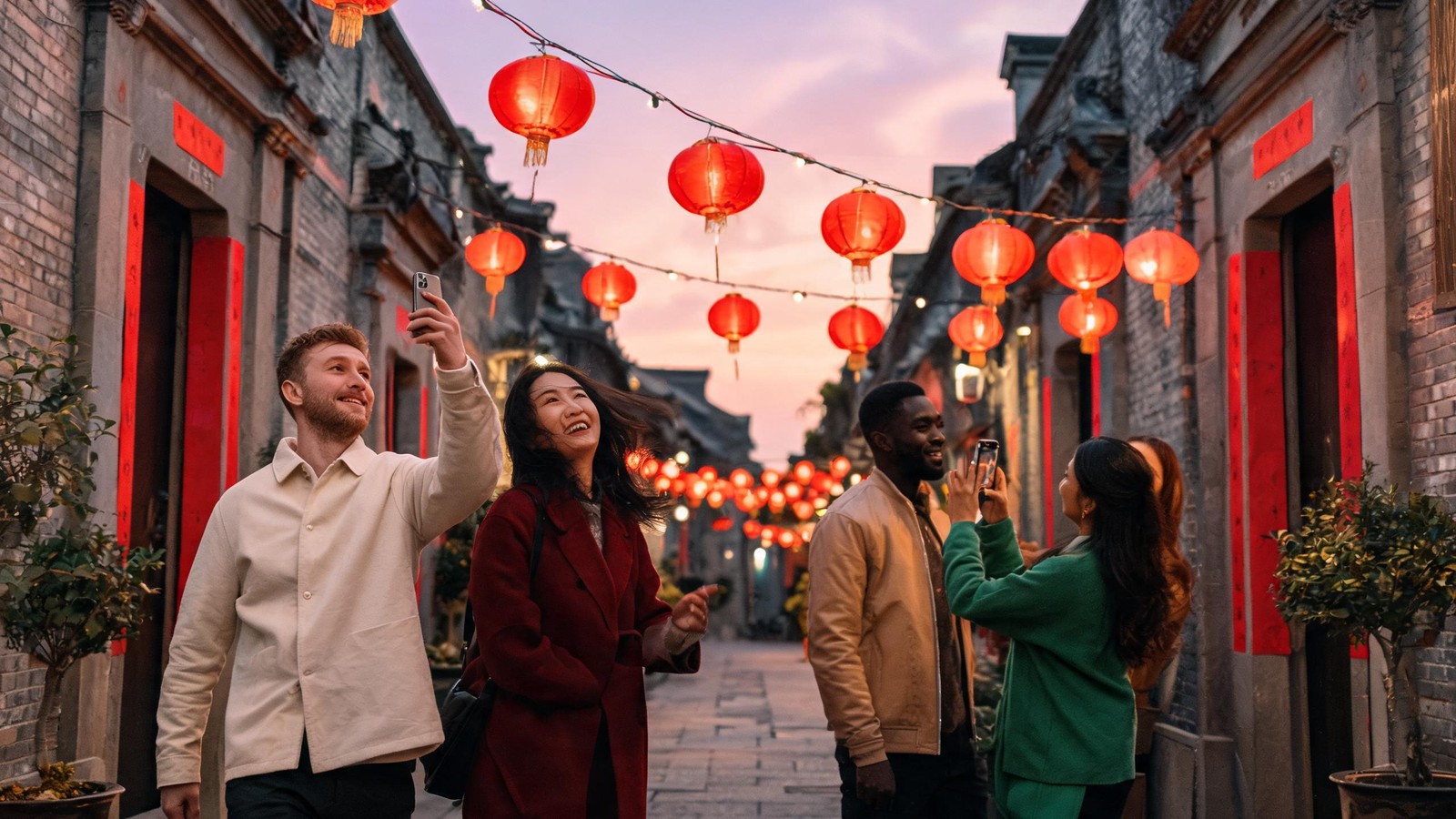
Spring Festival 春节: the monster who hated red
Legend says a beast called Nian crept out of the mountains every New Year’s Eve to eat the crops, the livestock, and the occasional slow villager. People worked out that the creature was terrified of three things: the colour red, bright light, and loud noise. So they pasted red couplets on their doors, kept the lanterns burning all night, and set off firecrackers, and Nian never came back. That is still more or less the plan: red on everything, a reunion dinner (年夜饭) that outranks Christmas, dumplings at midnight, red envelopes of lucky money (红包), and fireworks to frighten a monster nobody has seen in some time. In 2026 the Lunar New Year fell on 17 February, the Year of the Horse.
Qingming 清明: the loyal man under the willow
The tender one. Jie Zitui was a servant so devoted that, when his exiled lord was starving, he cut flesh from his own thigh to make him soup. Years later the lord became a duke, forgot him, then tried to make it right. Jie had gone to live quietly on a mountain with his mother and would not come down, so the duke, badly advised, set the forest alight to smoke him out. Jie chose to burn rather than break his word. The stricken duke banned fire on that day, so people ate only cold food, and that Cold Food Festival folded into today’s Qingming. Now families sweep their ancestors’ graves, burn paper offerings, and then, because grief needs an exit, go walking in the new spring green (踏青).

Dragon Boat 端午: the poet in the river
Qu Yuan was a poet and an honest minister who loved his kingdom and was exiled for saying so. When his state fell, he waded into the Miluo River in despair. The villagers who loved him raced their boats out to find him and, failing, threw parcels of rice into the water so the fish would eat those and leave him be. Two thousand years later we still race long dragon boats to a pounding drum and eat those rice parcels, now called zongzi (粽子) and wrapped in bamboo leaves. A sprig of mugwort goes on the door to keep the bad luck out.
Mid-Autumn 中秋: the woman on the moon
The archer Houyi shot down nine of the ten suns that were scorching the earth, and was given an elixir of immortality as thanks. His wife Chang’e swallowed it, to keep it from a thief the story says, and drifted up to the moon, one sky away from the man she loved ever after. So on the brightest full moon of the year, people sit outside with family, eat dense sweet mooncakes, and look up. If a colleague or a landlord hands you a box of mooncakes, that is a real gesture: thank them properly, and it is normal to give a box back. The lotus-paste-and-salted-egg-yolk ones divide opinion violently, which is part of the fun. And because Mid-Autumn lands on a Friday this year, it is the trip to take: our day trips guide is built for exactly this weekend.
Which one is for you 哪个适合你
If you want to travel far, use Mid-Autumn, not National Day, and book on the day tickets release. If you want to see China at its most festive and do not mind crowds, National Day is the whole point, so pick one city and stay in it. If you have a residence permit or bank errand pending, do it before 25 September, because the queues after each break are worse than the break itself. And if you simply want a rest, stay in Shanghai for Golden Week: the city is quieter than you will ever see it in October.
Confucius said 温故而知新, revisit the old and you will find something new in it. Each of these festivals is an old story told again, and the quiet joy is watching a legend you half remember light up a modern week off.
Do expats working in Shanghai get Chinese public holidays off?
If your employment contract follows the national calendar, yes, and you also work the make-up days. Some international employers keep a standard weekly schedule and ignore 调休 instead. Ask HR which applies to you, since it changes your September and October by several days.
Are banks and government offices open during Golden Week?
No. Bank branches, government service halls and the exit-entry administration close for the statutory holiday days, so residence permit and visa business cannot be filed between 1 and 7 October. Apps, ATMs and online services continue as normal, and hospital emergency departments stay open throughout.
When do train tickets go on sale for Chinese holidays?
Fifteen days before departure on 12306, released at set times through the day. For travel on 1 October that means booking around 16 September, and popular routes can sell out in the first few minutes.