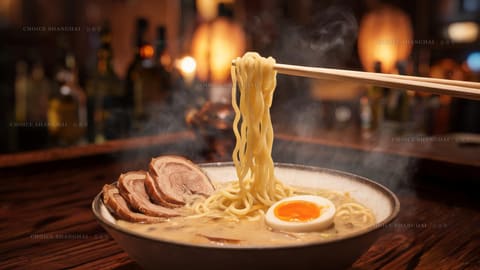
When Shanghai turns cold the food turns hot, rich and shared. Here is what the city actually eats through winter, from hotpot to street chestnuts, with rough prices.
When Shanghai turns cold, roughly from November to February, the food turns hot, rich and shared. Hotpot moves to the centre of the table, the last hairy crab gives way to lamb, clay-pot rice and salt-pork soup fill the local restaurants, and the mornings run on pan-fried buns and hot soy milk. Here is what the city actually eats through the cold months, and roughly what each thing costs.
Good to know
- Good for anyone who wants to eat like a local through a Shanghai winter instead of hiding indoors with delivery.
- What you'll pay from a few yuan for street chestnuts to ¥80 to ¥200 a head (about USD 12 to 30) for a proper hotpot night.
- Make the most of it go where the steam is: the busiest, foggiest-windowed places are busy for a reason.
Hotpot is the whole winter
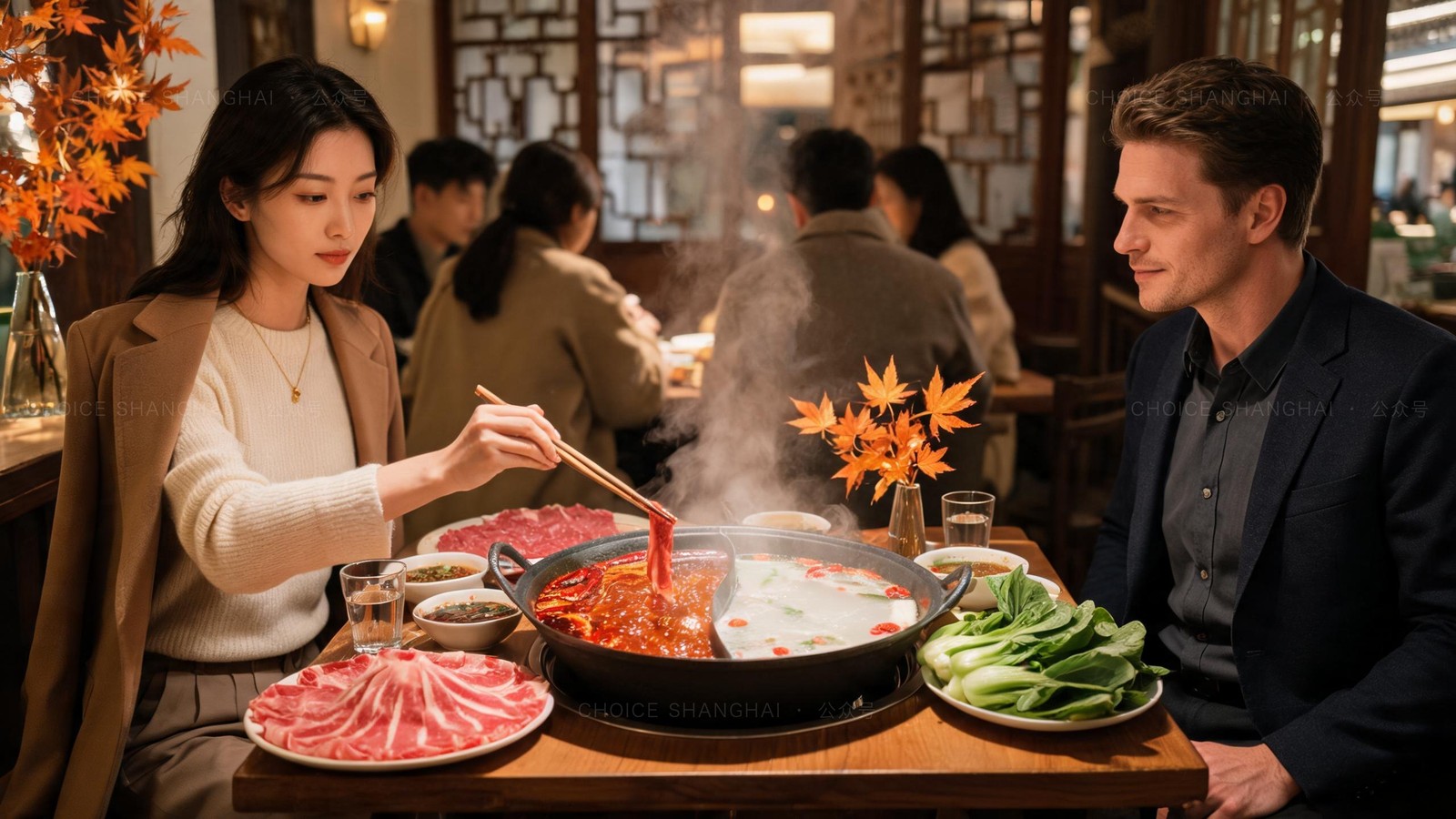
Hotpot is the centre of a Shanghai winter, a pot of simmering broth in the middle of the table that you cook your own thin-sliced meat and vegetables in, for as long as the night lasts. The common broths are the numbing-spicy Sichuan 麻辣, the clear 清汤, the split 鸳鸯 pot that gives you both, the collagen-rich 猪肚鸡 chicken-and-pork-tripe, and the deep-winter favourite 羊蝎子 lamb spine. Reckon on ¥80 to ¥200 a head (about USD 12 to 30) depending on how fancy the chain is and how much meat you order. Our full guide to eating hotpot without speaking Chinese walks through ordering, the sauce bar and the etiquette.
The last hairy crab, then lamb takes over
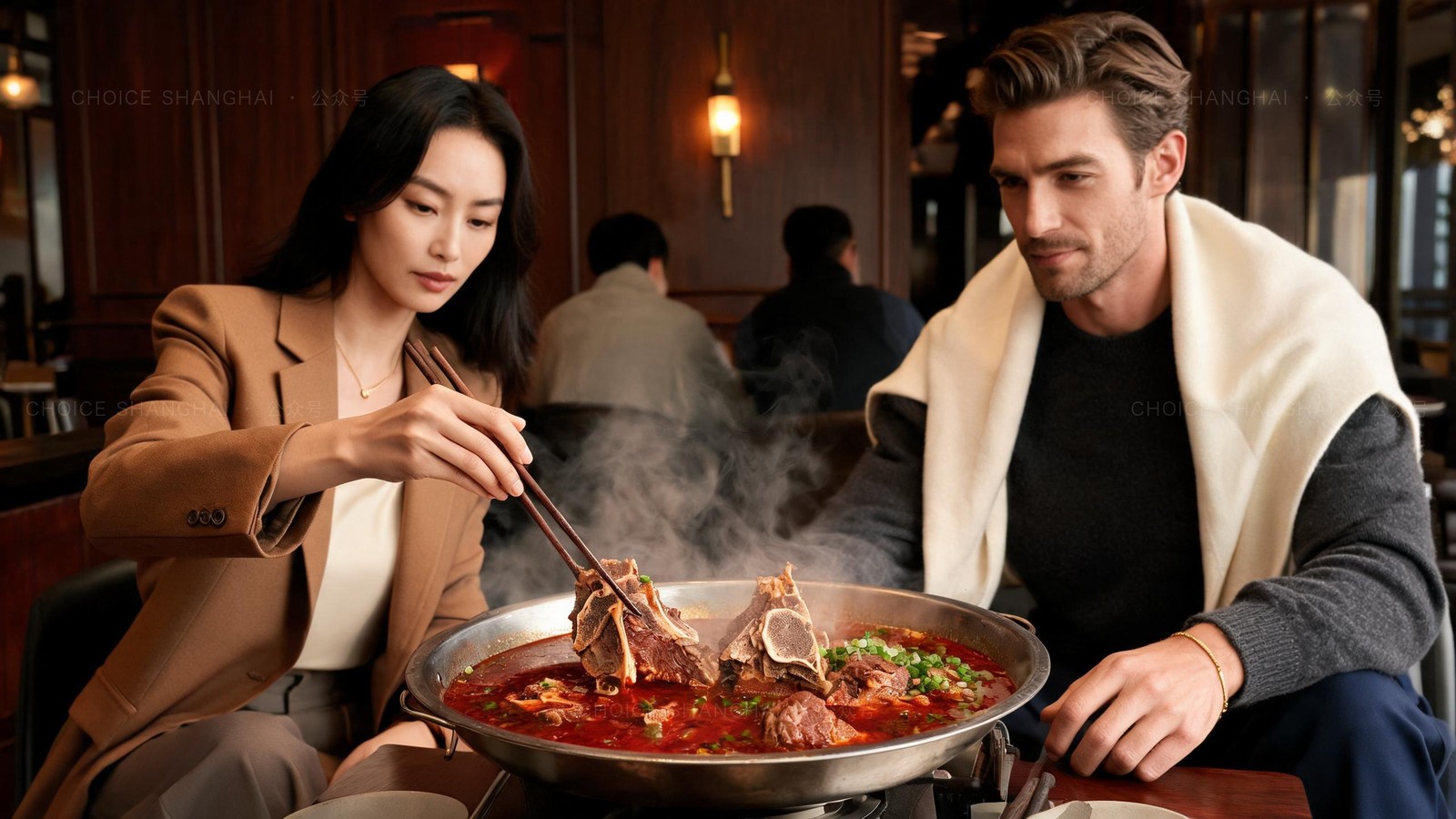
Hairy crab bridges autumn into winter, then lamb carries the rest of it. The crab peaks from late September through November, when the roe is at its richest, and our hairy crab guide covers how to buy, steam and eat it. As the crab fades, lamb (羊肉) takes the table: 涮羊肉 thin lamb swirled in clear broth, the Beijing-style copper-pot version, and 羊蝎子 lamb-spine hotpot gnawed off the bone. Chinese food thinking treats lamb as warming food for the cold months, which is exactly why it appears everywhere once the temperature drops. For the halal versions and the standout Northwestern lamb kitchens, see our halal food guide.
Clay pots, salt-pork soup and the slow-cooked stuff
Beyond the hotpot table, winter in Shanghai is clay pots and long-simmered soups. The signature local dish is 腌笃鲜, a milky soup of helps with pork, fresh pork and bamboo shoots that is pure Jiangnan winter comfort, found in almost any Shanghainese kitchen from November on. Alongside it: 煲仔饭 clay-pot rice with the crispy scorched layer at the bottom, 红烧肉 red-braised pork belly, and 砂锅 earthenware stews that arrive still bubbling. These are the dishes to cook at home too, and a cold-weather trip to the wet market for bamboo, pork and winter greens is half the pleasure. If you want the same warmth for next to nothing, the city's community canteens serve a hot plated meal for around ¥15 (about USD 2).
The street food that fights the cold
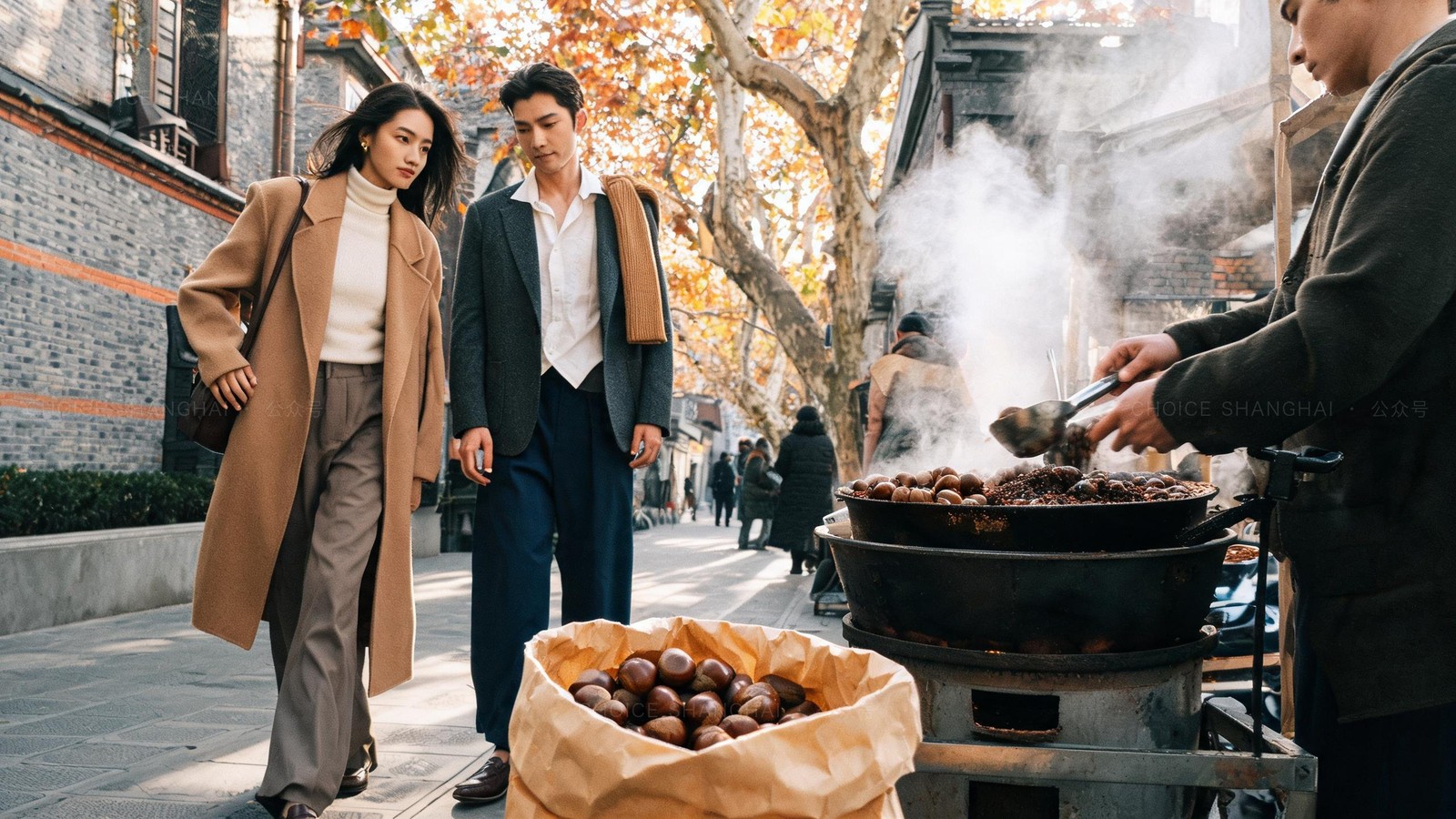
Shanghai's winter streets have their own menu, sold hot from carts and hole-in-the-wall windows. The sound of the season is 糖炒栗子, chestnuts roasted in a drum of black sugar-sand, sold warm by the bag for around ¥15 to ¥25 the half-kilo (about USD 2 to 4). Next to them: 烤红薯 roasted sweet potato pulled from an oil-drum oven for about ¥10 (USD 1.50), skewers of 糖葫芦 candied hawthorn glinting red, and steaming cups of 关东煮 simmered skewers from the convenience store. None of it costs much, and a hot chestnut bag in cold hands is one of the small, reliable joys of the season.
The breakfast that beats the cold
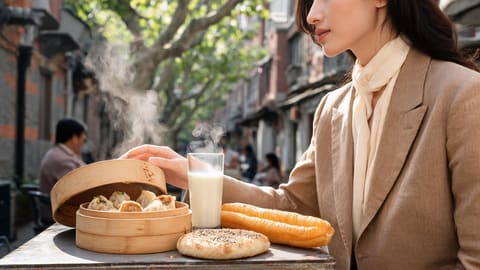
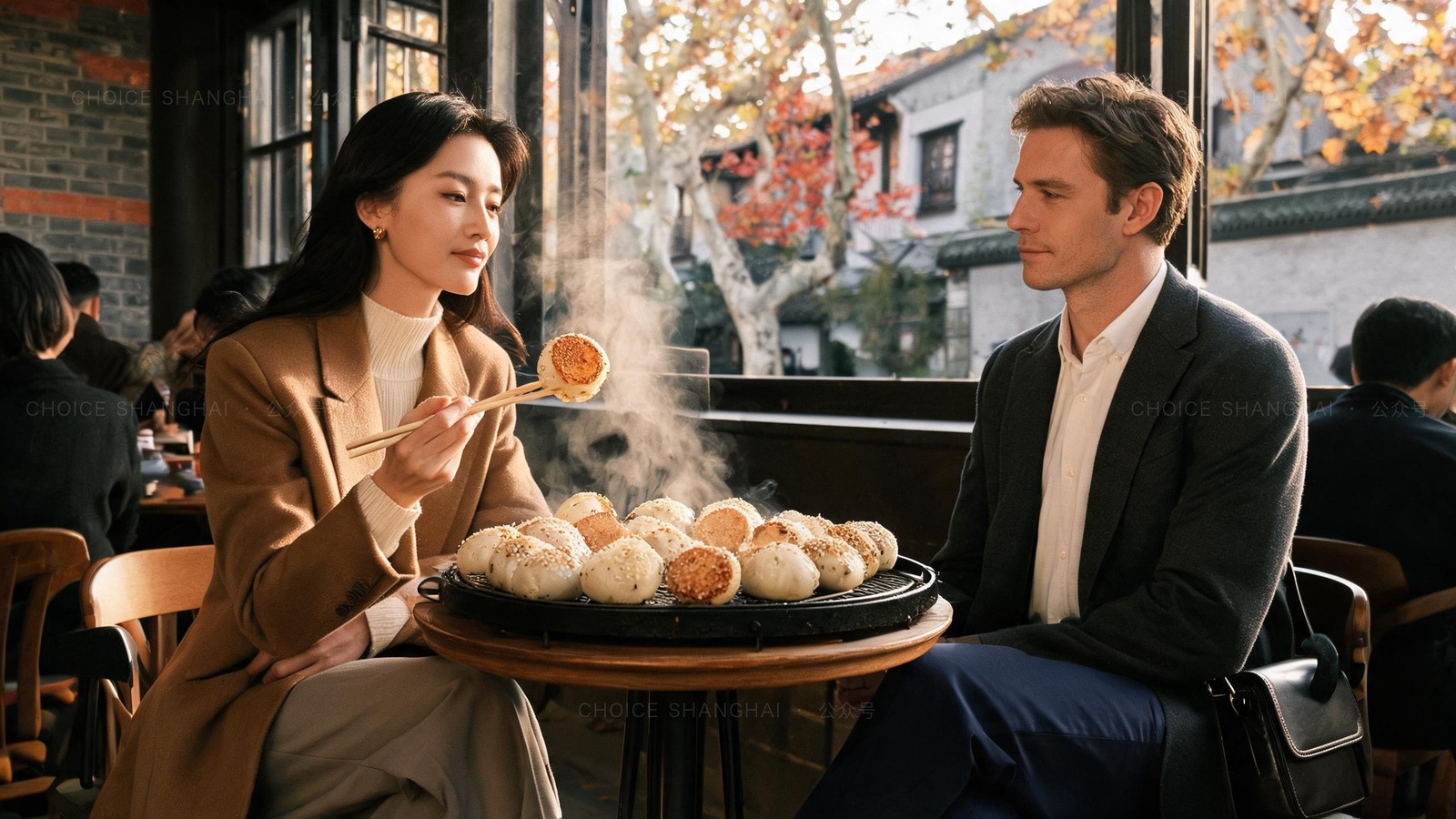
A Shanghai winter breakfast is built to warm you from the first bite. The icon is 生煎, pan-fried pork buns with a crisp sesame base and a scald of soup inside, go-to eaten standing while they are too hot, usually ¥8 to ¥14 (about USD 1 to 2) for four. Around them: a hot bowl of 豆浆 soy milk with a 油条 fried stick to dip, 粢饭团 sticky-rice rolls wrapped around a crisp centre, and bamboo steamers of 小笼 soup dumplings. Our guides to the breakfast locals actually eat and where to eat soup dumplings have the specific spots worth the queue.
| Dish | What it is | Rough cost |
|---|---|---|
| Hotpot 火锅 | DIY pot of broth, meat and veg | ¥80-200 (USD 12-30) |
| Lamb spine pot 羊蝎子 | Deep-winter lamb hotpot on the bone | ¥90-160 (USD 13-24) |
| Salt-pork soup 腌笃鲜 | Milky pork-and-bamboo winter soup | ¥40-70 (USD 6-10) |
| Roasted chestnuts 糖炒栗子 | Street-roasted by the half-kilo | ¥15-25 (USD 2-4) |
| Pan-fried buns 生煎 | Crisp-bottomed soup buns, four | ¥8-14 (USD 1-2) |
Converted at about 6.7 RMB to the US dollar, October 2026, so treat the dollars as a ballpark.
The old line from the Book of Han holds here: 民以食为天, the people regard food as heaven. Nowhere is it truer than a Shanghai winter, when the whole city organises its evenings around something hot to share.
When is hairy crab season in Shanghai?
Hairy crab peaks from late September through November, when the roe and paste are richest, and tapers off in December. Females mature first, around the ninth lunar month, with males go-to a month later. Our hairy crab guide covers how to buy and eat them without overpaying.
What is the most popular winter food in Shanghai?
Hotpot, by a distance. Through the cold months it is the default way the city eats out with friends, a shared pot of broth you cook at the table over a long evening. Lamb hotpot and 腌笃鲜 salt-pork-and-bamboo soup are the other two dishes you will see everywhere once the temperature drops.
How much does hotpot cost per person in Shanghai?
Expect ¥80 to ¥200 a head (about USD 12 to 30), depending on the chain and how much meat you order. Budget local spots and all-you-can-eat deals sit at the lower end, while premium brands with wagyu and prawn paste climb past ¥250 a head.
Where do you get roasted chestnuts in Shanghai?
From the street carts and bakery chains that appear once it turns cold, roasting 糖炒栗子 in a drum of black sugar-sand. A warm half-kilo bag runs about ¥15 to ¥25 (USD 2 to 4). Bakery chains and countless corner vendors sell them through the cold months; follow the sweet, smoky smell.
Words, maps and research by the Choice Shanghai team. Please credit us and tag our 公众号 if you share.