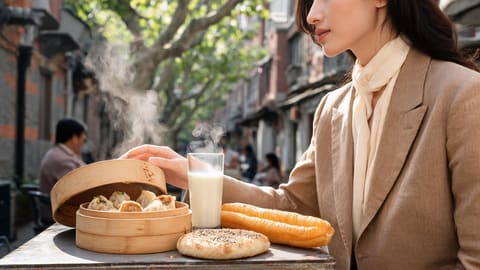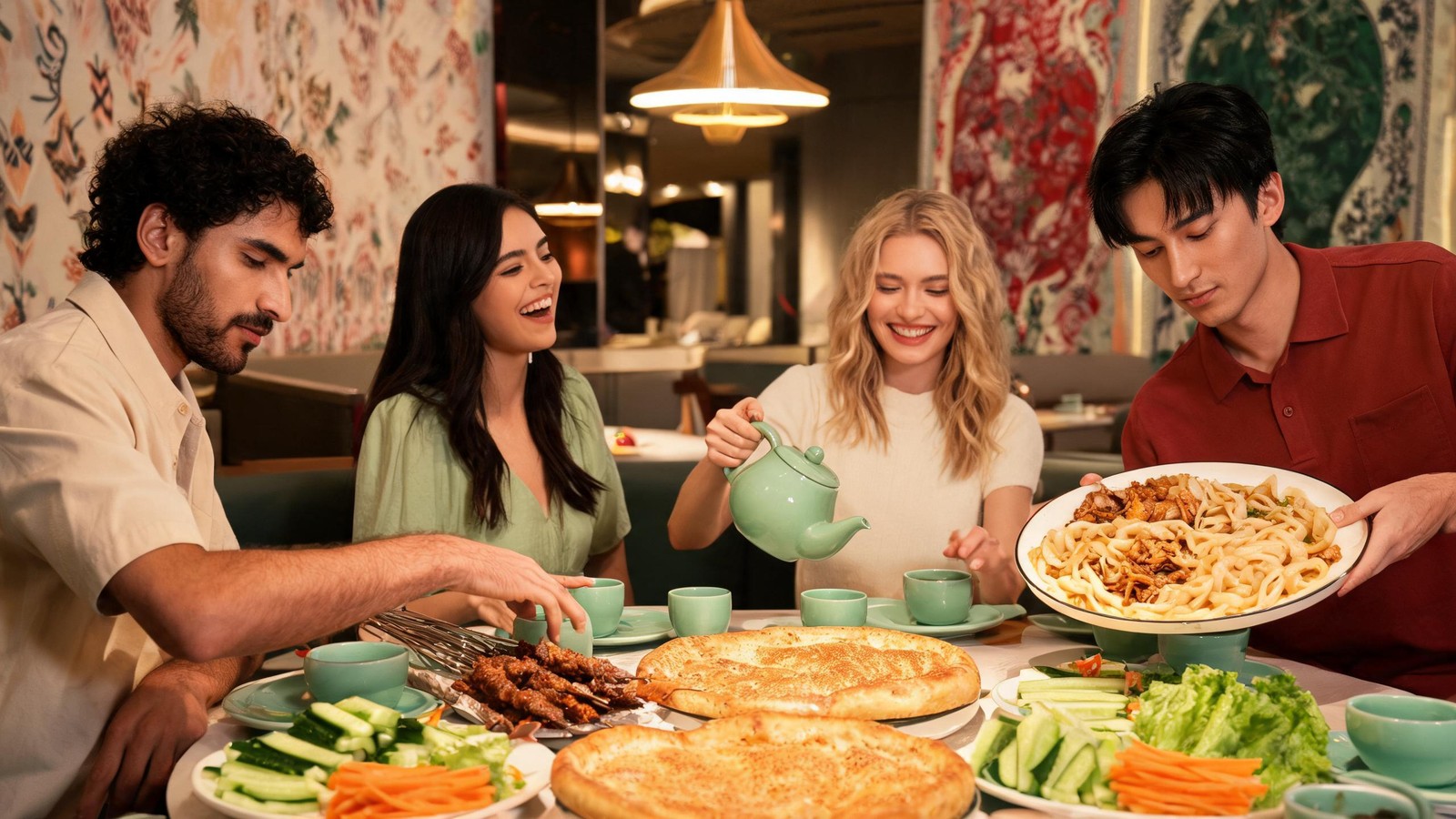
Halal food is easy to eat well in Shanghai once you know the marker: the green 清真 (qingzhen) sign, meaning a certified pork-free kitchen.
Halal food is easy to eat well in Shanghai once you know the marker to look for: the green 清真 (qingzhen) sign, which means the kitchen is certified pork-free and Muslim-run. Search 清真 on Dianping, Amap or Meituan and you will find hundreds of options, from century-old lamb hotpot houses to Xinjiang grill halls and Middle Eastern kitchens. Here is how to find them, what to order, and a few names to start with.
Shanghai is not a Muslim-majority city, so pork does turn up in a lot of ordinary Chinese cooking, which is exactly why knowing the system matters. The good news is that the halal scene here is deep and genuinely delicious, and it splits into a few clear traditions. Let me lay it out.
How do you find halal food in Shanghai?
The single reliable marker is the green 清真 sign on the shopfront, which signals certification by the China Islamic Association. Beyond spotting it in person:
- Search the apps. Type 清真 into Dianping, Amap or Baidu Maps and you will see certified places near you, often filterable as a cuisine type. For delivery, filter 清真 on Meituan or Ele.me; our food delivery guide covers ordering in English.
- Use a halal-finder app such as HalalTrip, HalaLive or Zabihah as a cross-check, especially for travellers.
- When in doubt, ask. "清真吗?" (qīngzhēn ma, "is this halal?") is a normal question and staff will answer plainly.
Shanghai also has several mosques, and the streets around them are the densest halal eating you will find.
What are the two main halal cuisines here?
Most halal food in Shanghai comes from one of two traditions, and knowing which you are in the mood for makes ordering easy.
- Hui (回族) Chinese Muslim food: eastern-Chinese cooking done pork-free. Think warming lamb hotpot, beef noodle soup, and pan-fried lamb. Comforting and familiar in shape, just built around lamb and beef.
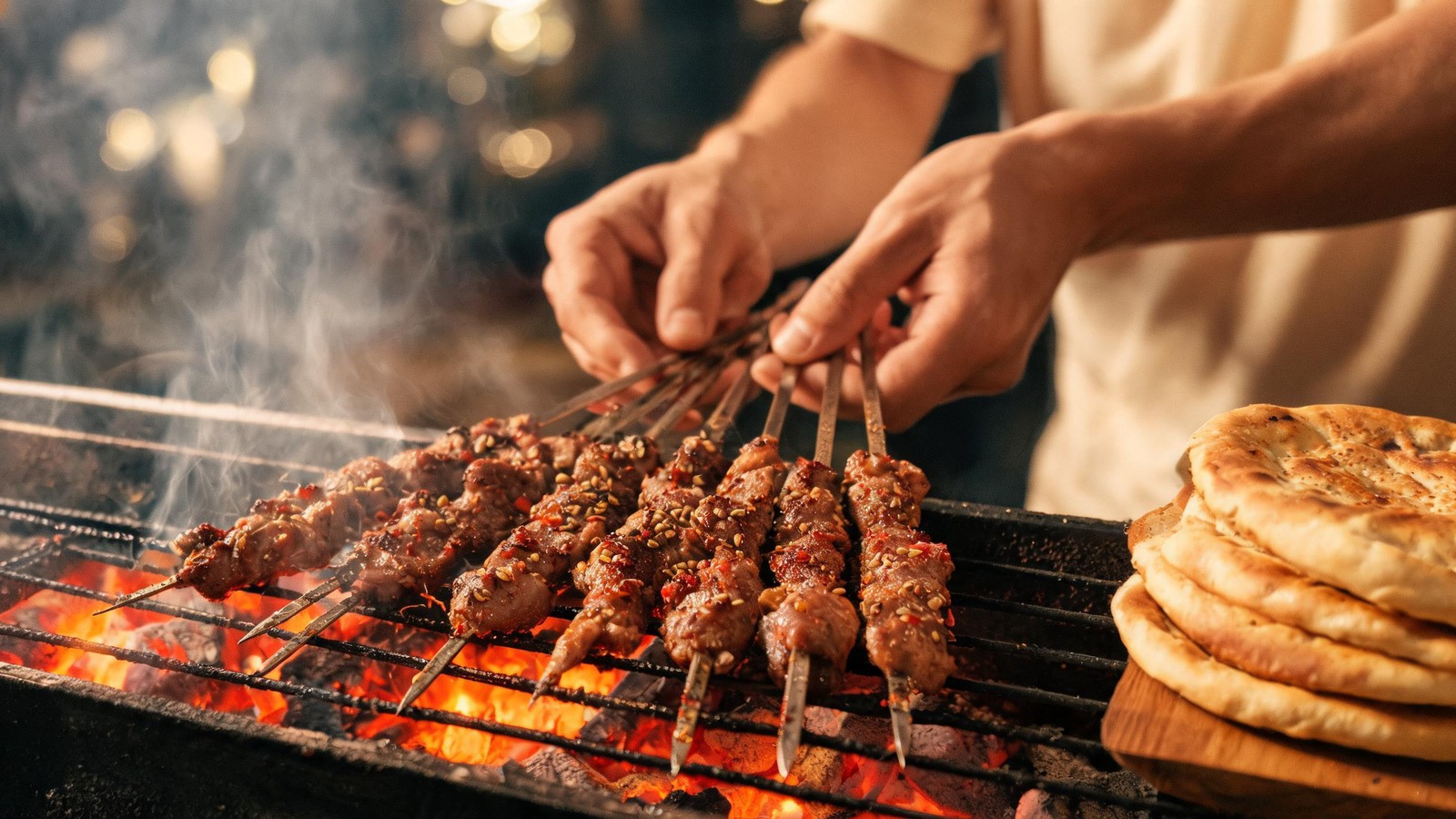
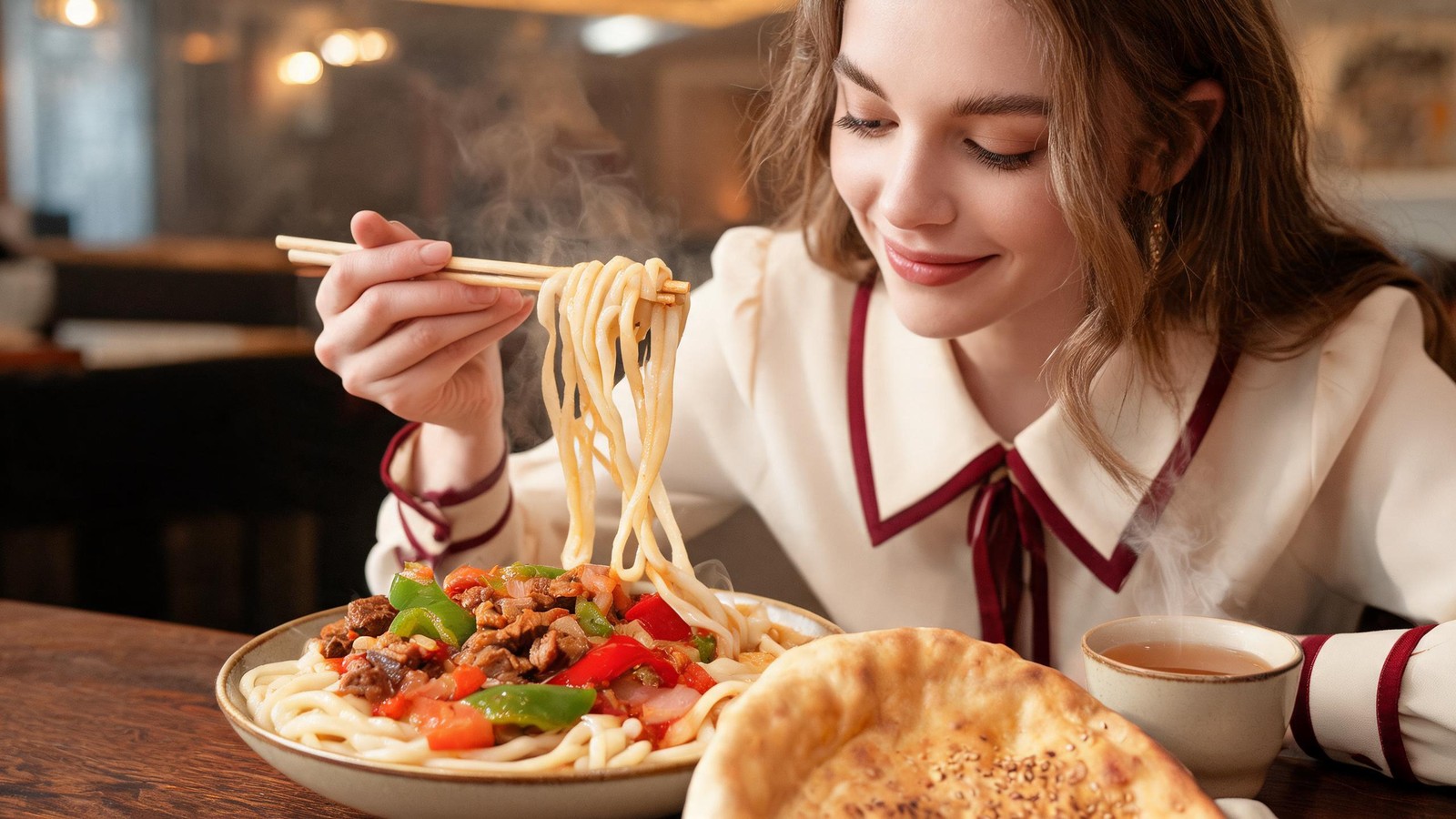
- Xinjiang Uyghur (维吾尔) food: the northwest, and the loudest, most-loved corner of the scene. The hits are cumin lamb skewers (羊肉串), big plate chicken (大盘鸡, a huge shareable braise of chicken and potato over wide noodles), hand-pulled laghman noodles (拌面/拉条子), and blistered rounds of naan (馕). Come hungry and share.
Beyond those, Shanghai has a good spread of Middle Eastern, Turkish, Lebanese and Indian halal kitchens, so a halal night out is not limited to Chinese food at all.
Where should you start?
A few well-established names to anchor your first few meals:
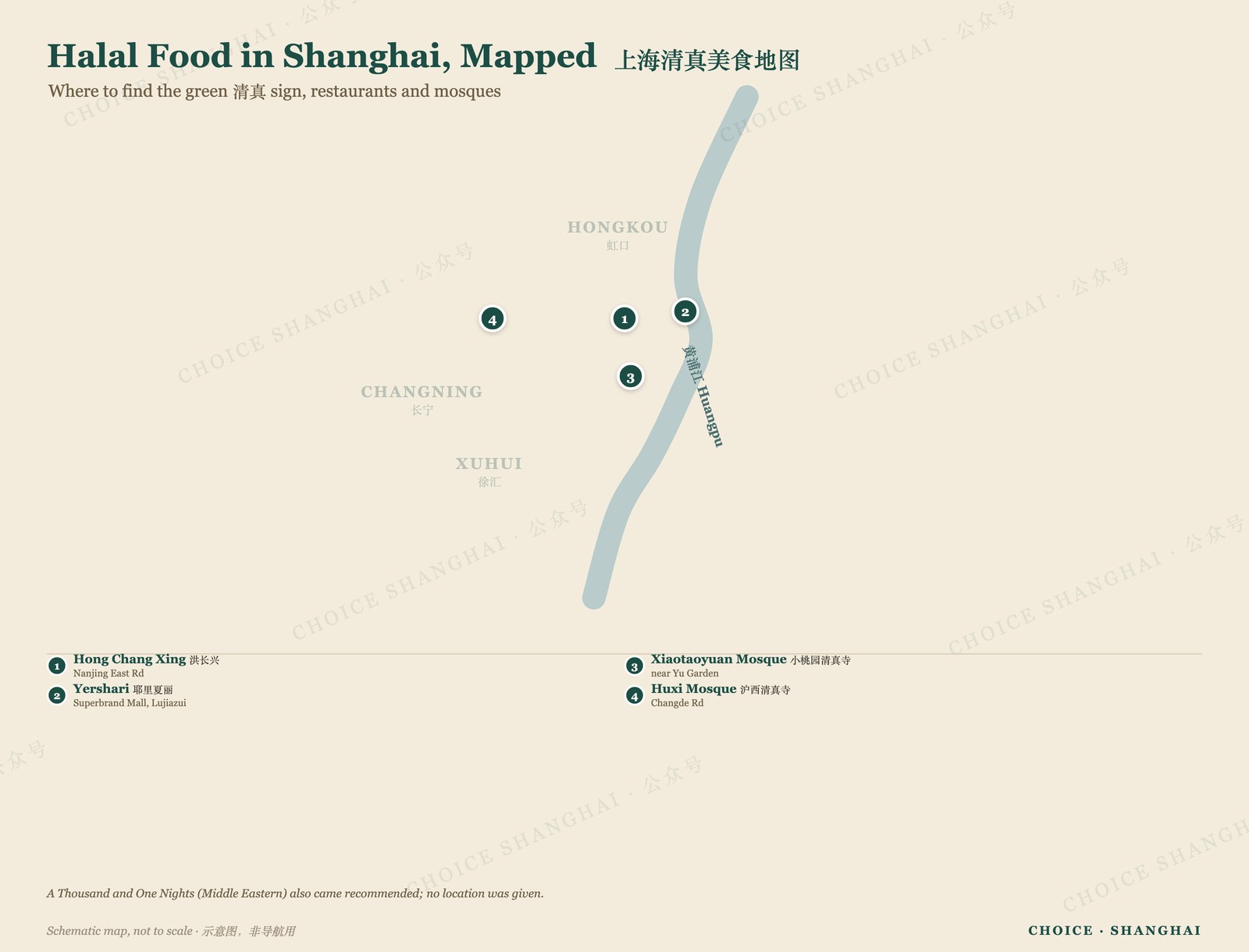
- Hong Chang Xing (洪长兴) is a Shanghai halal institution, a certified old brand serving lamb hotpot since 1891, with a branch on the Nanjing East Road pedestrian street. This is the classic Hui-style lamb experience.
- Yershari (耶里夏丽) is a long-running Xinjiang halal restaurant group with branches across the city, including Nanjing East Road and the Superbrand Mall in Lujiazui. A reliable, comfortable introduction to the whole Xinjiang table.
- A Thousand and One Nights (一千零一夜) covers the Middle Eastern side, with kebabs, hummus, falafel and grilled lamb in a lively setting.
For the most concentrated hunting, head to the streets around the Xiaotaoyuan Mosque (小桃园清真寺) at 52 Xiaotaoyuan Street near Yuyuan Garden, or the Huxi Mosque (沪西清真寺) at 1328 Changde Road, both surrounded by small halal eateries. When you want a wider survey of the city's tables, our roundup of where Shanghai's expats actually eat is a good next read.
A few things worth knowing
Good to know
- Halal is common but not the default. Most Shanghai restaurants are not halal and pork is widespread, so verify the 清真 sign rather than assume.
- Alcohol varies. Some halal restaurants serve no alcohol, others do for non-Muslim guests. Check if it matters to you.
- Xinjiang food is built for sharing. A big plate chicken easily feeds three, so order fewer dishes than you think and add more.
- Ramadan and Eid bring special hours and busier tables around the mosques, which is a lovely time to visit if you plan ahead.
Which one is for you?
If you want warm, familiar comfort food, start with Hui-style lamb hotpot or beef noodles. If you want a loud, generous feast to share, book a Xinjiang table and order skewers, big plate chicken and naan. If you are craving home flavours from further west, the Middle Eastern and Turkish kitchens have you covered. And if you are ever unsure a place is halal, the green 清真 sign and a quick "清真吗?" settle it in seconds.
Halal here keeps its own quiet code, a small green 清真 mark on the glass and a kitchen that has earned its regulars. The grace is in reading that sign the way the neighbourhood already does.
How do I know if a restaurant in Shanghai is halal?
Look for the green 清真 (qingzhen) sign on the shopfront, which means certification by the China Islamic Association. You can also search 清真 on Dianping, Amap or Meituan, or simply ask staff "清真吗?" Most Shanghai restaurants are not halal, so it is worth checking.
What halal food is Shanghai known for?
Two traditions dominate: Hui Chinese Muslim food such as lamb hotpot and beef noodles, and Xinjiang Uyghur food such as cumin lamb skewers, big plate chicken, hand-pulled laghman noodles and naan. Middle Eastern, Turkish and Indian halal kitchens are also easy to find.
Which areas have the most halal food?
The streets around the Xiaotaoyuan Mosque near Yuyuan Garden and the Huxi Mosque on Changde Road have the densest halal eating. Established names like Hong Chang Xing and Yershari also have central branches on Nanjing East Road.
Can I get halal food delivered in Shanghai?
Yes. Filter for 清真 on Meituan or Ele.me and you will find certified restaurants that deliver. An English how-to is in our food delivery guide.
Is halal food expensive in Shanghai?
No more than comparable Chinese food. Xinjiang restaurants are generally good value because the dishes are large and made for sharing, while a lamb hotpot dinner sits in the mid-range.