The densest Japanese food in Shanghai is in Gubei, the Japanese-expat enclave near Hongqiao.
The densest, most authentic Japanese food in Shanghai is in Gubei (古北), the Japanese-expat enclave on the Changning and Minhang border near Hongqiao, where izakaya, ramen counters and sushi bars line Xingyi Lu and Ronghua Xi Dao. Reckon on about 150 to 450 RMB (USD 22 to 67) a head at an izakaya and 60 to 120 RMB (USD 9 to 18) for a bowl of ramen. One thing to get straight first: nearby Hongquan Lu is Korea Town, not Japanese. They are different streets and different crowds.
Good to know
- Where to go: Gubei (古北), around Xingyi Lu and Ronghua Xi Dao, for the real concentration. Jing'an and Xuhui have good one-offs too.
- What you will pay: izakaya 150 to 450 RMB (USD 22 to 67) a head, ramen 60 to 120 RMB (USD 9 to 18), omakase from 500 RMB (USD 75) up.
- Don't confuse: Hongquan Lu nearby is Korea Town, a separate scene. Gubei is the Japanese one.
Where the Japanese food actually is
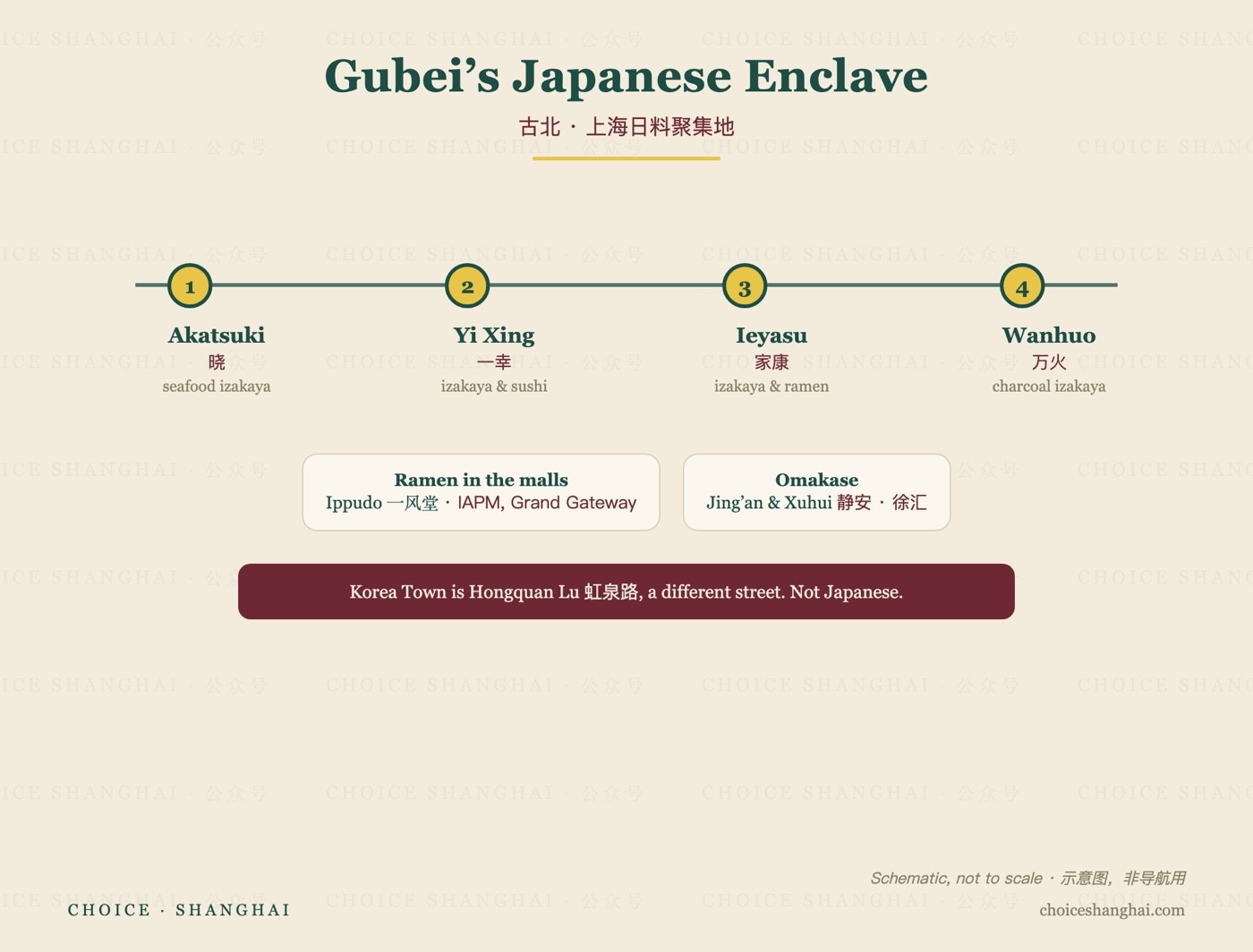
Gubei is the answer to where to eat Japanese food in Shanghai, and it is not a secret. The district holds one of the city's oldest international communities, and Shanghai's City News Service, the municipal government's news service, calls it home to "a very large enclave of Japanese expats," which "shows in the density of bona fide Japanese restaurants." Translated: the people who grew up on this food eat here, so the places have to be good. Walk Xingyi Lu (兴义路), Ronghua Xi Dao (荣华西道), Xianxia Lu and Hongmei Lu and you pass izakaya, ramen shops and sushi counters a few doors apart. The one trap to sidestep is geographic: Hongquan Lu, a short way south in Minhang, is the Korean strip, so do not go there expecting ramen. For everywhere else worth eating, our guide to where Shanghai expats actually eat casts wider.
The izakaya worth knowing
An izakaya is where a Japanese night in Shanghai usually starts and ends, over skewers, small plates and a cold beer, and Gubei has the real ones. Akatsuki (晓), a seafood-leaning izakaya on Xingyi Lu, is the one people name first for sashimi and grilled fish. A few doors around the enclave, Yi Xing (一幸) does an izakaya-and-sushi menu with a well-liked set lunch, Ieyasu (家康) is the casual, cheaper option that also does a solid ramen, and Wanhuo (万火) is the charcoal-grill izakaya that has been going for years. Expect roughly 150 to 450 RMB (USD 22 to 67) a head depending on how much sashimi and sake you order. Check the current average on Dianping before you commit, since prices move.
Ramen: cheap, fast and everywhere
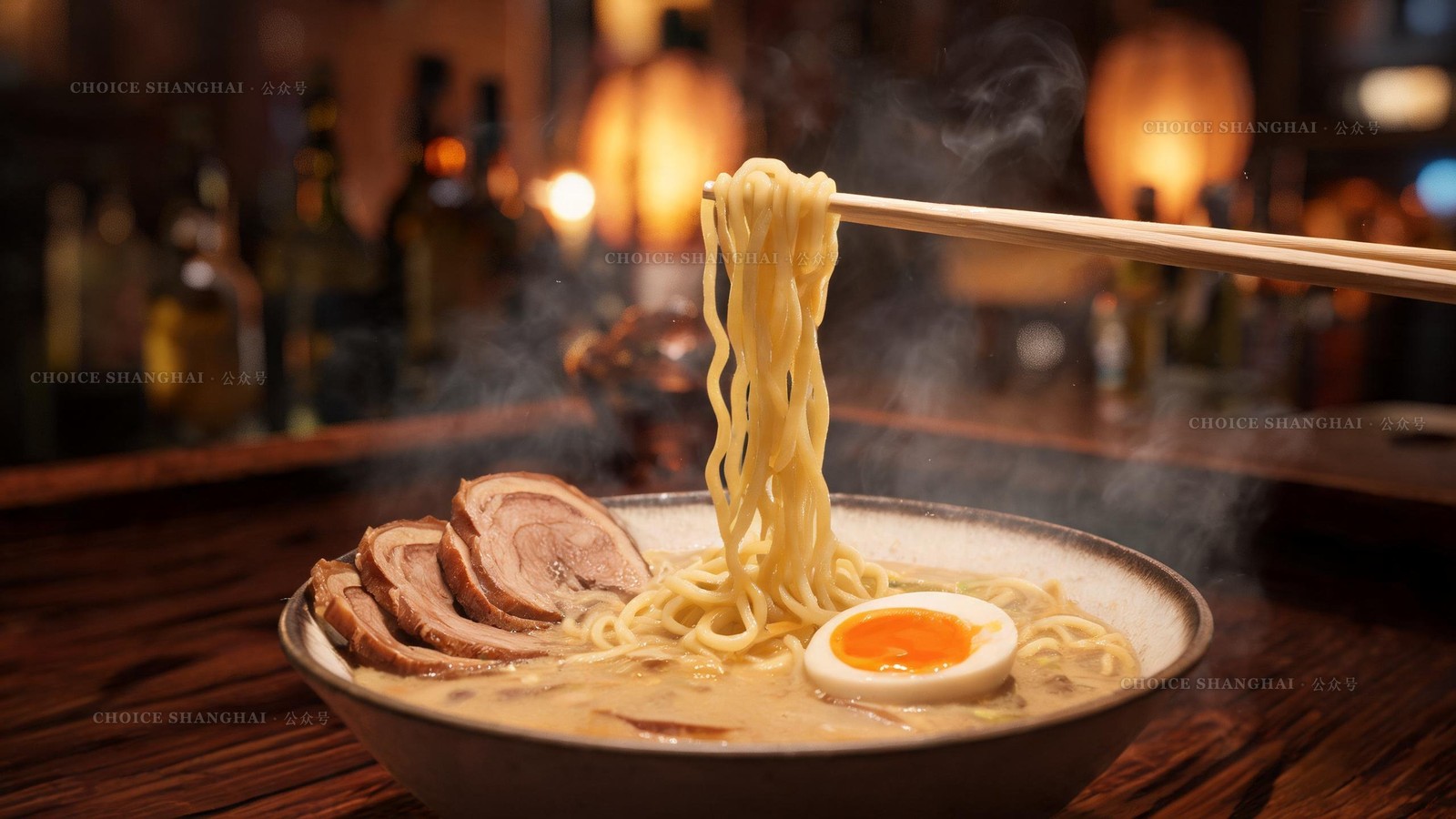
Ramen is the easiest Japanese meal to find in Shanghai and the easiest on the wallet, with a serious bowl running about 60 to 120 RMB (USD 9 to 18). The chains have landed, so you will find Ippudo (一风堂) and its tonkotsu in the big malls like IAPM on Huaihai Lu and Grand Gateway in Xuhui, reliable if not thrilling. The better bowls hide in Gubei's smaller shops, where the broth has been going since morning. If you cannot read the counter menu, our guide to ordering food when you cannot read the menu gets you through it, and for the after-midnight bowl, see late-night eats in Shanghai.
Sushi and omakase: pick your budget first
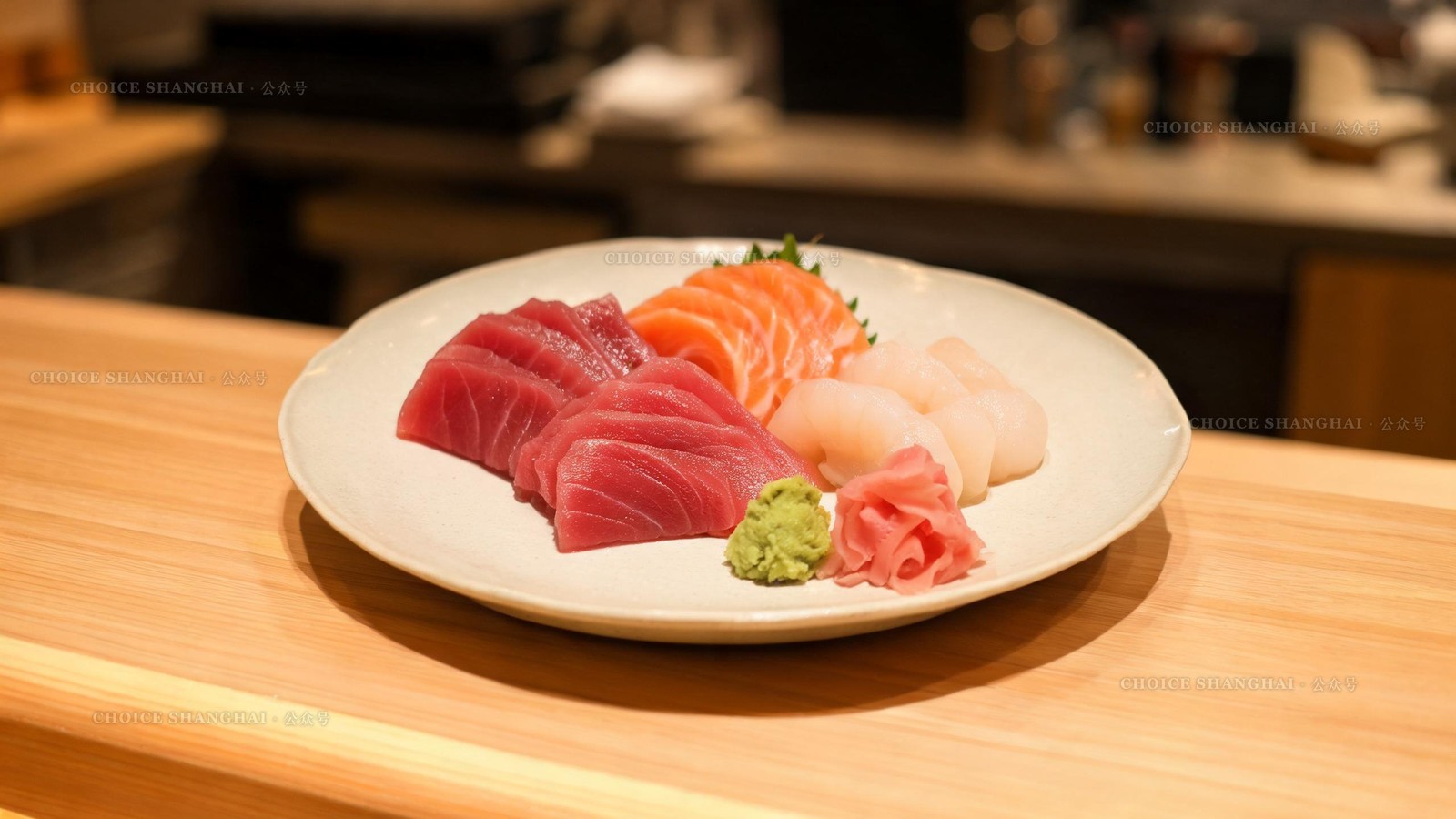
Sushi in Shanghai splits cleanly by budget, so decide before you book. A casual conveyor-belt or set-lunch sushi runs about 100 to 250 RMB (USD 15 to 37) and does the job. A proper omakase, where a chef feeds you course by course at the counter, starts around 500 RMB (USD 75) and climbs past 1,500 RMB (USD 224) at the serious rooms, many of which sit in Jing'an and Xuhui rather than Gubei. Book omakase ahead, because the good counters are small and fill up. If you want the city's higher end more broadly, our take on Shanghai's Michelin stars covers who is worth the splurge.
What Japanese food costs in Shanghai
Rough per-person bands, in October 2026, at about 6.7 RMB to the US dollar. Drinks push an izakaya bill up fast, so treat these as food-plus-one-drink.
Which one is for you 哪个适合你
If you want a long, loud night with friends, head to a Gubei izakaya and order sashimi, skewers and a bottle of sake. If you are solo and hungry on a budget, find a ramen counter and you will eat well for under 120 RMB (USD 18). If you are marking an occasion, book an omakase a week ahead and let the chef drive. And if you only remember one thing, remember the street: Gubei for Japanese, not Hongquan Lu.
Where is the Japanese area in Shanghai?
Gubei (古北), on the Changning and Minhang border near Hongqiao, is Shanghai's Japanese-expat enclave and the densest place for Japanese restaurants. Walk Xingyi Lu and Ronghua Xi Dao for izakaya, ramen and sushi within a few doors of each other. It is not the same as Hongquan Lu, which is Korea Town.
How much does a Japanese meal cost in Shanghai?
Budget about 150 to 450 RMB (USD 22 to 67) a head at an izakaya, 60 to 120 RMB (USD 9 to 18) for ramen, and from 500 RMB (USD 75) upward for omakase. Drinks lift the izakaya bill quickly, so sake and beer are what separate a cheap night from an expensive one.
Is there good ramen in Shanghai?
Yes. A serious bowl runs 60 to 120 RMB (USD 9 to 18). Mall chains like Ippudo are reliable, but the better ramen hides in Gubei's smaller shops where the broth simmers from morning. Look for a short menu and a queue of Japanese diners.
Where can I get omakase in Shanghai?
The serious omakase counters cluster in Jing'an and Xuhui rather than Gubei, starting around 500 RMB (USD 75) and climbing past 1,500 RMB (USD 224). Book a week ahead, because the good rooms seat only a handful of people and fill fast.
As Confucius says in the Analects, 有朋自远方来,不亦乐乎 , is it not a joy when friends come from afar, which is exactly what a long izakaya table is for.
Words, maps and research by the Choice Shanghai team. Please credit us and tag our 公众号 if you share.