How to Survive Your First Shanghai Hot Pot (2026)
Your first hot pot in Shanghai will test your patience, burn your mouth, and make you book a second round anyway. The classic first-timer move: point at the spiciest broth on the menu to seem brave, drop a piece of tofu into boiling red oil, fish it out ten seconds too late, and spend the next two hours with numb lips and a running nose. Then go back the next week. That is the hold hot pot has on people. Here is everything worth knowing before that first meal.
Pick your broth, pick your destiny
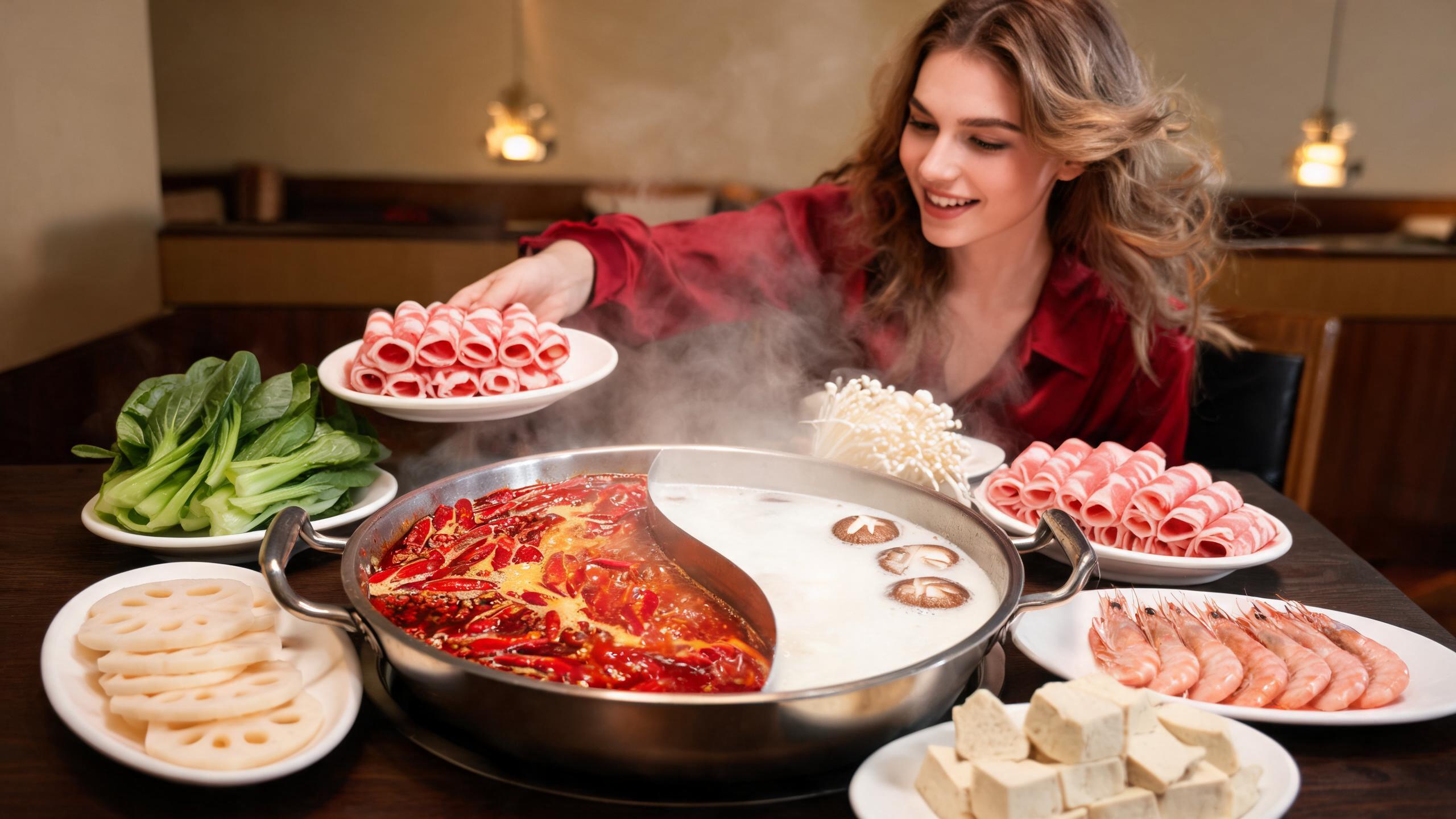
The broth is the foundation of everything. Get this right and you can coast on autopilot through the rest of the meal. Get it wrong and you spend 90 minutes staring at a bubbling pot you’re afraid to touch.
Sichuan/Chongqing numbing spicy (麻辣锅): The default hot pot for most people in China. Bright red oil loaded with Sichuan peppercorns and dried chilies. The numbing sensation (ma) is the key difference from regular spicy. It builds. First bite: fine. Fourth bite: interesting. Tenth bite: your entire mouth is a low-frequency hum. Places like Pei Jie 佩姨 and Xiaolongkan 小龙坎 do this style well.
Beijing copper pot (铜锅涮肉): A tall copper chimney pot with clear bone broth. You dip thinly sliced lamb, pull it out after a few seconds, and drag it through sesame paste. Simple, old-school, and the lamb does the talking. Lao Men Kuang 老门框 is the go-to in Shanghai.
Chaoshan beef hot pot (潮汕牛肉火锅): A clear broth with an obsessive focus on fresh beef. Cuts are sliced to order and cooked for exact seconds. The staff will time it for you at the better places. Typically around 150 to 200 RMB per person. Look for shops near Longhua or in the Chaoshan restaurant clusters around Xuhui.
Hainan coconut chicken (椰子鸡): Mild, slightly sweet, genuinely refreshing. Coconut water broth with free-range chicken. A good choice if you want the hot pot ritual without any heat at all. Several spots along Wulumuqi Road do solid versions.
Tomato broth (番茄锅): The no-shame, zero-risk beginner option. Sweet, tangy, and forgiving. Every hot pot restaurant has this. Nobody judges you for ordering it, and if they do, those people are not worth eating with.
Pro tip: If you are not sure, order a split pot (鸯鸯锅, yuanyang guo). Spicy on one side, mild on the other. Usually costs 20 to 40 RMB more than a single broth, and it is absolutely worth it on your first visit.
How to actually order
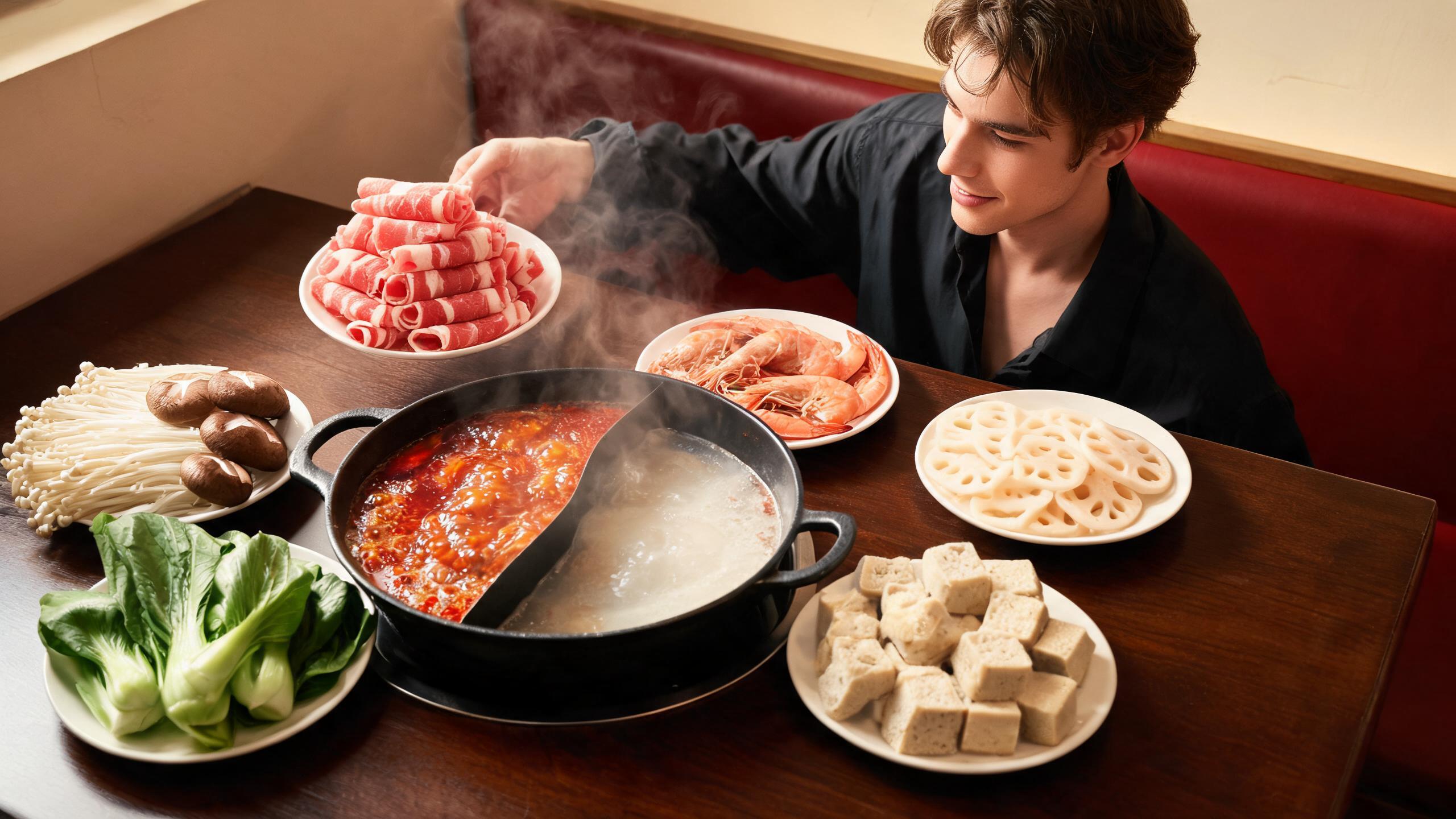
Most hot pot restaurants use tablet ordering now. A picture menu on an iPad. You tap, you add, you submit. Some places still use paper slips where you tick boxes with a pencil. Either way, here is the sequence:
Step 1: Choose your broth. The waiter will ask first. If you want the split pot, say yuanyang guo (鸯鸯锅). For spicy, say ma la guo (麻辣锅). For tomato, fanqie guo (番茄锅).
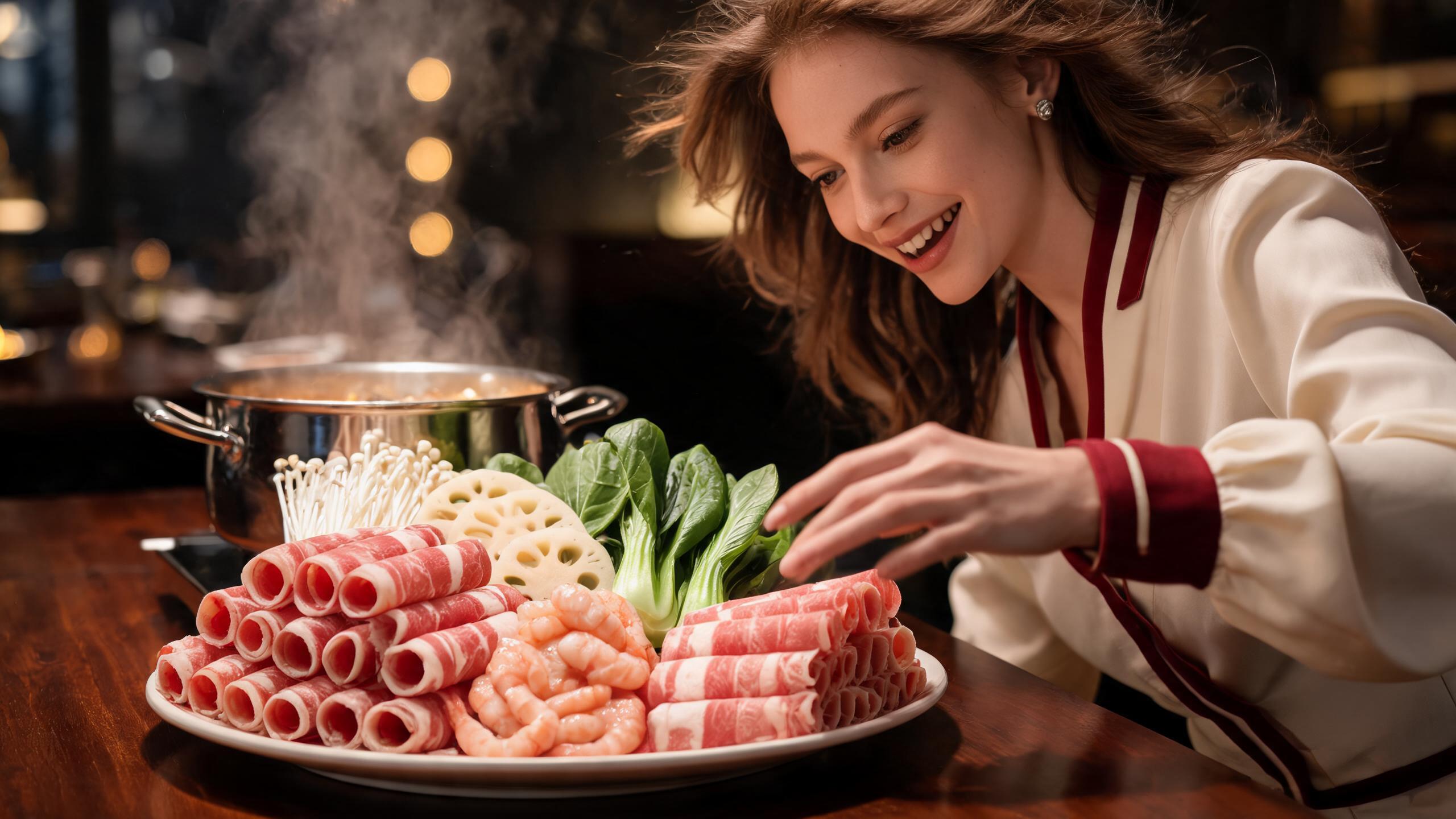
Step 2: Order whatever you actually want. Do not overthink the menu. Pick two or three meats that look good to you (thinly sliced lamb 羊肉卷 and beef 肥牛 are the easy classics; fish balls 鱼丸 and shrimp paste 虾滑 are hard to get wrong), then whatever vegetables you fancy: lotus root 藕片 and potato 土豆 for crunch, leafy greens 生菜 and mushrooms 金针菇 for the broth, frozen tofu 冻豆腐 because it soaks up everything. Noodles 面条 go in at the very end. There is no wrong combination.
How much to order (the tip that saves you money). Start with roughly two to three dishes per person, then top up as you go. Two people, about six plates; three people, about nine. Order that first round, and when you are down to your last plate or two, order more. It keeps every plate fresh and stops you burying the table in food you cannot finish. Over-ordering is the most common first-timer mistake, and re-ordering on the tablet is instant.
Cooking order matters. Meat goes in and comes out fast: 15 to 30 seconds for thin slices. Root vegetables and tofu go in early, as they need 3 to 5 minutes. Leafy greens go in last, 30 seconds max, or they turn into sad green mush. Noodles go in right at the end when you are almost done.
The sauce station: your real flex
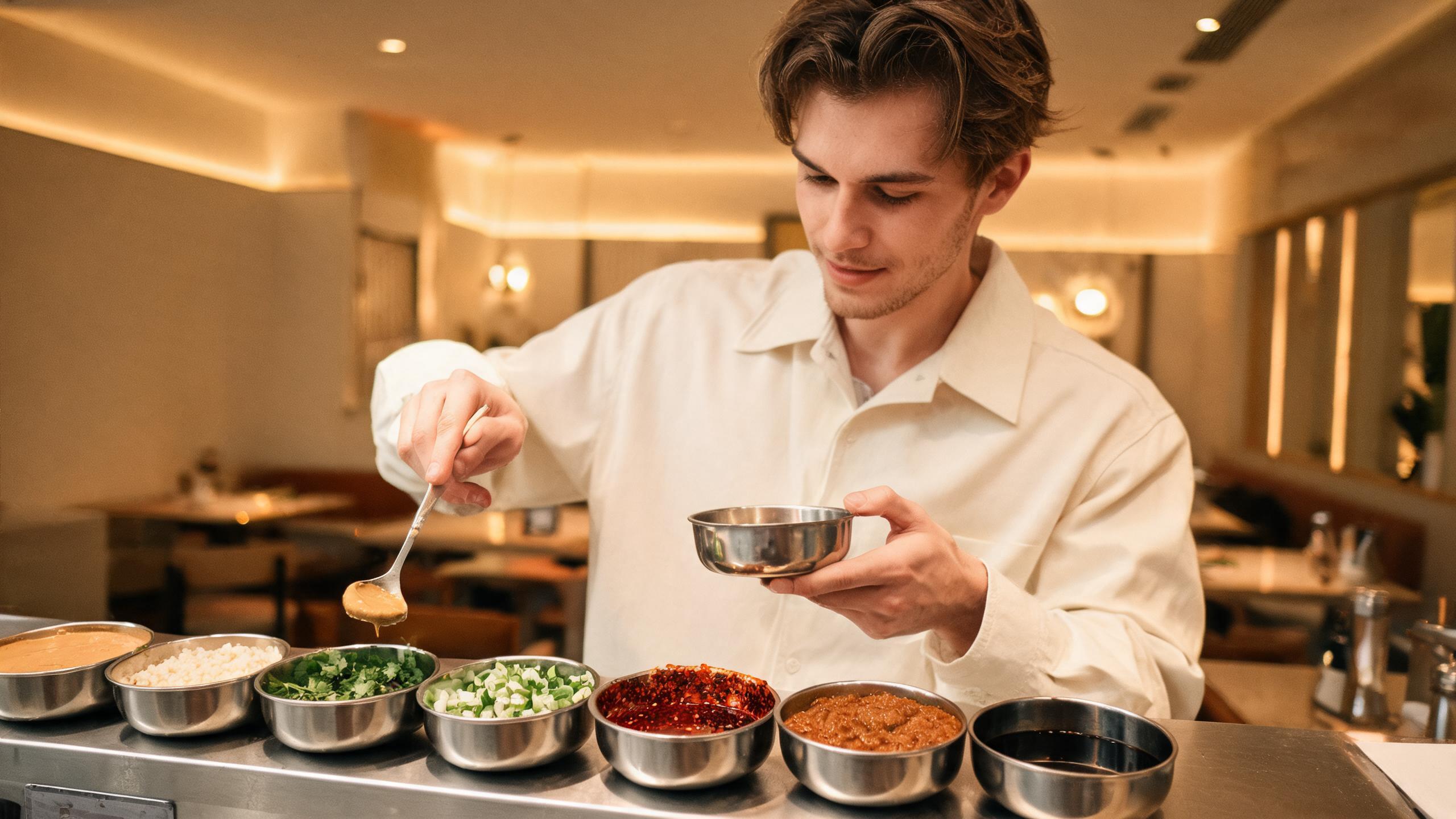
Almost every hot pot restaurant has its own self-serve sauce station, and this is where the meal is won or lost. Do not skip it, and do not let anyone build it for you: walk over and mix your own bowl to your exact taste. A good sauce rescues mediocre broth. A bad sauce wastes good ingredients.
The classic formula: Start with two big spoonfuls of sesame paste (芝麻酱). Add a spoonful of minced garlic (raw, yes, raw). A splash of soy sauce. Chopped cilantro and scallions. A drizzle of sesame oil. That is the northern-style base and it works on practically everything.
If you want more kick: Add chili oil (辣椒油), fermented bean curd (腐乳), or chopped fresh chili. Some stations have oyster sauce, peanut sauce, or vinegar. Experiment. Nobody is grading you.
If you eat Chaoshan-style beef hot pot: Skip the heavy sauces. Use a small dish of sha cha sauce (沙茶酱) with a raw egg cracked into it. The warm beef partially cooks the egg into a silky coating. Trust the process.
Rookie mistake: Filling your sauce bowl once and treating it as a final product. You will need to refill. The sauce dilutes as you dip. Most places offer unlimited trips to the sauce bar.
Where to go
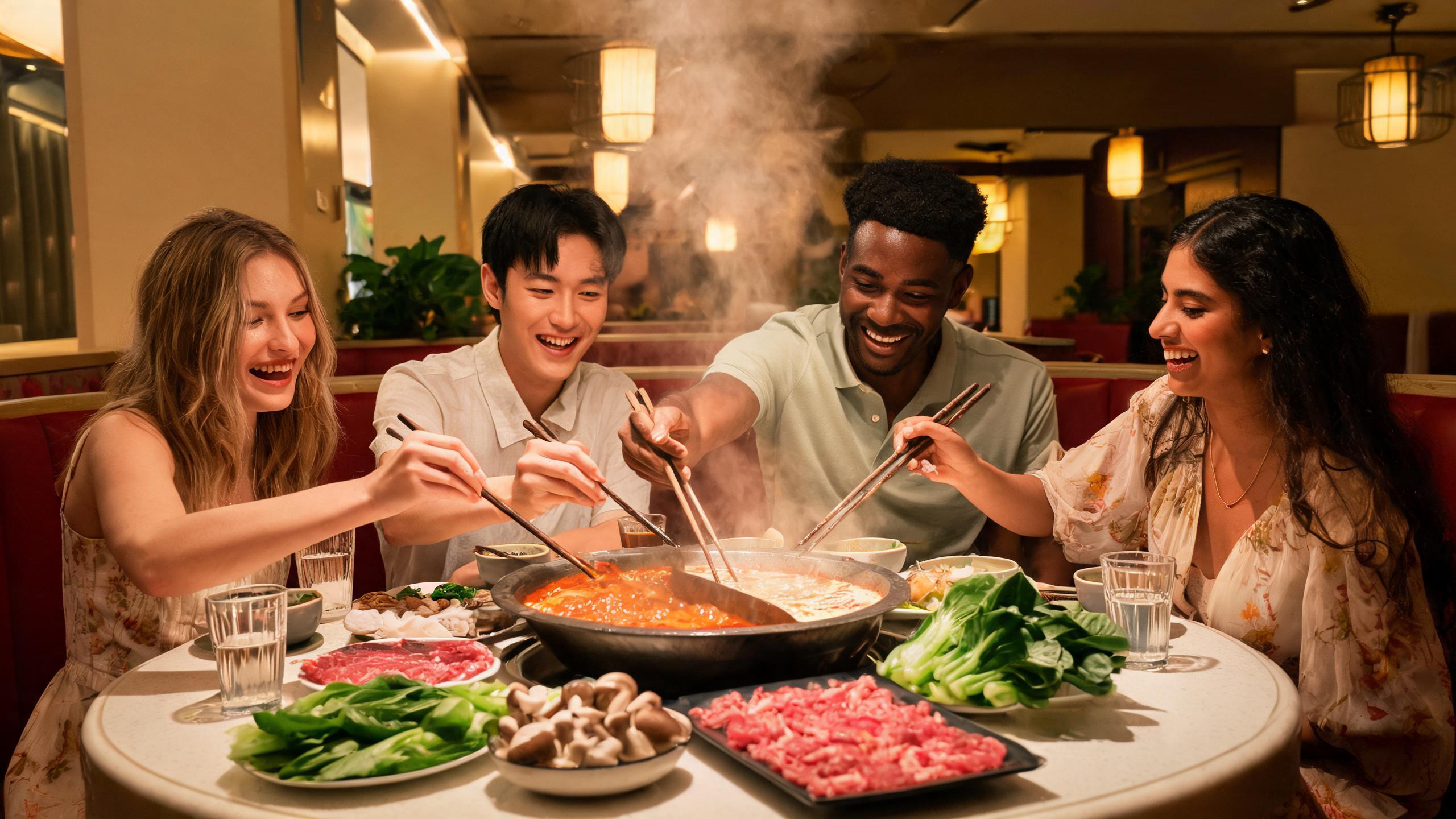
Shanghai has hundreds of hot pot restaurants. These are the ones worth going back to, across price ranges:
- Haidilao 海底捞 (the no-stress option): English menus, tableside service, and a sauce bar that could stock a small restaurant. The food is consistent, never thrilling, always reliable. Multiple locations across Jing’an, Xuhui, and Pudong. The Nanjing West Road branch rarely has a wait on weekday lunches. About 120 to 180 RMB per person. The real reason regulars love it is the service: while you wait, take the free manicure, and ask about the free photo printing (bring the photos you want printed, it is a genuine local favourite). Snacks, hot towels, games, the noodle-dancing show: it is all included, so use it.
- Pei Jie 佩姨 (Chongqing-style, serious heat): This is where Chongqing locals eat when they miss home. Butter broth (牛油锅底) with a slick of red oil that means business. The tripe (毛肚) and duck intestine (鹅肠) are popular with regulars. Not as English-friendly, but the tablet ordering system has pictures. Locations in Jing’an and Xuhui. About 100 to 170 RMB per person.
- Lao Men Kuang 老门框 (Beijing copper pot): Hand-cut lamb, a charcoal-heated copper pot, and sesame dipping sauce. The vibe is northern, no-nonsense, and the lamb quality is noticeably better than most chains. Near Nanjing East Road. About 130 RMB per person.
- Zuo Ting You Yuan 左庭右院 (Chaoshan beef hot pot): Fresh beef arrives sliced minutes before you cook it. The staff will tell you exactly how many seconds each cut needs. Throat meat (喉咽肉) and hanging tender (吊龙) are the house specialties. Near People’s Square. About 150 to 200 RMB per person.
- Maolago 毛辣果 (Guizhou sour tomato): If you want something different from the Sichuan standard, this is it. Guizhou-style sour tomato broth with pickled chili. Tangy, light, and a refreshing change of pace. Pairs well with fish and tofu. Fuxing West Road, Xuhui. About 140 RMB per person.
- Xiabu Xiabu 呧哺呧哺 (solo dining, budget-friendly): Individual pots, conveyor belt ingredients at some locations, and a price point that is hard to argue with. A full solo meal runs 50 to 80 RMB. The quality is chain-level, not artisan, but for a Tuesday lunch when you want hot pot without the production, it does the job.
Survival tips
Bring people, and do not fear going solo. Hot pot is a group sport and it genuinely tastes better shared, so round up two or three friends if you can. If you do end up going alone, do not feel odd about it: solo pots are normal, and some places, Haidilao most famously, will sit a teddy bear across the table to keep you company. Yes, really.
Do not drink the broth. The Sichuan broth is not soup. It is a cooking medium. It is oil, peppercorns, and roughly 3,000 milligrams of sodium per ladle. The clear broth is technically drinkable, but after two hours of cooking raw meat in it, you are making a choice. Not a great one.
Wear clothes you do not love. Hot pot splashes. The oil-based broth leaves spots. Dark colours, washable fabrics. Some restaurants offer plastic aprons and phone bags. Accept them. There is no style at the hot pot table, only survival.
Go at the right time. Weekday lunch is the sweet spot: shorter waits, same food, quieter room. Friday and Saturday dinner at popular spots means 40 to 90 minutes in line. At Haidilao, the wait can be entertaining (snacks, games, nail services). At most other places, it is just waiting.
Use Dianping or Meituan for reservations. Most hot pot restaurants allow table booking through Dianping (大众点评). Open the app, search the restaurant name, and tap the reservation button. You will need a Chinese phone number. If you do not have one, go at 11:30 AM and walk in.
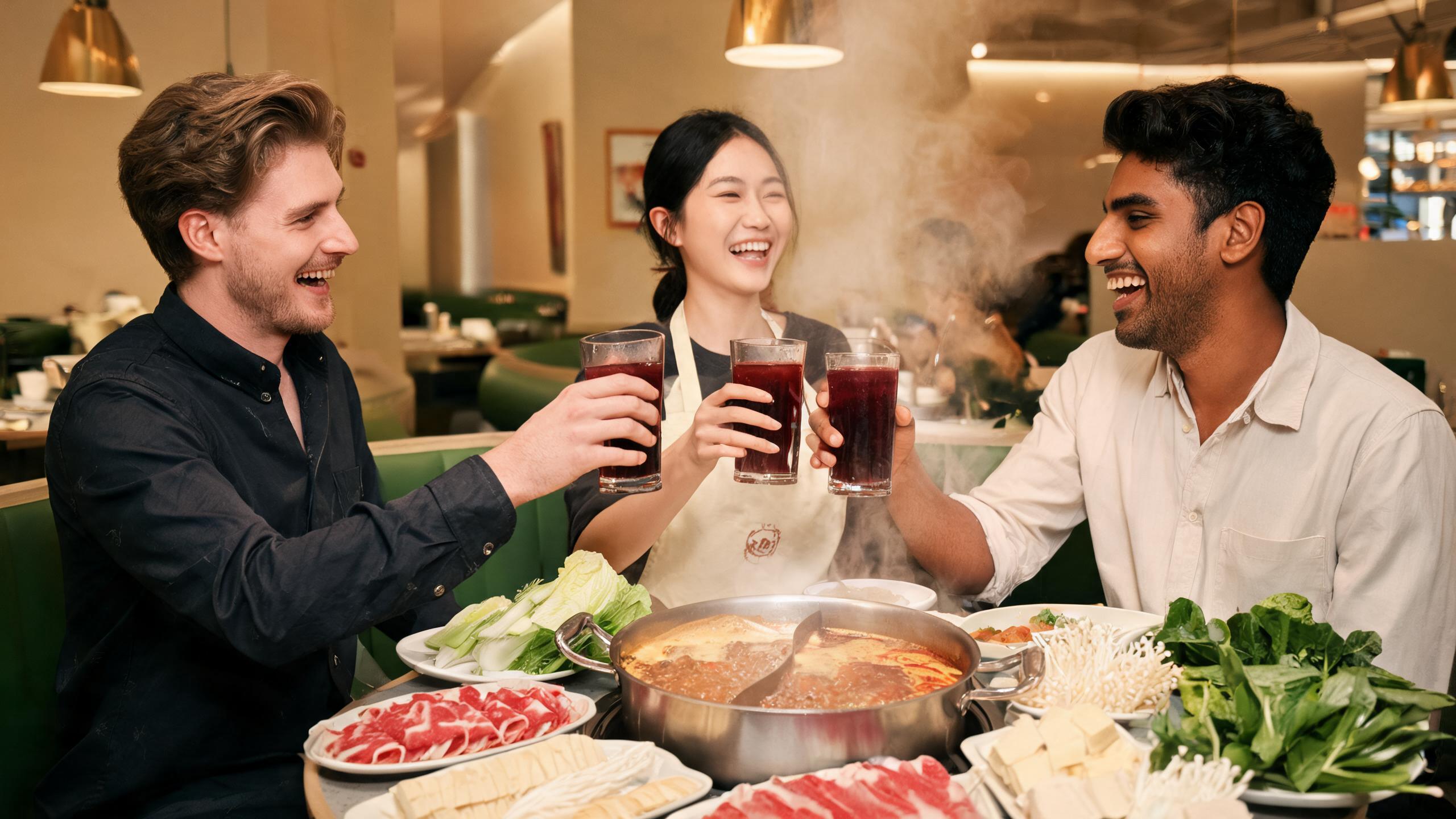
Order sour plum juice (酸梅汤). It cuts through the grease and cools the spice. Most places charge 8 to 15 RMB for a pot of it. Beer works too. Water works in theory but feels like bringing a bicycle to a Formula 1 race.
Pace yourself. A hot pot meal lasts 60 to 90 minutes. The broth takes 10 to 15 minutes to come to a full boil. Do not order everything at once. Start with two or three plates, add more as you go. The tablet is always there.
Know your cook times. This is the difference between silky and shoe-leather. Paper-thin sliced beef and lamb need about 8 to 15 seconds, just until the pink goes: swish and pull it straight out. Meatballs, potato, lotus root and frozen tofu want a few minutes, so drop them in and forget them while you cook the quick stuff. Keep a separate pair of chopsticks for lowering in raw meat and eat with your own, which is both hygiene and the mark of someone who has done this before.
Frequently asked
Is hot pot expensive in Shanghai?
It depends on where you go. Budget chains like Xiabu Xiabu run 50 to 80 RMB per person. Mid-range spots like Pei Jie or Maolago average 100 to 170 RMB. Haidilao and premium Chaoshan beef places sit around 150 to 200 RMB. Most of the cost comes from meat orders, so vegetable-heavy meals skew cheaper.
Can I do hot pot alone in Shanghai?
Yes, and it is more common than you might think. Xiabu Xiabu is designed for solo diners with individual pots, starting around 50 to 70 RMB. Haidilao has single-diner setups at most locations, often with a stuffed animal placed across the table to keep you company. Solo hot pot is totally normal here.
What if I cannot eat spicy food?
Order a split pot (鸯鸯锅, yuanyang guo) with one spicy side and one mild. Or skip spicy entirely and get a full pot of tomato, mushroom, or coconut chicken broth. Every restaurant has non-spicy options. Spice is popular, but it is not a requirement.
More guides →