Eating vegetarian in Shanghai is straightforward once you know that no meat and no meat stock are two different requests, and that most soy sauce here contains wheat.
Eating vegetarian in Shanghai is easy; eating strictly vegan or gluten-free takes technique. The obstacle is not a lack of vegetables, it is that most Chinese soy sauce contains wheat, and that stock, lard and dried shrimp turn up in dishes that read as plant-based. Dedicated vegetarian restaurants such as Godly, Jujube Tree and The Lakeside Veggie remove the guesswork entirely. Everywhere else, you order with a written card.
The mistake I watched a vegetarian friend make for three months was asking for dishes "without meat" and assuming that covered it. It does not. In a Chinese kitchen, meat means visible pieces of meat. The chicken stock the greens were blanched in is not meat, it is flavour. Neither of you is wrong, you are just using different definitions, and the fix is a translation card rather than a better accent.
Why is gluten-free harder than vegetarian in Shanghai?
Because soy sauce is in nearly everything, and traditional Chinese soy sauce is brewed with wheat. That single fact takes out most stir-fries, most braises, most dumpling dipping sauces, and a lot of dishes that carry no visible brown sauce at all, including plenty of fried rice and stir-fried noodle plates.
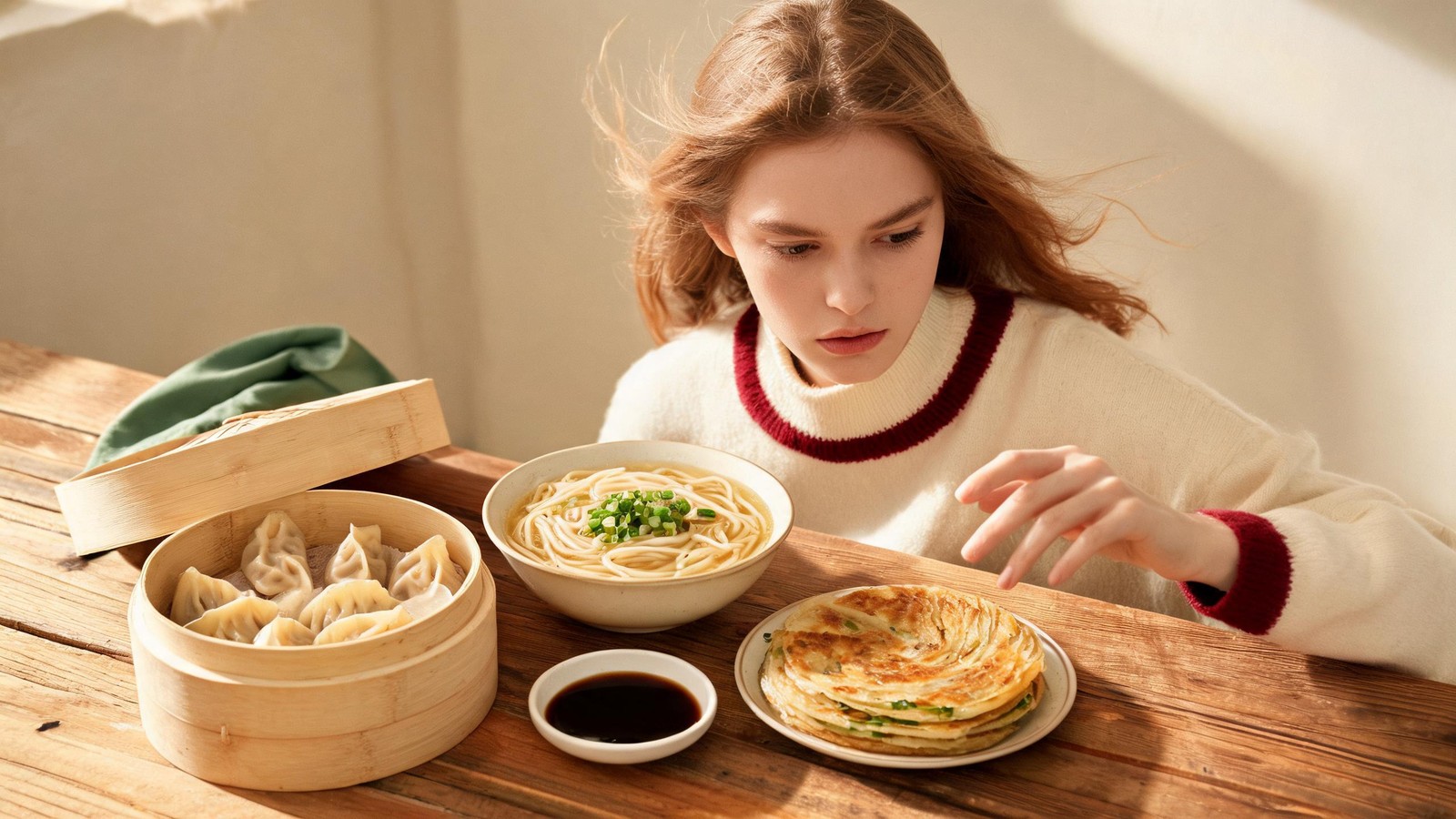
Then there is the wheat you can see: noodles, dumpling wrappers, buns, scallion pancakes, and the fried coating on anything crisp. Shanghai cooking in particular leans on wheat more heavily than Cantonese cooking does.
What is naturally safer: plain steamed rice, rice noodles ordered without soy sauce, clear soups you have asked about, steamed fish and vegetables dressed at the table. Cross-contamination in a shared wok is a real limitation, and any guide that tells you otherwise is not being straight with you. If you have coeliac disease rather than a preference, the honest answer is that dedicated vegetarian and international restaurants are a safer bet than a neighbourhood stir-fry shop.
What should I actually say when ordering?
Say it in writing. Screenshot these, keep them in a favourites album, and show the phone rather than attempting the tones on the first try.
- I eat pure vegetarian, no meat, no eggs, no dairy: 我吃全素,不吃肉、蛋、奶。
- No meat, no fish, no seafood, and no meat stock: 不要肉、不要鱼、不要海鲜,也不要肉汤。
- I am allergic to wheat flour and soy sauce, please do not use them: 我对小麦和酱油过敏,请不要使用。
- Does this dish contain soy sauce or wheat flour? 这个菜有没有酱油或者面粉?
- Please do not add lard, chicken stock, or dried shrimp: 请不要放猪油、鸡汤、虾米。
- This is a serious allergy, I could become very unwell: 这是严重过敏,会让我很不舒服。
That last line matters more than the others. Framing something as an allergy rather than a preference changes how seriously a kitchen treats it, and it is the difference between the cook working around your request and the cook accommodating it.
Two ingredients worth learning to recognise on sight, because they appear in dishes that otherwise look plant-based: 猪油 (lard, common in vegetable stir-fries and pastry) and 虾米 (dried shrimp, scattered through greens, tofu and cold dishes).
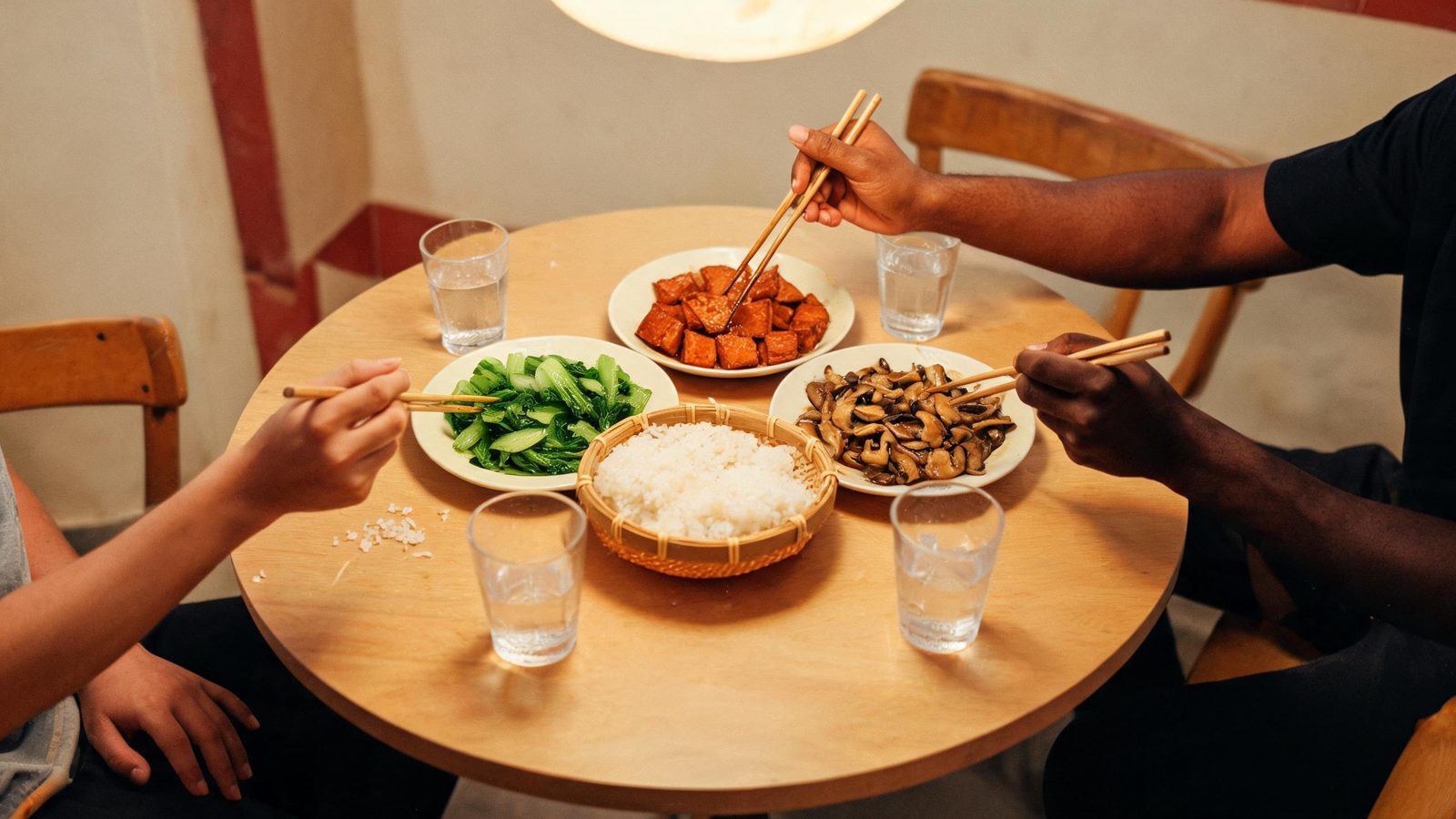
Where can I eat without negotiating at all?
Some nights you do not want to run a briefing before dinner. These three are entirely meat-free, so you can order off the whole menu.
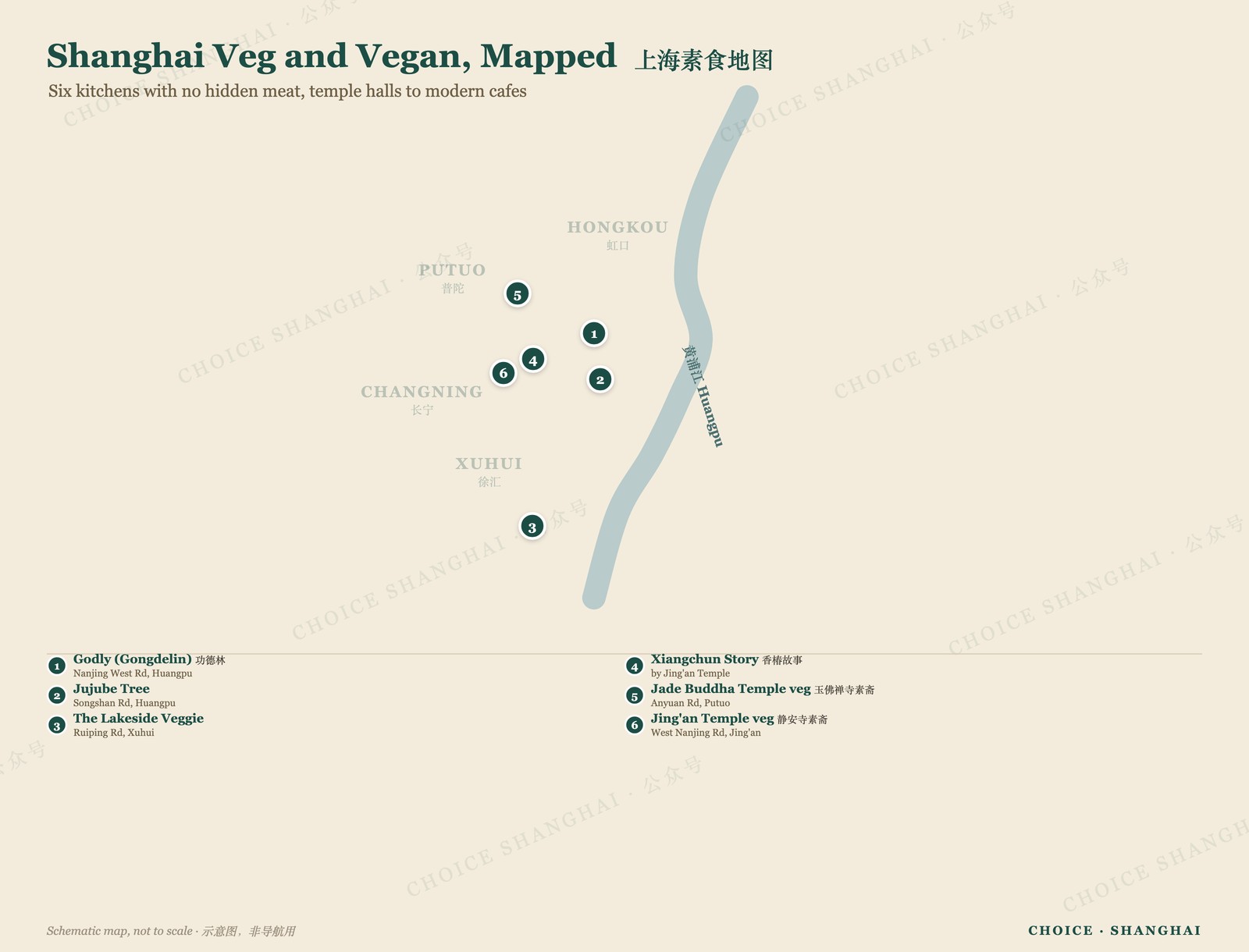
Godly, Gongdelin, Nanjing West Road
Buddhist vegetarian cooking at 445 Nanjing West Road in Huangpu, running since 1922. This is the temple-cuisine tradition, where wheat gluten, tofu skin and mushrooms are worked into mock duck, mock ham and mock fish with genuine craft behind it. Note the split hours: it closes mid-afternoon and again after nine, and people turn up at four o'clock to a shut kitchen constantly. Not a gluten-free option, given what mock meat is made from.
Jujube Tree, Songshan Road
The one I send new arrivals to first, at 77 Songshan Road near Huaihai Middle Road in Huangpu. Modern Chinese vegetarian across several regional styles, no meat, no eggs and no alcohol on the premises, which means a vegan can order from the entire menu instead of three corners of it. The menu is in English with photographs, so it is also the lowest-stress place to bring someone who has just landed.
The Lakeside Veggie, Longhua
At 230 Ruiping Road in Xuhui, near Longhua Temple, and holder of a Bib Gourmand in the 2026 MICHELIN Guide Shanghai for good cooking at a fair price. It leans away from mock meat toward homey Jiangnan dishes where vegetables and beancurd are the point. It fills up with temple visitors around Buddhist observance days, so go early on those.
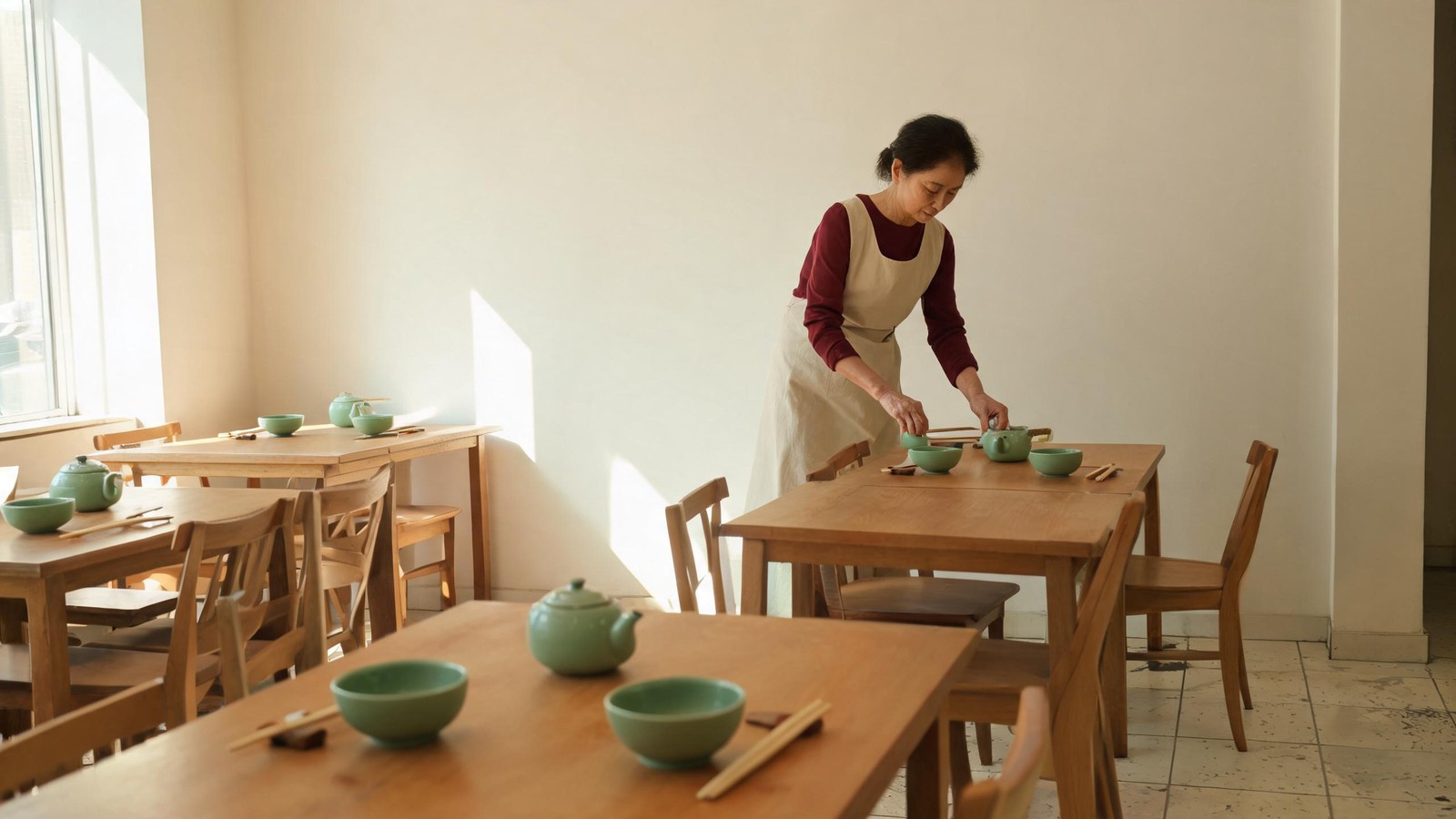
Three more, for a date and a temple lunch
Three more fully meat-free rooms worth the trip: one for a date, two for a quiet bowl alone or a table with family.
Xiangchun Story 香椿故事, Jing'an
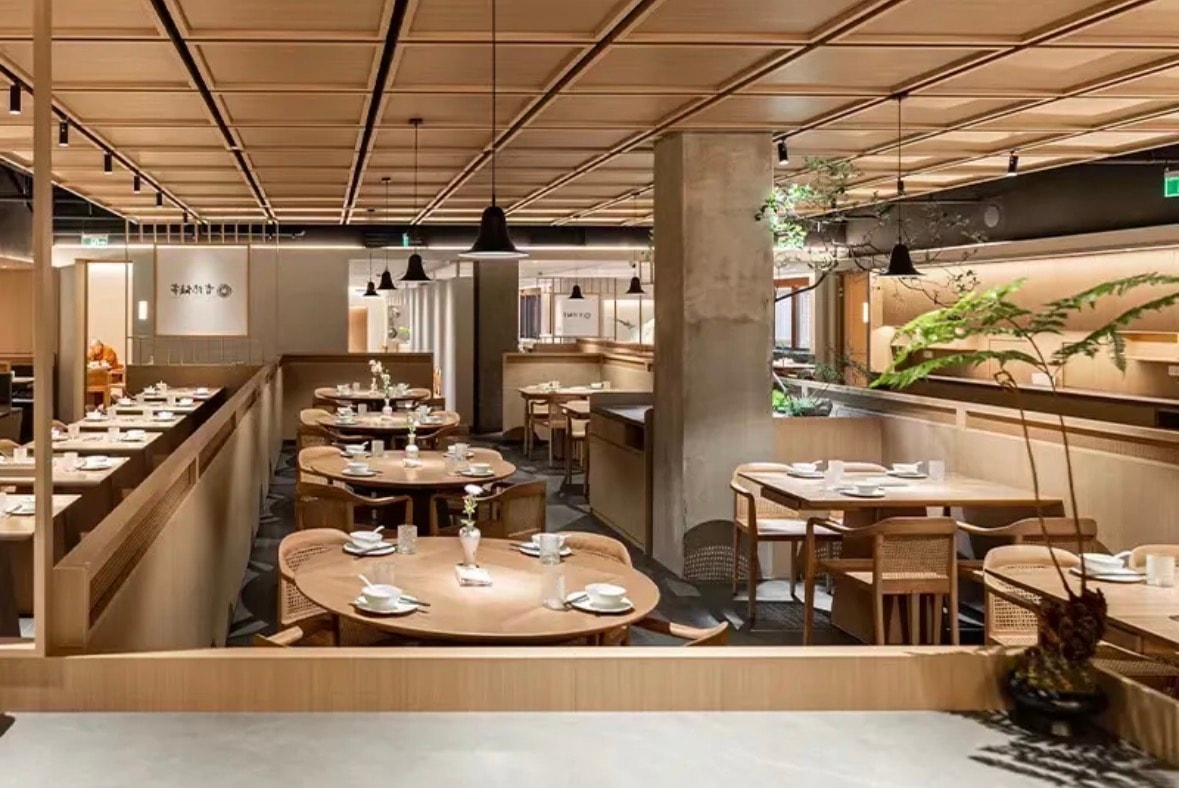
A design-led modern Chinese vegetarian room on the third floor of Fuhui Building by Jing'an Temple, about 115 RMB a head. The menu is built on wild mushrooms, matsutake, truffle and morel, plated with quiet, photogenic care. It reads like a proper date even on a Tuesday, and solo diners are looked after just as warmly.
Jade Buddha Temple vegetarian 玉佛禅寺素斋, Putuo
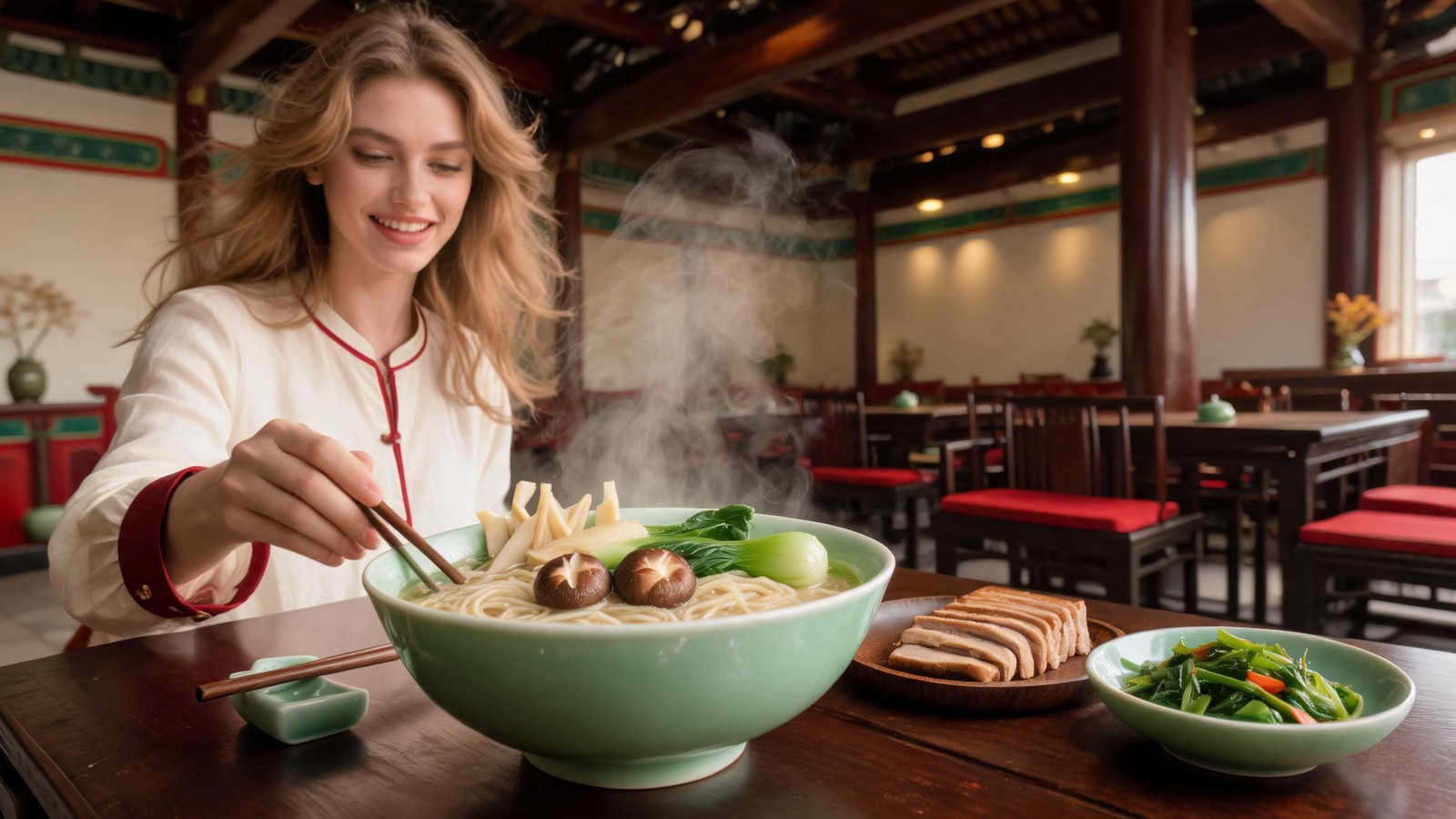
Buddhist temple cooking at 170 Anyuan Road: a bowl of the house noodles from about 25 RMB downstairs, or a sit-down spread upstairs closer to 50. Calm, cheap and genuinely good, alone or with family, and the temple's pure-vegetarian mooncakes have a following of their own.
Jing'an Temple vegetarian 静安寺素斋, Jing'an
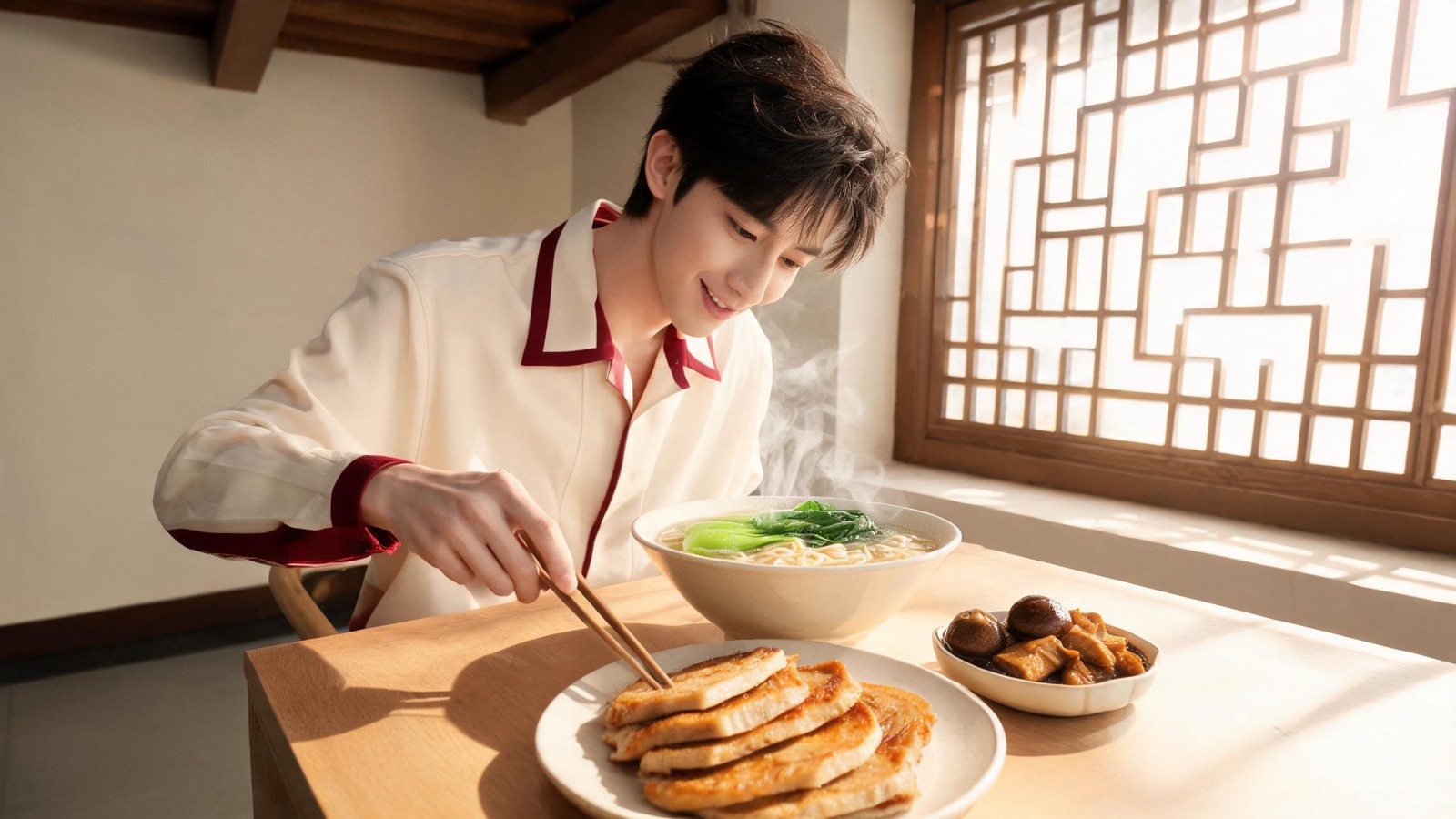
The 素斋 hall inside Jing'an Temple at 1686 West Nanjing Road, meat-free and free of onion and garlic. A ticket-order noodle window runs 10 to 30 RMB, a small sit-down meal roughly 30 to 50. A quiet reset in the middle of the city.
How do I filter for vegetarian food on the delivery apps?
Search the Chinese term rather than the English one. 素食 (vegetarian) and 全素 (pure vegetarian, no eggs or dairy) return far more than typing "vegetarian" does. 净素 is the Buddhist term and will surface temple-style kitchens, which are reliably egg-free and dairy-free.
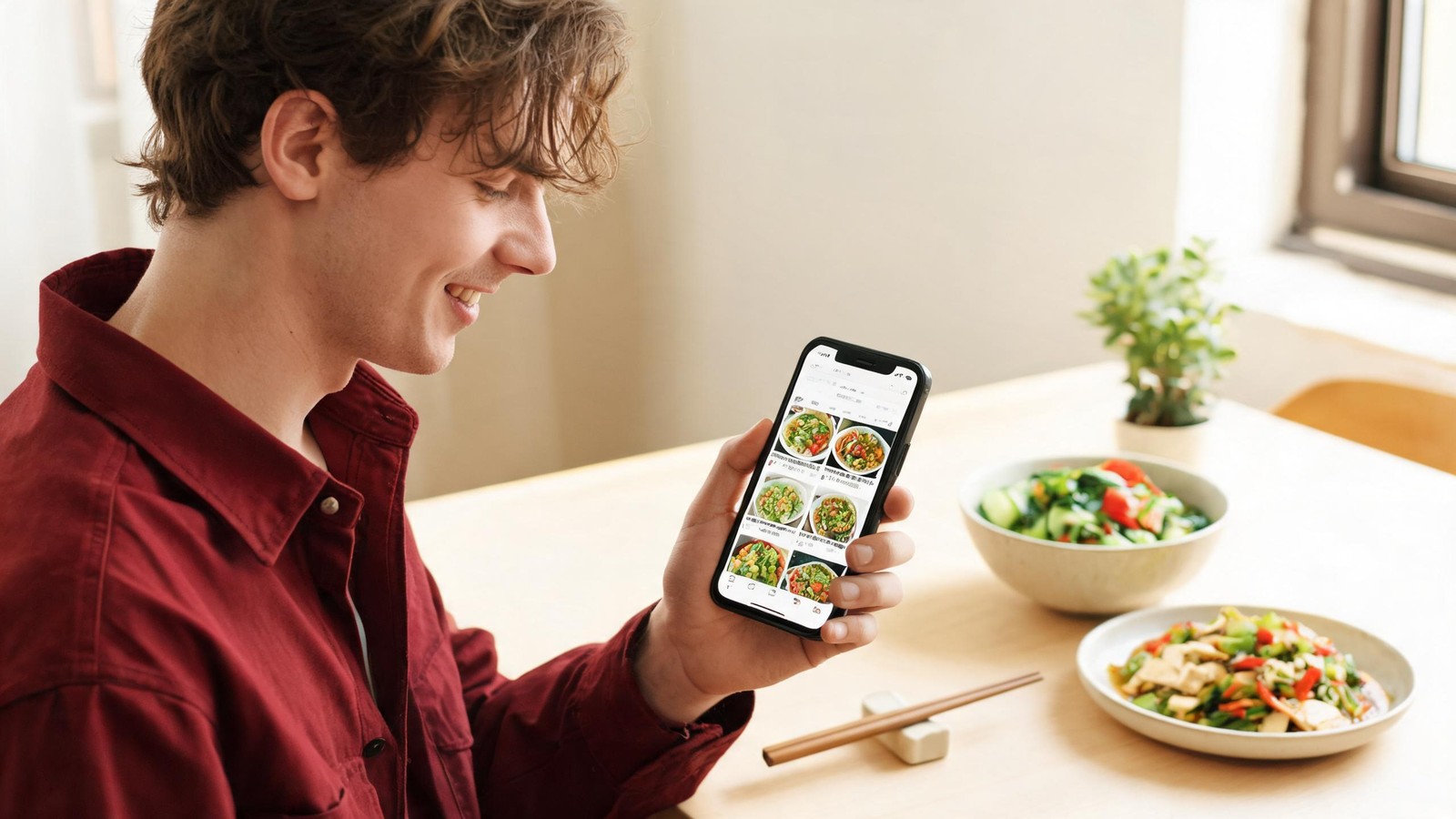
Add your allergy note to the order comments in Chinese, using the phrases above, and keep it short. A long paragraph gets skimmed; one line gets read. Our guide to ordering on Meituan and Ele.me covers getting the apps working in the first place, which is the prerequisite for any of this.
For finding places on a map rather than for delivery, searching 素食 in Amap works well, and our Amap in English guide explains how to run Chinese search terms in an English interface.
What about the rest of the city's food?
You are not restricted to dedicated vegetarian restaurants, you just order more deliberately. Yunnan restaurants carry the widest genuinely vegetable-forward menus in Shanghai. Buddhist-adjacent and Jiangnan places do beancurd well. Middle Eastern and Indian kitchens around the city are used to vegetarian and vegan requests and generally understand them the way you mean them. Hotpot works if you order a mushroom or tomato broth and check that the dipping sauce station has something without oyster sauce.
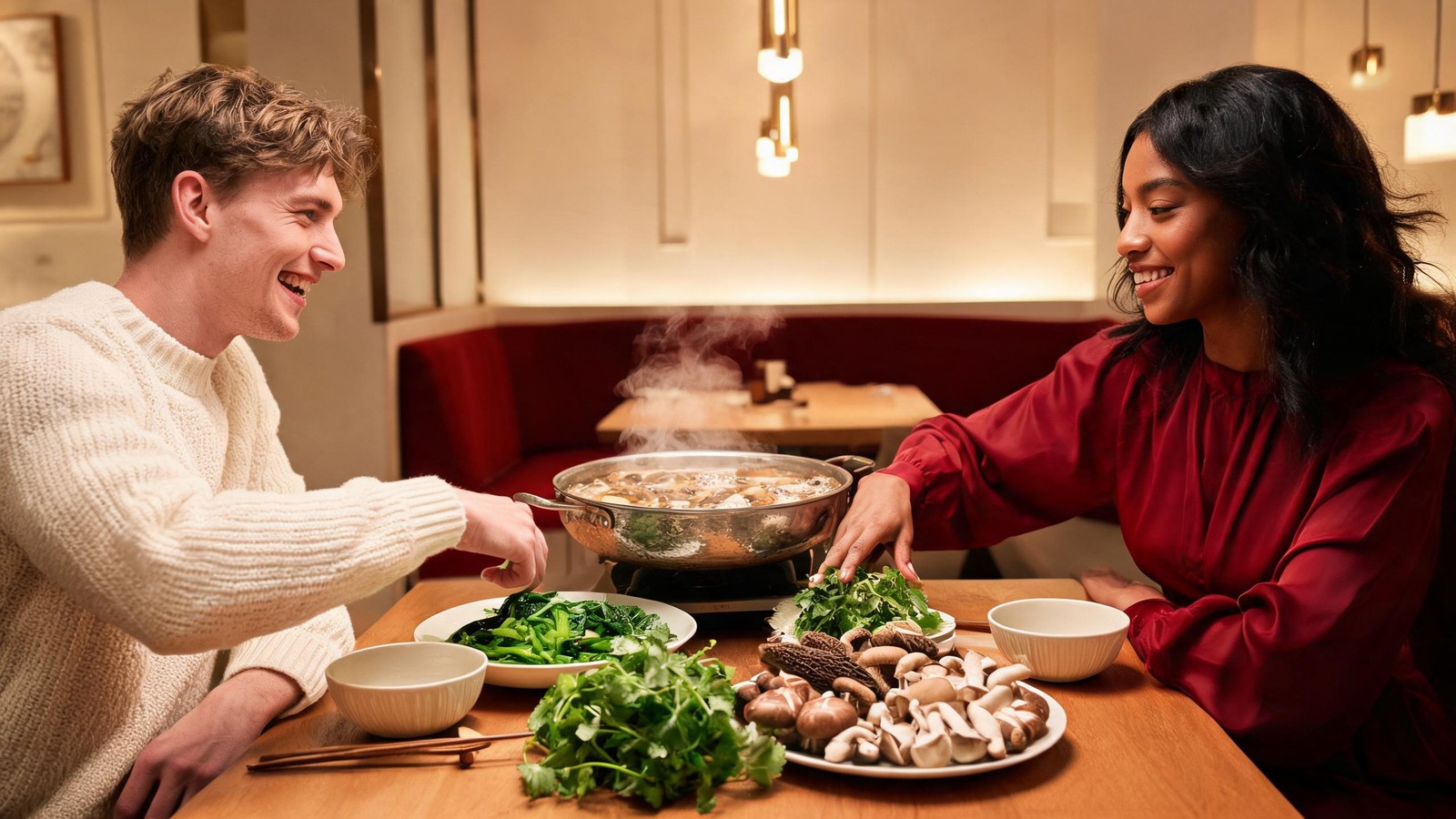
Where it gets difficult: classic Shanghainese cooking, which is built on pork fat and soy, and street breakfast, which is largely wheat. If you want to understand the local food scene beyond your own dietary lane, our guide to where Shanghai expats actually eat is the wider picture.
Which one is for you
If you are vegetarian and eat eggs and dairy, you can eat almost anywhere in Shanghai with one written card; do not over-plan it.
If you are vegan, anchor your regular eating around the dedicated vegetarian restaurants above and treat other places as occasional, because eggs and stock are the hard part rather than meat.
If you avoid gluten by preference, learn to order rice-based dishes and ask for sauces on the side.
If you have coeliac disease, cook at home more than you expected to, and reserve eating out for kitchens that can tell you what is in the sauce; a shared wok is not a controlled environment.
The Book of Han reminds us that 民以食为天, to the people, food is heaven. A kitchen that respects what you leave off the plate respects you too, and this city holds more of them than you would guess.
Is it hard to be vegetarian in Shanghai?
No, as long as you specify no meat stock, lard and dried shrimp alongside no meat, because a kitchen here reads "no meat" as no visible pieces of meat. With a written card in Chinese, most restaurants can feed you comfortably.
Does Chinese soy sauce contain gluten?
Traditional Chinese soy sauce is brewed with wheat, so yes in most cases. Tamari-style wheat-free soy sauce is not standard in Chinese kitchens, so assume the soy sauce in front of you contains wheat unless someone has checked the bottle.
How do I say vegan in Chinese?
全素 (quán sù) is the useful term, meaning no meat, eggs or dairy. 素 alone is sometimes interpreted as vegetarian-with-eggs, so add 不吃蛋、奶 to be unambiguous.
Can I find plant-based milk in Shanghai supermarkets?
Yes. Soy milk is everywhere, and oat and almond milk are widely stocked in larger supermarkets and imported grocers, as well as being standard options in most speciality coffee shops across the city.
Are there gluten-free restaurants in Shanghai?
Dedicated gluten-free restaurants are rare, but a number of international and health-focused kitchens can accommodate the request if you call ahead and explain it as an allergy. Ringing before you go gets a far more reliable answer than asking at the door during service.