You have three realistic ways to send a parcel out of Shanghai: China Post EMS for price, SF Express International for a middle path with door pickup, and DHL.
You have three realistic ways to send a parcel out of Shanghai: China Post EMS, which is the cheapest tracked option and caps most destinations at 20 kg per box; SF Express International, which is faster and picks up from your door; and DHL, FedEx or UPS, which are quickest and cost several times more. All three need your passport at the counter, and none of them will take batteries, liquids or powders from a walk-in customer.
Which courier should I use to send a parcel abroad?
It depends on whether you are optimising for money or for time, and the gap between the two is large.
EMS is the postal service, tracked door to door and cheapest for a real box of belongings. SF Express International sits in the middle with easy door pickup and good tracking. DHL, FedEx and UPS are quickest and cost a real premium, go-to kept for paperwork you cannot lose. Past five boxes, a mover's shared-container sea freight beats them all per kilo.
One thing worth understanding before you compare quotes: international couriers charge on volumetric weight, meaning a big light box is billed as if it were heavy. A duvet costs more to send than a laptop. Pack tight, use the smallest box that fits, and squeeze the air out of soft goods. Boxes, tape and bubble wrap are a few RMB each on Taobao if you order them a day ahead, which our Taobao in English guide covers.
If the box is going the other way, arriving rather than leaving, our parcel collection guide covers the pickup stations and lockers instead.
Do I need my passport to post something?
Yes. China has run real-name posting rules nationwide for years: the sender's identity is recorded, the contents are inspected, and the parcel is X-rayed before it is accepted. Bring your passport, expect the clerk to open the box in front of you, and do not seal it before you arrive. That last point catches almost everyone once.
How do I book a door pickup instead of queueing?
For most people this is the easy path, and it works in English less well than you would like, so here is the order of operations.
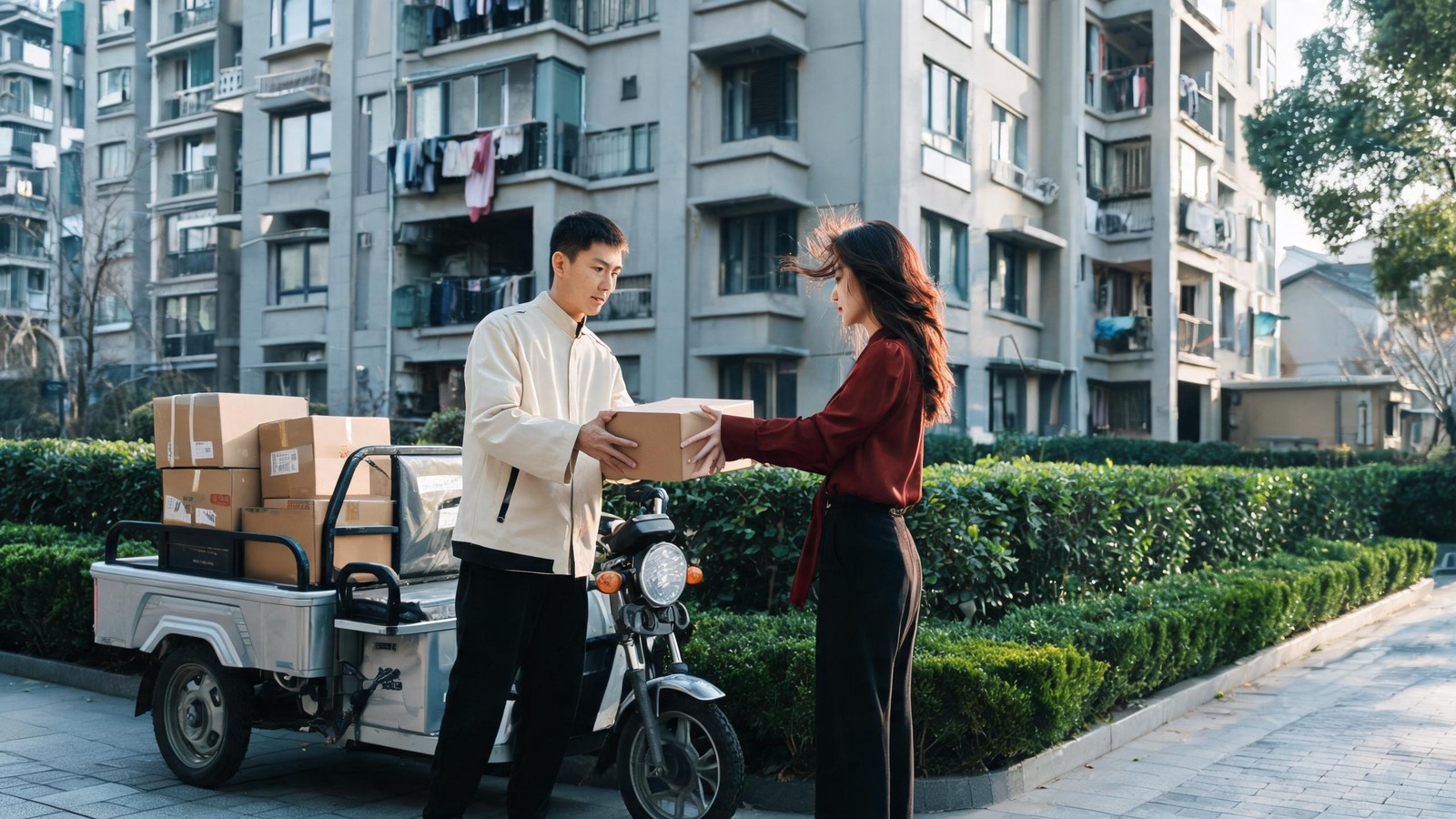
- SF Express. Open the 顺丰速运 mini-program in WeChat or the SF app, choose to send a parcel, set the pickup address and pick "international" as the destination type. Or call the hotline on 95338, which is staffed daily. A courier comes to your door, weighs the box, and prints the waybill on the spot.
- EMS. Call 11183 to book a collection, or walk into any China Post branch with the green and yellow signage. Branches near university districts and government offices tend to handle international paperwork more often, which makes them quicker.
- DHL, FedEx and UPS. Book online through their China sites or by phone. Pickup windows are tighter and they will ask for a commercial invoice even for personal effects.
Have the destination address written in the local language of the receiving country, in Latin script, plus a phone number that actually rings. A missing receiver phone number is the most common reason a box sits in a foreign depot.
What am I not allowed to send?
More than you would guess, and the rules are enforced at the counter rather than argued about. As a walk-in customer, expect a refusal on:
- Batteries and anything containing one. Loose lithium batteries and power banks are refused outright. Devices with a built-in battery are handled case by case and often need a commercial shipper.
- Liquids, creams, powders and aerosols. That includes perfume, skincare and most cosmetics.
- Food, medicine and supplements. Tea and packaged snacks sometimes pass, meat and dairy do not, and the destination country adds its own rules as well.
- Anything flammable, magnetic or pressurised, plus the obvious weapons, cash and counterfeits.
Fragile and liquid items also lower the EMS weight ceiling for a single box, so a heavy fragile shipment is better split. If a shop tells you they can send your perfume "no problem", that is a freight agent taking a risk with your parcel, not a rule you can rely on.

What will it cost, and how long will it take?
Pricing works the same way everywhere: a first-weight charge for the opening 500 g or 1 kg, then an add-on rate per additional unit, banded by destination zone. Rates move with fuel surcharges and route capacity, so any number printed in a blog post ages badly. Do this instead:
- Weigh the packed box on a bathroom scale and measure it, then calculate volumetric weight as length times width times height in centimetres, divided by 5000 or 6000 depending on the carrier.
- Get a quote from the SF mini-program, which prices international shipments before you commit.
- Ask the China Post counter for the EMS rate to your country for that weight, and compare.
As a rule of thumb that has held up across my own moves, EMS lands well under the integrators for the same box, and the express carriers charge a real premium for a few days of speed. For a single wedding invitation, that premium is irrelevant. For 18 kg of winter coats, it is the whole budget.
What happens with customs and duty at the other end?
Fill the customs declaration honestly and specifically. "Gift" and "personal effects" with a low declared value is the folk wisdom, and it backfires: if the box is lost or damaged, compensation is capped at what you declared. Write real contents ("2 cotton jackets, 1 pair shoes, used") and a plausible value.
Duty is charged by the receiving country, not by China, and thresholds vary widely. Whoever receives the box may get a customs bill before delivery, so warn them. Books and used clothing usually clear quietly. New electronics rarely do.
What if I am shipping a whole household?
Once you are past four or five boxes, stop thinking in parcels. International movers in Shanghai sell shared-container sea freight, which is slow at roughly six to ten weeks door to door but dramatically cheaper per kilo than air. Get three written quotes, confirm whether the price includes destination customs clearance and delivery, and ask what happens if the container is held. If you are leaving for good, work through our exit checklist in parallel: shipping is one line on a longer list that includes closing accounts and cancelling your residence permit.
Which option is for you
If you are sending documents that must arrive this week, choose DHL, FedEx or UPS. If you are sending a box of clothes or books home and can wait a fortnight, choose EMS. If you want a middle path with door pickup and better tracking, choose SF Express International. If you are shipping an entire flat, choose shared-container sea freight through a mover and start six weeks before your flight.
Laozi wrote 千里之行,始于足下, a journey of a thousand li begins beneath your feet; your box may cross oceans, but it starts with one honest label and the courier at your door.
Can I send a parcel abroad without a Chinese ID?
Yes. Your passport is accepted for real-name posting. Bring the physical passport, not a photo of it.
What is the heaviest box I can send by EMS?
Most destinations cap a single international express item at 20 kg, and boxes with fragile or liquid contents are capped lower. Heavier shipments get split into multiple pieces, each priced separately.
Can I ship my laptop or phone home?
Devices with built-in lithium batteries are restricted and most walk-in counters will refuse them. Carrying them in hand luggage is simpler, and if you must ship, use a courier that handles dangerous goods and declare it properly.
How do I track the parcel once it leaves China?
Keep the waybill number from the receipt. EMS tracking hands over to the destination postal service, so once it lands you will often get better information from that country's own tracking site than from the Chinese one.
Is it cheaper to post from Shanghai or to pay excess baggage?
For one or two suitcases of clothing, excess baggage on your own flight is often competitive and it arrives with you. For anything you cannot carry, or if you are flying out before you have finished packing up, shipping wins.