
You do not need a car in Shanghai.
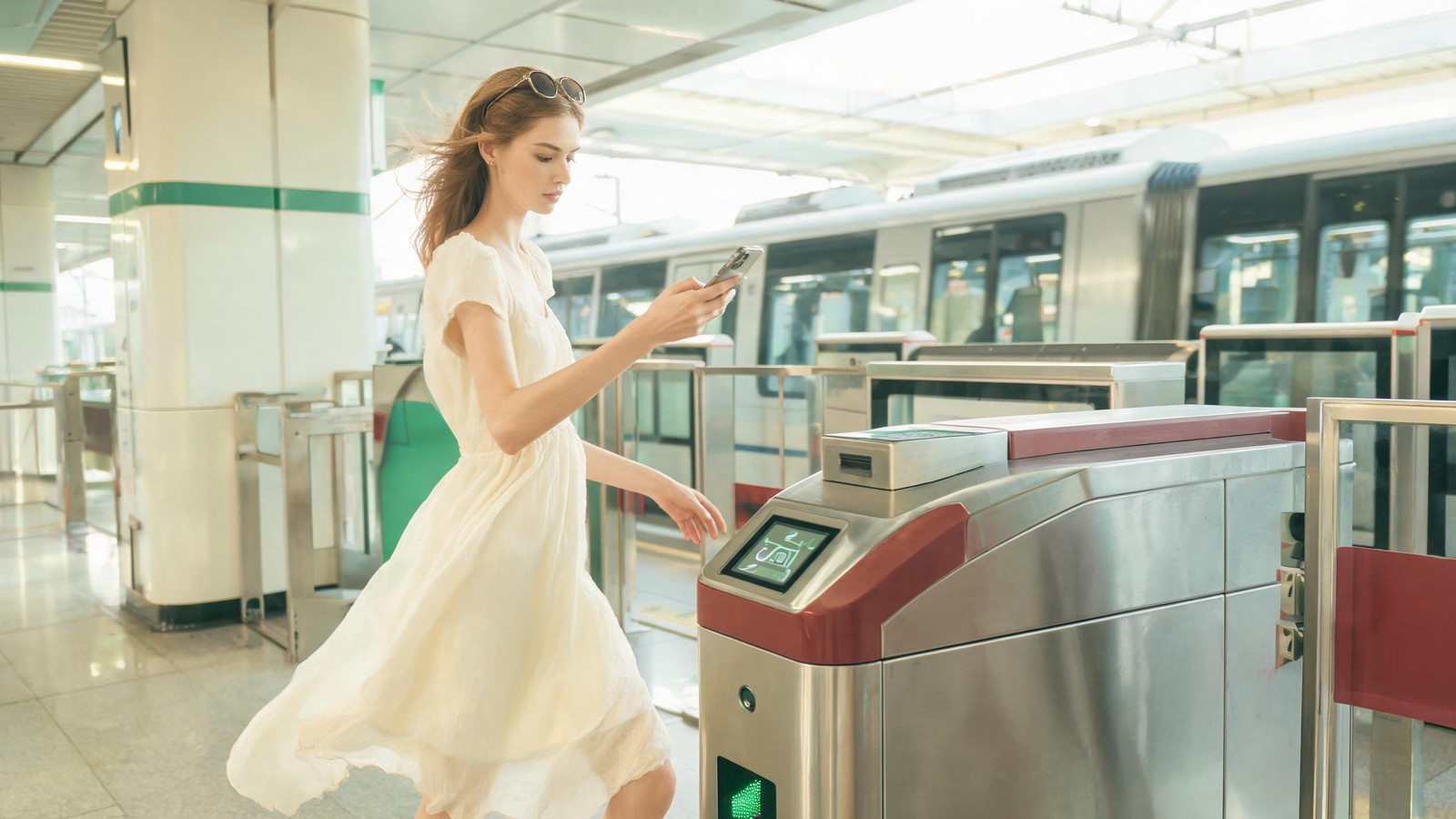
How does the Shanghai metro work?
Shanghai's metro system is enormous. Twenty lines, over 500 stations, and still growing. It's clean, air-conditioned, and absurdly cheap. A single ride costs 3 to 9 RMB (~USD 0.40 to 1.25) depending on distance (most trips within the city center run 3 to 5 RMB, ~USD 0.40 to 0.70). Trains run from roughly 5:30 AM to 10:30 PM, with the last trains varying by line and direction.
You can pay with:
- Alipay or WeChat Pay: Open the app, go to the transit mini-program, scan the QR code at the gate. This is the easiest method for newcomers since you've probably already set up one of these.
- Shanghai Transportation Card (交通卡): A physical stored-value card you can buy at any metro station service center for a 20 RMB (~USD 3) refundable deposit. Tap on, tap off. Also works on buses, ferries, and some taxis.
- Apple Pay / Huawei Pay: If your phone supports a Shanghai Transit virtual card in your wallet app, you can tap your phone at the gate.
Rush hour is real. Lines 1, 2, and 10 between 7:30 and 9:30 AM are sardine territory. If your schedule allows, shift your commute by even 30 minutes in either direction.
Pro tip: download the 上海地铁 (Shanghai Metro) official app or use Amap/Gaode Maps for real-time train schedules and transfer route planning. The metro signage is bilingual (Chinese and English), so navigation is fairly straightforward even on day one.
How do you use Didi in Shanghai?
Think of Didi as China's Uber, except it's actually better in several ways. The app has an English interface (switch in settings), and you can pay with Alipay, WeChat Pay, or an international credit card linked directly in the app.
To set up Didi: download the app, register with your +86 phone number (you'll want drivers to be able to call you), enter a destination in English or Chinese, and request a ride. Pricing is dynamic, but a typical 20-minute ride across central Shanghai runs 25 to 50 RMB (~USD 3.50 to 7). Airport runs to Pudong cost roughly 150 to 250 RMB (~USD 21 to 35) depending on your starting point and traffic.
A few things to know:
- During rush hour and rainy days, demand surges. You might wait 10 to 15 minutes for a car, and fares jump.
- Didi drivers rarely speak English. The app translates your destination, but if you're being picked up from a tricky location, drop a pin rather than typing an address.
- The Didi mini-program inside Alipay works if you don't want to download another app.
- Alternatives: Caocao (曹操) runs an all-electric fleet and tends to have slightly newer cars. T3 is another competitor. Both work similarly but have smaller fleets.
When should you take a taxi instead?
Shanghai taxis are metered and reasonably priced. Flagfall is 16 RMB (~USD 2) for the first 3 km during the day (18 RMB (~USD 2.50) after 11 PM), then about 2.5 RMB (~USD 0.35) per kilometer. A typical cross-town ride runs 30 to 60 RMB (~USD 4 to 8).
When are taxis better than Didi?
- During Didi surge pricing (heavy rain, holidays, 2 AM on a Saturday).
- When you spot one right there and don't want to wait.
- At taxi queues outside malls, hospitals, and train stations.
All Shanghai taxis accept Alipay and WeChat Pay. Many also take cash. Some still don't take international credit cards directly, so have a payment app ready. The taxi receipt prints automatically; keep it in case you leave something in the car, since it has the license plate and a complaint hotline.

How do shared bikes work in Shanghai?
Three companies dominate Shanghai's shared bike scene: Hellobike (哈啰), Meituan Bike (美团单车, yellow bikes), and Qingju (青桔, green bikes, owned by Didi). You'll see them everywhere, parked in clusters on sidewalks.
To use one: open the corresponding app (or the Alipay mini-program for Hellobike), scan the QR code on the bike, and ride. When you're done, lock the bike in a designated parking zone, or you'll get fined. Pricing is roughly 1.5 to 2 RMB (~USD 0.20 to 0.30) per 15 minutes.
Important: shared electric bikes/scooters are not available in Shanghai. The city banned shared e-bikes back in 2017 for safety reasons, and that ban is still in effect. You'll see plenty of privately owned e-bikes around, but the dockless rental platforms only offer pedal bikes here.
Shared bikes are perfect for short hops between the metro station and your destination, especially in walkable neighborhoods like the Xuhui area around Wukang Lu, Jing'an along Nanjing Xi Lu, or the Bund waterfront.
Are Shanghai buses worth using?
Shanghai has an enormous bus network. The flat fare is 2 RMB (~USD 0.30), payable via transportation card or mobile payment. The bus system covers routes the metro doesn't reach, and some scenic routes (like the ones along the Bund) are genuinely pleasant.
The challenge: route information is almost entirely in Chinese, announcements are in Mandarin (sometimes with English on major routes), and figuring out which bus goes where requires Amap or Baidu Maps. If you're comfortable reading Chinese transit apps, buses open up a lot of the city. If not, the metro and Didi will serve you well for the first few months.
Is Shanghai a walkable city?
Shanghai is surprisingly walkable, especially in the central districts. Some wonderful neighborhoods for strolling:
- Wukang Lu and the surrounding Xuhui lanes: Tree-lined streets, boutiques, cafes, and some of Shanghai's prettiest architecture.
- Jing'an Temple to Nanjing Xi Lu: Major shopping and dining corridor.
- The Bund to Nanjing Dong Lu: Classic Shanghai tourist walk, but genuinely impressive, especially at night.
- Tianzifang and the Sinan Mansions area: Narrow lanes, galleries, restaurants.
Summer heat (June through September) and winter chill (December through February) are real. Plan outdoor walks for mornings and evenings during summer, and layer up in winter.
How do you get from the airport into Shanghai?
Pudong International Airport (PVG)
- Maglev train: 8 minutes to Longyang Road metro station. Regular ticket 50 RMB (~USD 7), discounted to 40 RMB (~USD 5.50) if you show a same-day flight boarding pass. From Longyang Road, transfer to Line 2 or Line 16 to get into the city. Total travel time to central Shanghai: about 50 to 70 minutes.
- Metro Line 2: Direct to central Shanghai. Takes about 60 to 80 minutes to People's Square. Costs 7 to 9 RMB (~USD 1 to 1.25). Runs until around 10:30 PM.
- Taxi: 45 to 90 minutes depending on traffic. Metered fare to central Shanghai runs roughly 150 to 250 RMB (~USD 21 to 35) including the airport expressway toll.
- Didi: Similar pricing to taxis, sometimes cheaper. Order from arrivals.
Hongqiao Airport and Railway Station (SHA)
- Metro Lines 2 and 10: Both serve Hongqiao. Line 2 runs to Pudong via central Shanghai; Line 10 covers the Xuhui and Jing'an areas. Much closer to the city center than Pudong, so a metro ride is typically 30 to 50 minutes.
- Taxi/Didi: 80 to 150 RMB (~USD 11 to 21) to central Shanghai, 20 to 45 minutes depending on traffic.
How do you pay for transit in Shanghai?
Almost everything in Shanghai transit accepts mobile payment, so set this up before your first ride (our full Alipay and WeChat Pay guide walks through it). Here's the minimum setup:
- Get Alipay or WeChat Pay working with your international credit card linked. Both accept Visa and Mastercard.
- Activate the transit QR code in your payment app. In Alipay: search for "Shanghai Metro" or 上海地铁 in mini-programs. In WeChat: search for the same.
- Optional but nice: Buy a physical Shanghai Transportation Card at any metro service center. It's faster through gates than scanning a phone.
Which navigation apps work in Shanghai?
Use Amap (AMap Global for the English version) or Baidu Maps. Google Maps technically loads in Shanghai, but the GPS offset will put you 50 to 500 meters from your actual location, and transit data is spotty. Apple Maps uses Chinese mapping data and works reasonably well for basic navigation.
Amap is the standard. Its English-language app (AMap Global) launched for international users and doesn't require a +86 number. It covers walking, driving, transit routing, and even has a built-in ride-hailing feature covering 360+ cities. For Chinese-language addresses, copy-paste them directly from WeChat or your browser into Amap's search bar.
What practical tips should newcomers know?
- Keep your phone charged. Your phone is your wallet, your transit pass, your map, and your ride-hailing device. A dead phone in Shanghai is genuinely inconvenient. Carry a power bank.
- Screenshot your destination in Chinese before you leave. If your phone dies or the driver can't find you, showing Chinese characters on a piece of paper (or a phone screenshot) solves most problems.
- Rush hour is 7:30 to 9:30 AM and 5:00 to 7:30 PM. Plan around it when possible.
- The metro closes early by global standards. If you're out late, Didi or a taxi is your way home after 10:30 PM.
- Rainy days mean ride-hailing chaos. Everyone orders a car, wait times spike, and surge pricing kicks in. On rainy mornings, just take the metro.
As Laozi put it, 千里之行,始于足下, every journey of a thousand li begins under your own feet. Without a car, each day starts on foot or on the metro, and the city turns out to be closer than the map made it look.
Good to know
- Good for: reaching anywhere in Shanghai without owning a car, from the airport run to a ride home after midnight.
- What you'll pay: the metro from ¥3 (~USD 0.40), most city journeys ¥3 to ¥9 (~USD 0.40 to 1.25); a Didi across town is usually ¥20 to ¥50 (~USD 3 to 7).
- Make the most of it: put the metro QR code in Alipay or WeChat, keep Didi for door-to-door, and grab a shared bike for the last kilometre.
Do I really not need a car in Shanghai?
For most residents, no. The metro, Didi, taxis and shared bikes cover almost everything, usually faster and cheaper than driving and parking in the city center.
How much does the Shanghai metro cost?
A single ride is 3 to 9 RMB (~USD 0.40 to 1.25) depending on distance, with most central trips 3 to 5 RMB (~USD 0.40 to 0.70). You can pay with Alipay, WeChat Pay or a physical Shanghai Transportation Card. As of 2026 the base fare is ¥3 (~USD 0.40) for the first 6km, then ¥1 (~USD 0.15) more per 10km; in August 2026 the city opened its first fare review since 2005, so a small rise is on the table.
Can I use Didi in English as an expat?
Yes. Switch the app to English in settings and pay with Alipay, WeChat Pay or an international card. Register with a +86 number so drivers can call you when they cannot find the pickup spot.
How do I get from Pudong airport into the city?
Options are the Maglev to Longyang Road (40 to 50 RMB, ~USD 5.50 to 7) plus a metro transfer, Metro Line 2 direct (7 to 9 RMB (~USD 1 to 1.25), about 60 to 80 minutes), or a taxi or Didi (roughly 150 to 250 RMB, ~USD 21 to 35).
Does Google Maps work in Shanghai?
Not well. The GPS offset misplaces you and transit data is patchy. Use Amap (AMap Global for the English version) or Baidu Maps instead.