
The standard deal is one month's deposit plus three months' rent up front, paid only to the person named on the ownership certificate.
The standard Shanghai deal is one month's rent as deposit plus three months' rent up front, paid to the person whose name is on the property ownership certificate, and never before you have stood inside the actual apartment. Since 15 September 2025 the national Housing Rental Regulations require your lease to spell out the deposit terms in writing. Everything below is how to use that.

Every long-term resident I know has a rental story. Mine involves a bathroom ceiling; a friend's involves a landlord who turned out to live in Vancouver and also, it emerged, did not own the apartment. Shanghai's rental market moves fast, listings are gorgeous, and the pressure to transfer money today is constant. The good news is that the scams here are not creative. They repeat the same handful of patterns year after year, which means you can learn the patterns once and be effectively vaccinated.
Good to know
- Good for: anyone signing a Shanghai lease and wanting the deposit back at the end.
- What you'll pay upfront: 押一付三, one month's deposit plus three months' rent up front, plus an agent fee (often about a third of one month's rent, sometimes more, occasionally nothing).
- Make the most of it: since 15 September 2025 the law requires the deposit terms in the contract, so never sign a lease that is silent on when and how your deposit comes back.
How much deposit do you pay to rent in Shanghai?
One month's rent as deposit plus three months' rent up front, all paid on signing. Locals call it 押一付三 (ya yi fu san): one month held as deposit, rent paid three months at a time. Some landlords take two months' deposit and monthly rent instead (押二付一), which frees up cash but ties up more deposit. Two rules follow:
- If someone wants far more than a quarter up front (six months, a year), or any money before you have seen the flat and met the owner, slow down and ask why.
- The deposit is refundable at move-out, minus documented damage. Get the amount, the conditions and the return date written into the lease, and a signed receipt for every payment. A transfer record plus a receipt wins disputes; a WeChat promise does not. Ask for a fapiao (发票) each time you pay, too: a landlord renting out is running a taxable activity and is meant to provide one, and it quietly puts your tenancy on the official record.
What does the 2025 rental law give you?
The Housing Rental Regulations (住房租赁条例, State Council Order 812) took effect on 15 September 2025, China's first national rules written specifically for rental housing. Three parts matter before you sign:
- Deposit terms must be in the contract: the amount, when it returns, and the only grounds for a cut. A lease silent on the deposit is one to have amended, not signed.
- Platforms cannot hold your money: apps and agency float accounts are barred from collecting rent or deposits, so the deposit goes to the landlord, full stop.
- There is a defined route when it goes wrong: negotiation first, then neighborhood mediation (quicker and cheaper than court, and the step most expats never hear about), then arbitration or the courts.
None of this makes a bad landlord good. What it does is give you a written standard to point at, calmly, in a conversation that used to be pure improvisation.
How do you check the landlord actually owns the flat?
Ask to see the property ownership certificate (房产证, fangchanzheng) and the owner's ID, and check both names match each other and match whoever signs your lease. This one check defuses most known scams. Dealing with a sublessor rather than the owner? Ask for the original lease and written proof that subletting is allowed. A real landlord produces all of it without drama.

The classic frauds all fail at exactly this step:
- The overseas landlord. Abroad, terribly sorry, will courier the keys once you wire the deposit. There are no keys.
- The empty apartment. A vacant unit taken on a short booking, shown convincingly, deposits collected from several hunters in one weekend, then gone.
- The double landlord. A middleman re-rents one flat to several tenants at once; one Shanghai case ran to more than fifty victims and roughly 300,000 RMB.
- The holding deposit. "Five people are viewing in an hour, send 2,000 RMB now to hold it." A viewing fee to a stranger is not a thing.
What should you never pay before?
- Viewing the actual unit in person. Not a similar unit, not a video call. The photos that made you fall in love may belong to a different apartment entirely.
- Meeting the landlord (or verified agent) face to face and seeing the ownership documents above.
- Confirming the keys work in the door on signing day, before the final transfer clears if you can arrange it that way.
Urgency is the whole toolkit. "Two other people are coming to see it tonight" is sometimes true in this market, but a deal that cannot survive 24 hours of due diligence was never a deal. There will be another apartment next week; there always is.
How do agents work, and what should the fee be?
Most expats rent through an agent, and a good one earns the fee. But ask what that fee is before you start viewing, because it varies more than people expect. Most agents take around 30% of one month's rent as commission from the tenant; some ask for as much as 50%; and a few charge the tenant nothing at all and take their cut from the landlord instead. None of it is fixed: the percentage is negotiable, so settle on a number both sides are happy with, in writing, before viewings rather than at the signing table.
Two protections either way. Ask directly who receives the deposit and whose name is on the receipt (it should be the owner, not the agency). And be wary of illegally partitioned rooms, one flat carved into many tiny ones, which break housing rules and can get tenants evicted with little recourse.
How do you get your deposit back at the end?
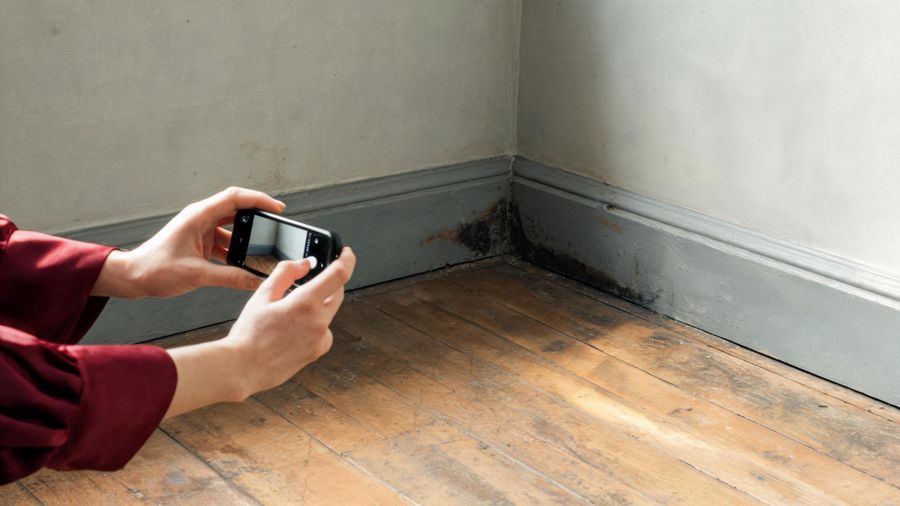
You win this at move-in, not move-out. The tenants who get it all back are the ones who built a paper trail on day one, and it takes about twenty minutes.
- Film the flat before you move a thing in. A slow walk-through and dated photos of every scuff, stain and tired appliance, sent to the landlord on WeChat that day. Chinese courts accept WeChat records, so an unchallenged message beats any memory.
- Keep the lease, every payment and every receipt in one folder, each transfer matched to its clause.
- Log repairs in writing, by message not call, so the ask and the reply both live in text.
- Settle utilities before you hand back the keys and screenshot the zero balances. An unpaid gas bill is the most common legit deduction there is; our utility bills guide covers each account.
- Do the move-out walk-through with the landlord there, film it, and get the refund agreed in a message before the keys change hands. Keys first means leverage gone.
If it still does not come back, put it in writing citing the return date in your lease, then ask about mediation through the neighborhood committee or housing authority. Most disputes end the moment the landlord sees you have dates, photos and a clause, not just a grievance.
One more lever if a landlord stalls: renting out is taxable, so a landlord who has never issued a fapiao can be reported to the national tax service hotline, 12366, with your contract and payment records. The tax office usually just presses them to issue the fapiao and declare the rent, but that prospect alone is often enough to unstick a deposit.
Which one is for you 哪个适合你
If you're new and cannot read a Chinese lease, use an agent; the protection beats the saving. If you're taking a room in a shared flat, get the head tenant's own lease and the owner's written permission to sublet before any money moves. If the landlord lives abroad, insist on meeting a legally authorised representative in person and testing the keys. And if a listing is priced far below its neighbors, that is the red flag, not the bargain.
What do you have to do after you sign?
Within 24 hours of moving in, expats must register their address at the local police station, or the online system many now use. Bring your passport and lease. Your landlord may need to come or send documents, and one who refuses is a red flag, because you need this registration for visa renewals, a bank account and much else. It costs nothing and takes minutes. Our 24-hour police registration guide covers both routes.

After that comes the ordinary business of a home: getting broadband installed, learning which neighborhood errands are worth the walk, and, if you want a hand, finding an ayi. Still choosing an area? Our Shanghai neighborhoods guide maps the trade-offs.
The one-line version
See the flat, see the owner's papers, put every yuan in writing, film everything on day one, and let any deal that demands money faster than that walk on by.
Su Shi wrote 此心安处是吾乡, where the heart is at peace, that is home. Understand the deposit before you sign, and the flat can get on with the quieter work of becoming the place you mean when you say you are going home.
How much is a rental deposit in Shanghai?
One month's rent as deposit, paid with three months' rent up front at signing, the arrangement locals call 押一付三. Anything materially above that is worth questioning before you transfer.
What is a normal agent fee for renting in Shanghai?
Usually about 30% of one month's rent from the tenant, occasionally up to 50%, and sometimes nothing at all when the landlord pays the agent instead. It is negotiable, so pin the number down before you start viewing.
Can a landlord keep my deposit in China?
Only on the grounds written into your lease, such as documented damage or unpaid bills. Under the Housing Rental Regulations in force since September 2025, the contract must state the amount, the return time and the deduction conditions, and anything outside those terms needs proper justification.
What should I do if my landlord will not return the deposit?
Send a written demand that names the return date in your lease, with your move-in and move-out evidence attached. If the landlord still stalls, take it to your neighborhood committee, whose mediation is free and fast.