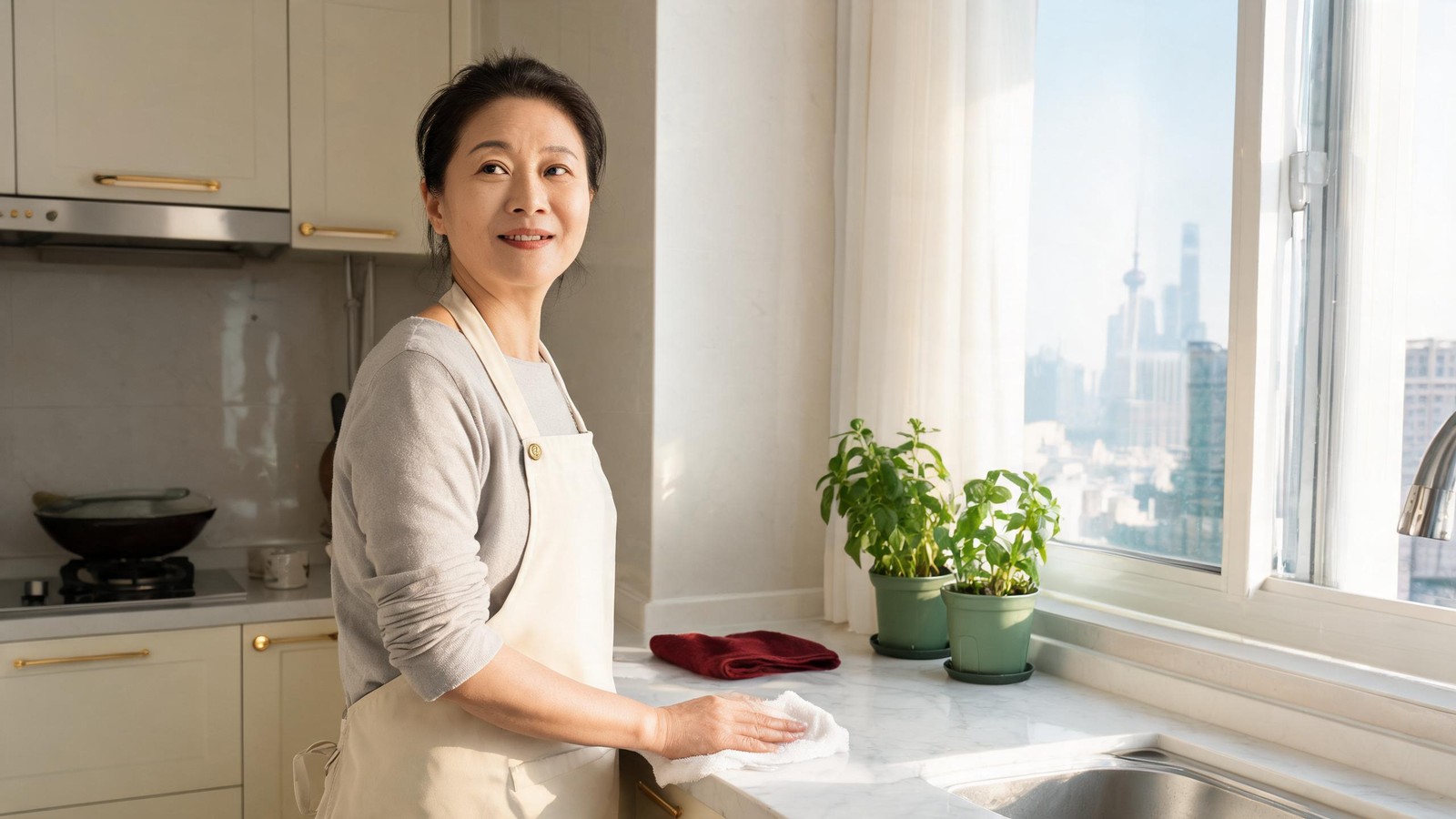
To hire an ayi in Shanghai, expect roughly 40 to 70 RMB an hour for cleaning, find candidates through word of mouth, WeChat groups, or an agency.
The short version. A part-time cleaning ayi in Shanghai runs about 40 to 70 RMB an hour (about US$6 to US$10), and a full-time live-out housekeeper who cooks and cleans is commonly 6,000 to 10,000 RMB a month (about US$900 to US$1,500). You find one through a referral, an agency, or a neighbourhood app, vet her in person, and agree the terms up front. Here is how each step actually works.
Good to know
- Good for: households wanting regular cleaning, cooking or childcare without a full agency contract.
- What you’ll pay: 40 to 70 RMB an hour (US$6 to US$10) part-time, or 6,000 to 10,000 RMB a month (US$900 to US$1,500) for a full-time live-out ayi, as of September 2026.
- Make the most of it: meet her in person, agree hours, pay and duties up front, and budget an extra month’s pay as a Spring Festival bonus.
An ayi (阿姨) is one of the quiet joys of living in Shanghai. For a very reasonable hourly rate, a good household helper can clean your flat, do the laundry, cook, and in many homes help care for the kids. But hiring one when you do not speak much Mandarin and have no local network can feel opaque. Here is how it actually works, what to pay, and how to find someone you trust.
What does an ayi do, and what does it cost in Shanghai?
The word ayi covers a spectrum: a part-time cleaner who comes twice a week, a full-time housekeeper who cooks and shops, or a live-in nanny (sometimes called a 育儿嫂 for newborn care). Rates depend on the work, the hours, the neighbourhood, and whether you need any English or specialised childcare. Treat these as current ballpark ranges and confirm with the person or agency, since pay has drifted upward over the years:
- Part-time cleaning, paid hourly: roughly ¥40 to ¥70 per hour, usually with a two to three hour minimum per visit.
- Full-time live-out housekeeper (cleaning, laundry, cooking, five to six days a week): commonly ¥6,000 to ¥10,000 a month, higher in central districts and for heavier workloads.
- Live-in nanny or full-time childcare: generally more again, and newborn specialists (月嫂 for the first month) command a clear premium.
- English-speaking ayis are rarer and cost more. Most experienced ayis speak little English, which is workable for cleaning and becomes more important for childcare.
Central neighbourhoods like Xuhui and Jing'an tend to sit at the higher end, while parts of Pudong can run a little lower. Prices are negotiated directly, so it helps to ask a couple of neighbours what they pay before you settle.
| Type of ayi | Typical rate (RMB) |
|---|---|
| Part-time cleaning (per hour) | 40 to 70 |
| Full-time live-out, 5 to 6 days (per month) | 6,000 to 10,000 |
A live-in nanny, a newborn 月嫂 specialist, or an English-speaking ayi all sit above these. In US dollars, cleaning is roughly USD 6 to 11 an hour and a full-time housekeeper USD 892 to 1,494 a month, converted at about 6.7 RMB to the dollar, August 2026, so treat the dollars as a ballpark.

Where do I actually find an ayi?
Four routes, roughly in order of how much most expats rely on them:
- Word of mouth. The gold standard. When a family leaves Shanghai they often try to place their trusted ayi with someone new. Ask colleagues, neighbours, and parents at your kid's school. A recommendation from someone you know skips most of the vetting.
- WeChat groups. Most compounds and expat communities have WeChat groups where ayis are recommended and advertised. Ask a colleague or your building's management to add you.
- Agencies (家政公司). A domestic-service agency will match you with candidates, handle basic screening, and step in if it does not work out. You pay a placement fee or a markup on the hourly rate in exchange for that convenience and backup.
- On-demand cleaning apps. WeChat mini-programs and apps let you book a vetted cleaner by the hour without a long commitment. Handy for one-off deep cleans or if your schedule changes often.
How do I vet someone before hiring?
Whether you go through an agency or a friend, do a short trial and a proper chat first:
- Do a paid trial session. One cleaning visit tells you more than any interview about thoroughness and reliability.
- Check references. Ask for the contact of a previous employer, ideally another foreign family, and actually message them.
- Agree the scope clearly. Walk through the flat and name exactly what you want done: floors, bathrooms, ironing, dishes, windows. Expectations around what counts as "cleaning" vary.
- Confirm health and ID. Agencies usually verify identity and a basic health check. If you hire privately, it is reasonable to ask to see an ID and a recent health certificate, especially for childcare or cooking.
If communication feels like the main barrier, a little Mandarin goes a long way with an ayi. Our guide on learning Mandarin in Shanghai can help you get to the useful household vocabulary faster.

Setting up the working relationship well
- Pay on time, in the way that suits her. Many ayis prefer cash or a WeChat transfer on an agreed day. Be consistent.
- Holidays and bonuses. It is common practice to give a bonus around Chinese New Year, often about an extra month's pay for a full-timer, and to understand that many ayis travel home for the holiday.
- Write down the basics. Even a simple note covering hours, rate, days off, and duties prevents most misunderstandings. For a live-in or full-time role, a short written agreement is worth the effort.
- Leave clear instructions. A labelled note or a photo of how you like things done bridges the language gap better than trying to explain in the moment.
- Be a fair employer. Reasonable hours, a clear scope, and respect keep a good ayi for years. The happiest arrangements in this city are long, warm, and mutually loyal.
If you are hiring specifically to help with a new baby, read alongside our guide on having a baby in Shanghai, which covers the newborn-care support many families arrange. And when you need household supplies, our bill-paying guide covers the same WeChat Pay setup you will use to pay her.
Confucius offered 己所不欲,勿施于人, do not do to others what you would not want done to you. The person who keeps your home holds a part of your daily life, so pay and speak as you would want to be paid and spoken to.
How much is an ayi per hour in Shanghai?
Part-time cleaning typically runs about ¥40 to ¥70 per hour (about US$6 to US$10), usually with a two to three hour minimum per visit. Central districts sit at the higher end.
Do I need to speak Chinese to hire an ayi?
Not for cleaning. Most ayis speak little English, so a few Mandarin phrases and written notes help, and for childcare clearer communication matters more.
Should I use an agency or find one privately?
An agency costs more but screens candidates and offers backup if it does not work out. A trusted personal recommendation is often the smoother route if you can get one.
What about a Chinese New Year bonus?
For a full-time ayi it is customary to give a bonus around the holiday, frequently about an extra month's pay, and to expect she will take time off to travel home.
Get the fit right and your ayi becomes part of how the week runs. It is one of the small luxuries that makes daily life here feel lighter.