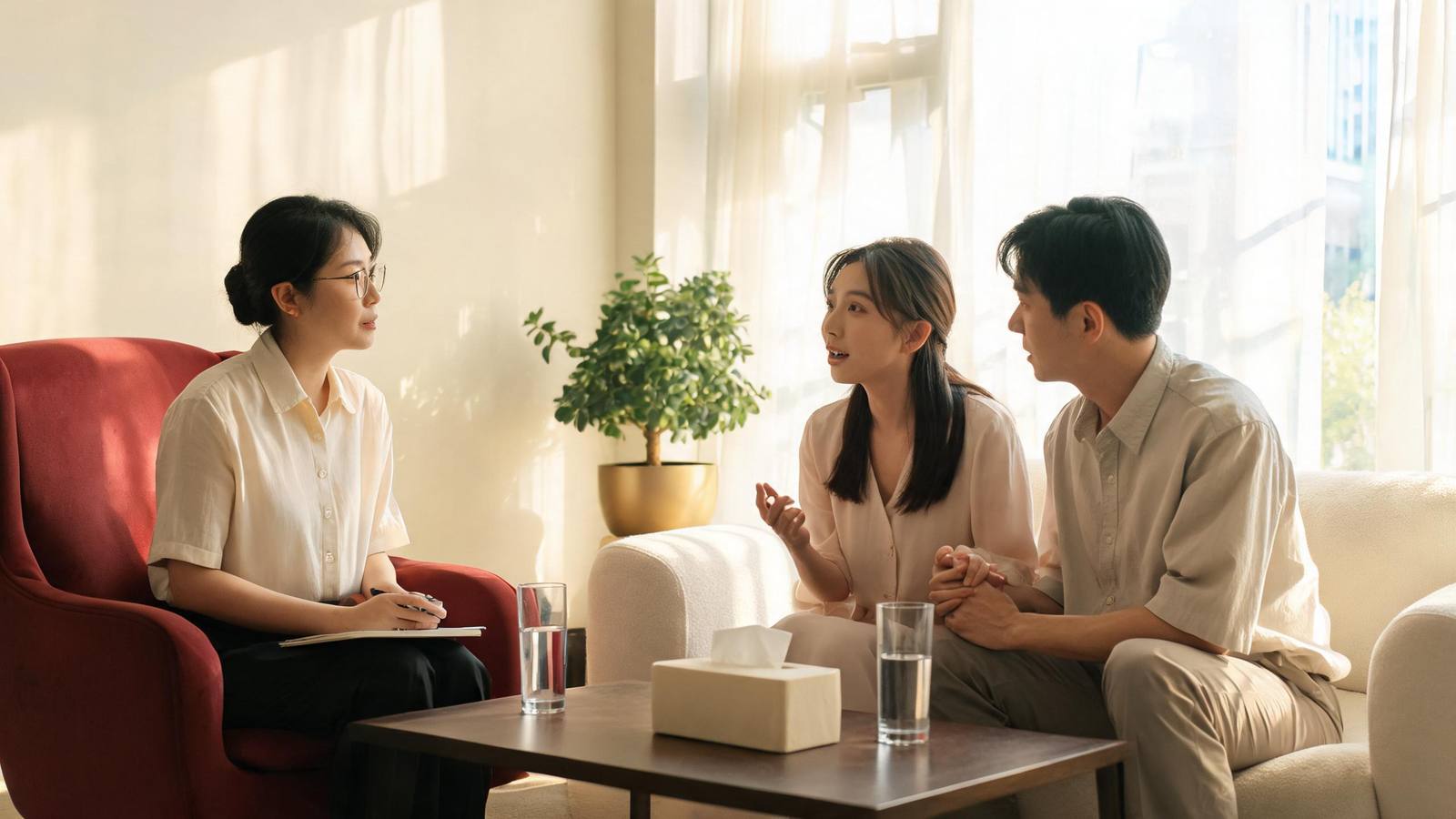
Looking for an English-speaking therapist near you in Shanghai?
If you are feeling low in Shanghai, start with a free ten-minute self-check (PHQ-9 or BDI-II), then find English-speaking help: the SIMHA directory lists about 40 therapists, private sessions run 600 to 1,500 RMB, hospital clinics such as United Family, Parkway and Mindfront charge 1,200 to 2,000 RMB, and Community Center Shanghai offers sliding-scale fees. In a crisis, call LifeLine Shanghai on 400 821 1215.
Step one: check where you actually are 先测一测自己的状态
Before you spend a single yuan on a session, spend ten minutes on a validated screening questionnaire. It gives you a number and a severity band for how you have felt over the past two weeks, which does two useful things: it tells you how urgently to act, and it hands you the vocabulary for your first conversation with a therapist. Do it somewhere quiet, answer honestly, and note your score.
🌐 You can take every test in your own language 每个测试都可以用你的母语做
All the tests below work in multiple languages, including English and 中文. The page usually follows your browser language automatically. If a test opens in the wrong language, look for the language switcher on the page, or change your browser language in settings and reload. Answer in the language you think and feel in; your score will be more honest. 下面所有测试都支持多语言(含中文和英文),页面一般会自动跟随你的浏览器语言;如果打开后语言不对,在页面上找语言切换按钮,或在设置里改浏览器语言后刷新。用你平时思考和感受的语言作答,结果才最真实。
One more practical tip before you start: some result pages lead with a paid "full report". You do not need it: keep scrolling and the free score and severity level are right below.
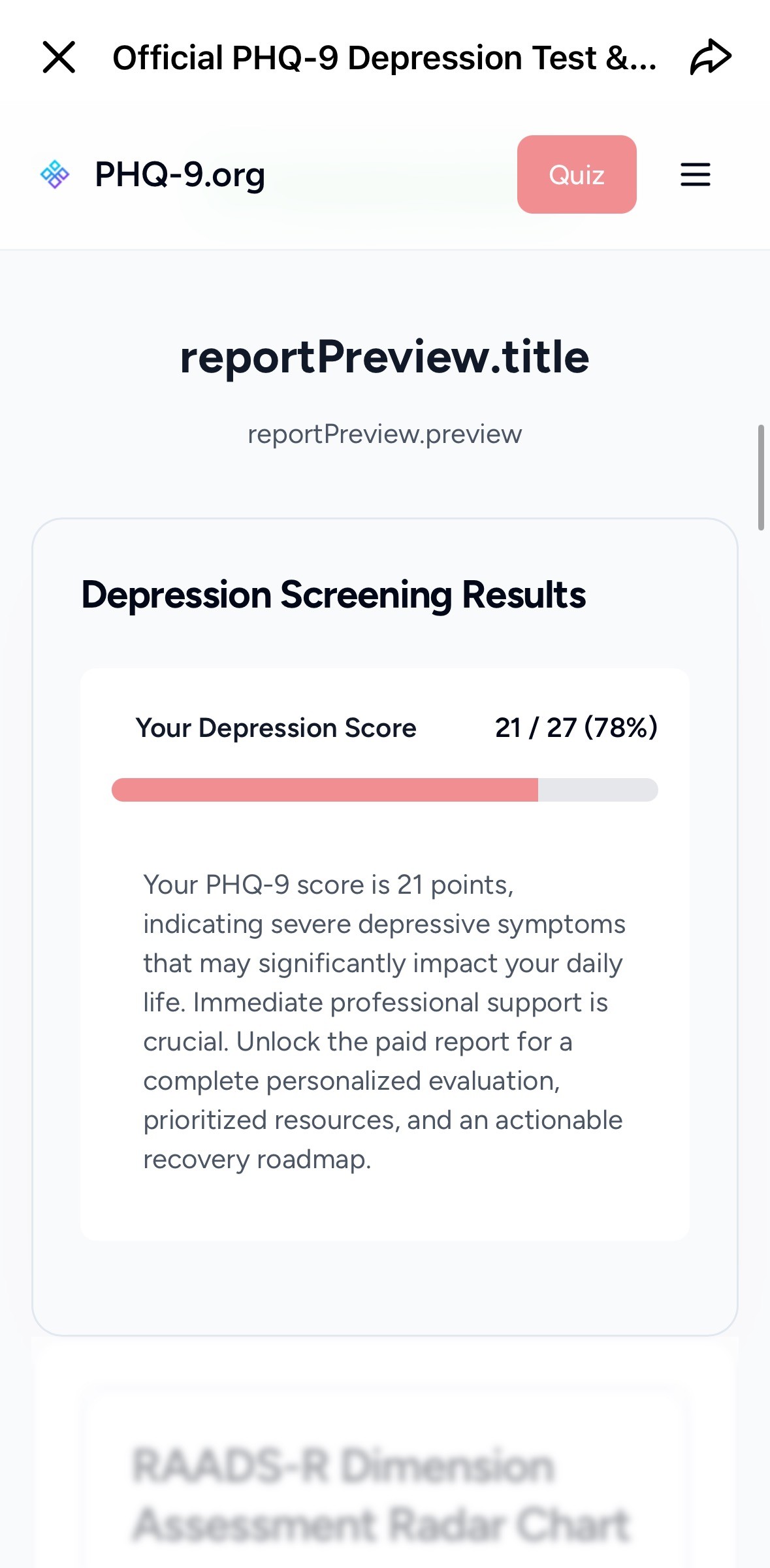
Three free tests that work
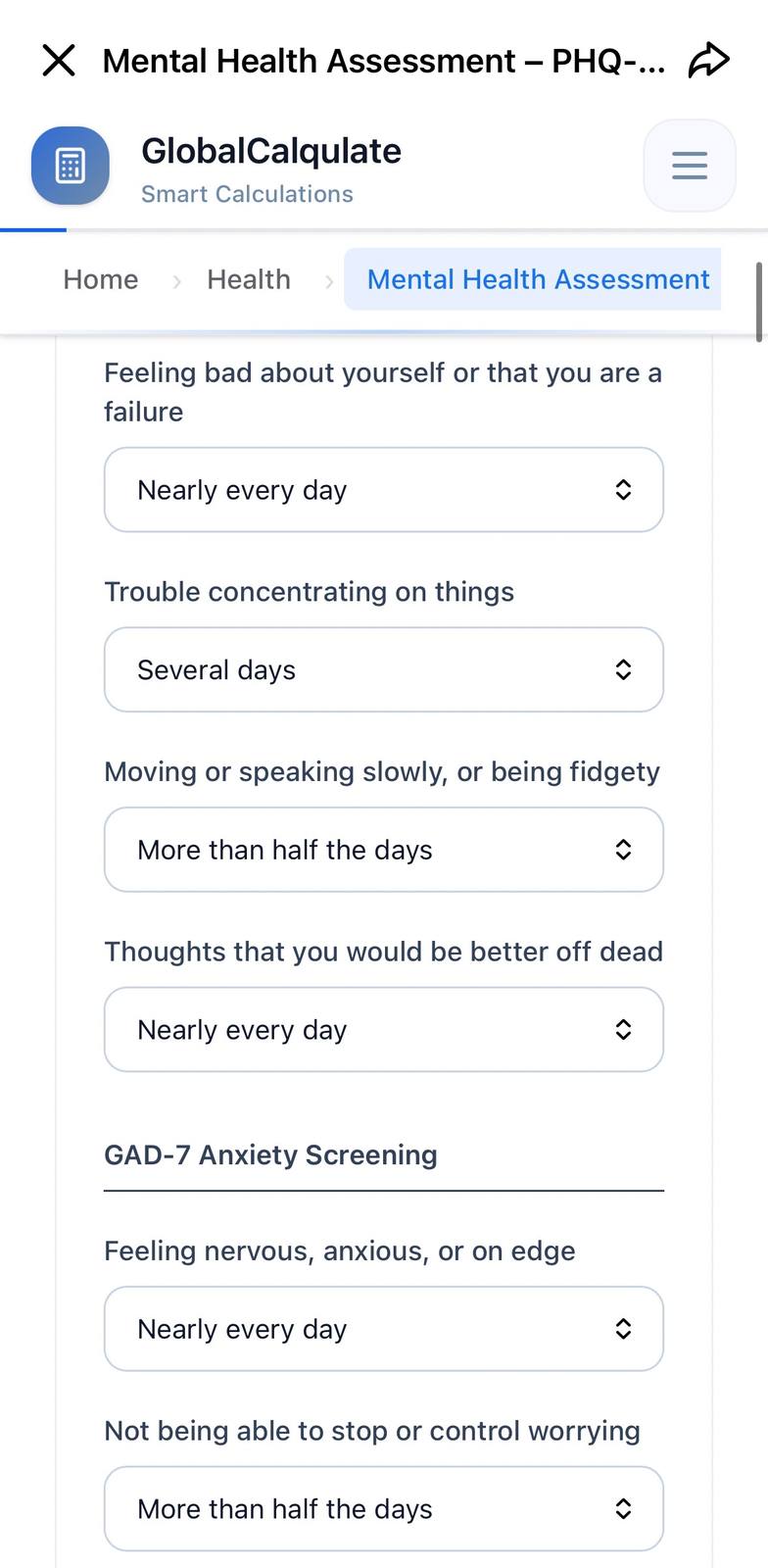
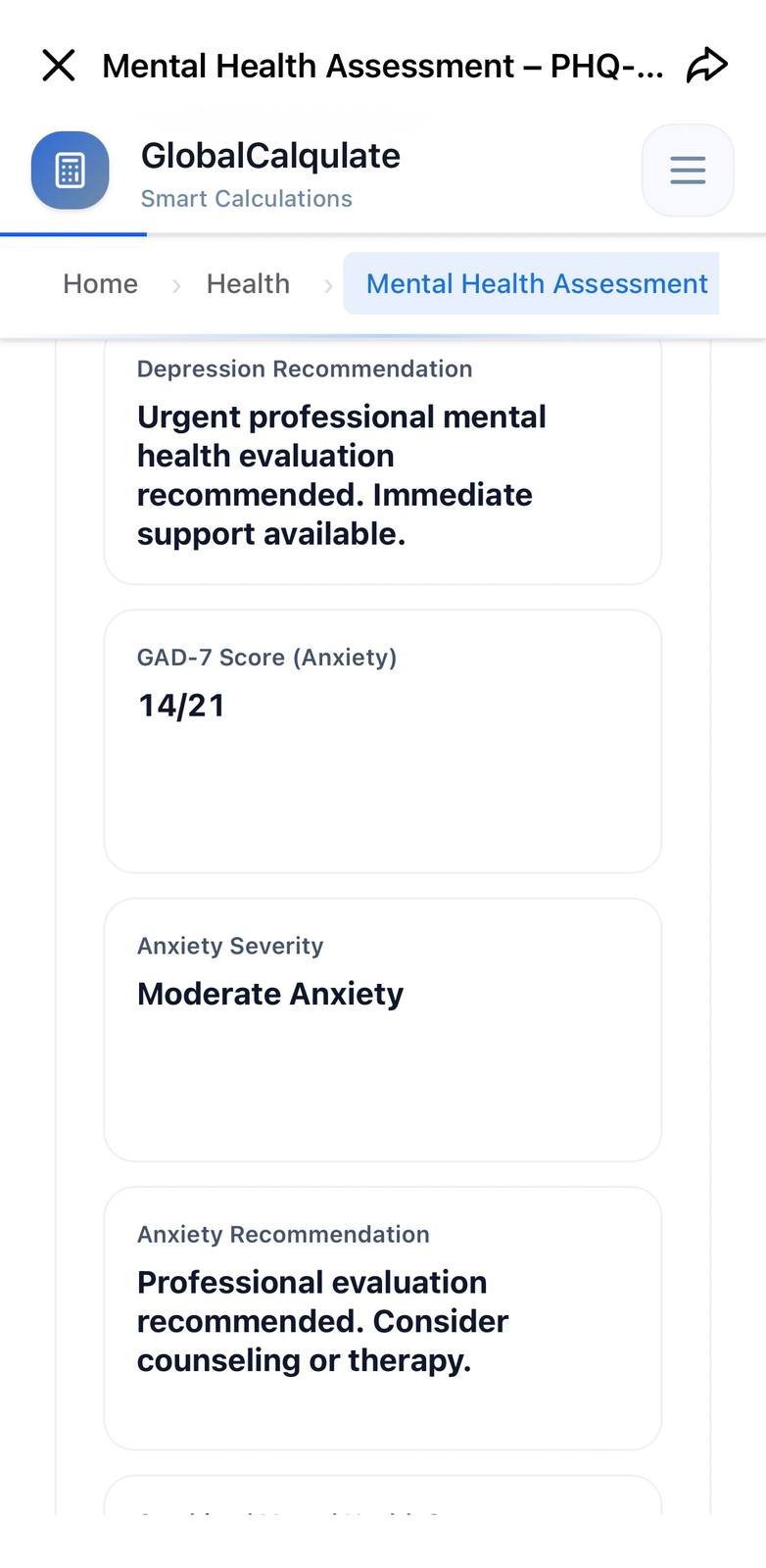
1. PHQ-9 + GAD-7 combo at GlobalCalqulate. The PHQ-9 is the nine-question depression screen most clinics use at intake, and this version pairs it with the GAD-7 anxiety screen in one pass, with free results. Take it at globalcalqulate.com/health/mental-health-assessment.
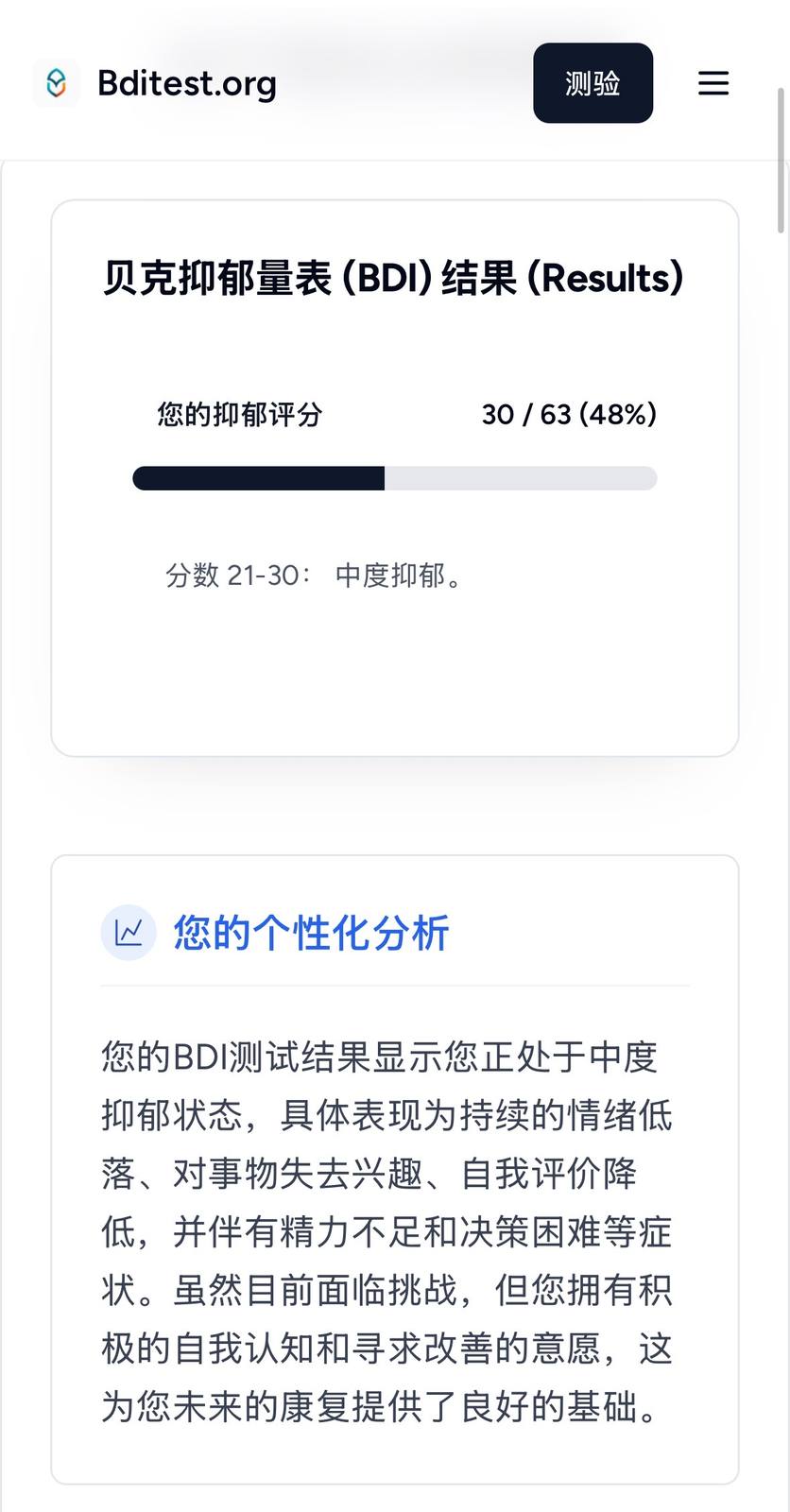
2. Beck Depression Inventory (BDI-II). Twenty-one questions, about ten minutes, and the classic research instrument when you want detail on how depression shows up for you across mood, thinking and the body. There is a free Chinese-interface version with automatic scoring at bditest.org/zh and an English version at lurialab.com.
3. DASS-21, if you want the fuller picture. It screens depression, anxiety and stress together at dass-21.com. Same rule applies: the free summary sits below the unlock banner.
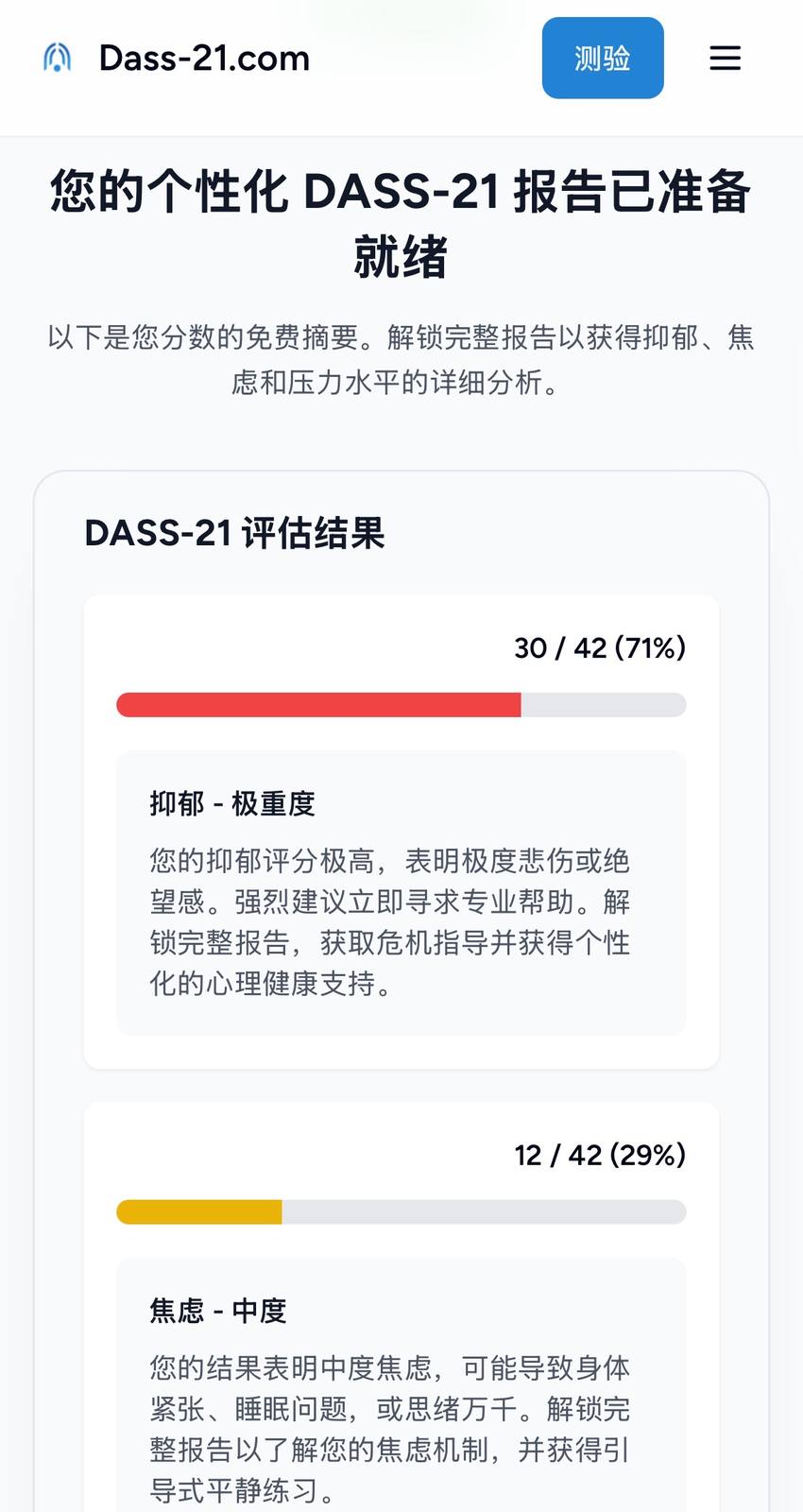
One important frame: these are screening tools, not a diagnosis. Scores move with sleep, stress and season. A moderate or higher band is not a verdict on you; it is simply a strong, practical reason to talk to one of the professionals below. And if you are having thoughts of harming yourself, skip the tests and call LifeLine Shanghai (400 821 1215) right now.
Psychiatrist, psychologist or counselor: what is the difference?

Mental health professionals in China come in several flavors, and knowing what each one does saves you time and money:
- Psychiatrist (精神科医生): A medical doctor who can prescribe medication. Based in hospitals or clinics. If you think you might need medication for anxiety, depression, or ADHD, this is your starting point.
- Psychologist (心理咨询师): Trained in talk therapy. Cannot prescribe medication. Found in private practices, clinics, and hospitals.
- Counselor / Therapist: Similar to psychologists in practice, though the credentials and training vary more widely. Many expat-focused therapists in Shanghai hold international certifications (licensed clinical social worker, licensed professional counselor, or equivalent).
In China, the distinction between "psychologist" and "counselor" is blurrier than in Western systems. What matters most: are they licensed or credentialed somewhere you trust, do they speak your language, and do you feel comfortable with them?
Where can you get help in a crisis?
Before we get into finding a regular therapist, here are the crisis resources you should save in your phone today:
- LifeLine Shanghai: 400 821 1215. Confidential, free, multilingual crisis hotline staffed by trained volunteers. Available daily 10:00 AM to 10:00 PM. They offer emotional support and can help you find further resources.
- Beijing Suicide Research and Prevention Center: 010-8295-1332. 24-hour hotline, Mandarin-language. Serves all of China.
- International SOS 24-hour Assistance: If you have travel or expat health insurance through your employer, your policy likely includes a mental health crisis line. Check your insurance card for the number.
If someone is in immediate physical danger, call 120 (ambulance) or 110 (police).
How do you find a therapist through SIMHA?
The Shanghai International Mental Health Association (SIMHA) maintains a directory of roughly 40 English-speaking mental health professionals in Shanghai. This is the single most useful resource for expats looking for therapy.
SIMHA is a nonprofit organization that has been operating in Shanghai since 2008. Their directory lists therapists by specialization (anxiety, depression, relationship issues, child psychology, trauma, addiction, and more), language, and location. Many of the therapists listed hold international licenses.
How to use it: visit the SIMHA website, browse the therapist directory, and contact providers directly. SIMHA also runs community talks and workshops on mental health topics throughout the year.
What is Community Center Shanghai?
Community Center Shanghai (CCS) is a nonprofit that offers subsidized counseling services. Their fees are on a sliding scale based on your ability to pay, which makes them one of the more affordable options for talk therapy in the city.
CCS counselors work in English and cover a range of issues, from adjustment difficulties and relationship stress to more clinical concerns. They also run support groups and wellness workshops. Worth looking into if cost is a factor or if you prefer a community-oriented setting.
Which hospitals offer English mental health care?
Several international hospitals and clinics in Shanghai have dedicated mental health departments with English-speaking staff (for how hospital registration works in general, see our guide to seeing a doctor in Shanghai as an expat):
- United Family Hospital (UFH) Pudong and Puxi: Full psychiatric and psychology departments. Psychiatrists can prescribe medication. Accepts most international insurance plans. Expect to pay 1,200 to 2,000 RMB per session without insurance.
- Parkway Health (百汇医疗): Multiple locations across Shanghai. Offers psychiatry and counseling with international-trained practitioners. Similar pricing to UFH.
- Mindfront (曼朗医疗): A mental health-focused clinic in Jing'an. Offers psychiatry, psychology, and child developmental services. Known for a relatively modern approach and shorter wait times than some of the larger hospital systems.
Hospital-based care is generally more expensive than private practice, but the advantage is coordinated care. If you need both medication management and talk therapy, a hospital can handle both under one roof.
How do you find a private-practice therapist?
Many qualified therapists in Shanghai operate independently, seeing clients in private offices or co-working therapy spaces. Session rates for private practice typically range from 600 to 1,500 RMB per session (45 to 60 minutes), depending on the therapist's experience and credentials.
Where to find them:
- SIMHA directory (mentioned above): the most comprehensive listing.
- Word of mouth: Ask friends, colleagues, or your company's HR department. Expat communities on WeChat are also a good source of honest recommendations.
- Embassy or consulate lists: Many consulates maintain referral lists of English-speaking medical professionals, including mental health providers.
When reaching out to a private therapist, ask about:
- Their licensing and training background
- Their experience working with expats or cross-cultural issues
- Whether they can provide receipts for insurance reimbursement (fapiao)
- Whether they offer online sessions as a backup
Can you do therapy online in Shanghai?
If you can't find the right fit locally, or if your schedule makes in-person sessions difficult, online therapy is a viable option. Several platforms serve English-speaking clients in China:
- International therapists via Zoom or similar: Many therapists based outside China offer video sessions. The catch: you need a VPN for Zoom, Google Meet, or Skype, and session times need to accommodate time zone differences. WeChat video also works for some therapists.
- Platforms like BetterHelp or Talkspace: These subscription-based services connect you with licensed therapists. They work in China with a VPN, but the connection quality can be inconsistent.
- Some SIMHA-listed therapists: Many local therapists added online sessions during and after the pandemic and continue to offer them.
Does insurance cover therapy in Shanghai?
This depends entirely on your plan. Here's what to check:
- International health insurance (Cigna, Bupa, Allianz, Aetna, MSH): Most comprehensive plans include mental health coverage, sometimes with a per-session cap or annual limit. Pre-authorization may be required.
- Employer-provided local insurance: Coverage for mental health varies enormously. Some plans cover psychiatry but not counseling. Always call your insurer to confirm before your first session.
- Chinese national health insurance (医保): Covers hospital-based psychiatric care at public hospitals, but not private counseling or international clinic visits. Useful for medication costs at public hospitals.
- No insurance: Budget roughly 600 to 1,500 RMB per session for private therapy, or explore CCS's sliding-scale fees.
What cultural context should you understand?
Mental health carries stigma in many cultures, and China is no exception. You might notice that Chinese colleagues or friends don't openly discuss therapy. This is changing, especially among younger generations in cities like Shanghai, but it's worth being aware of.
For expats, the mental health challenges are often specific: language barriers, isolation from your support network back home, career identity shifts, relationship strain from relocation, and the slow grind of navigating a bureaucracy in a language you're still learning. If day-to-day logistics are part of the weight, our guide to renting without getting burned tackles one of the big ones. These are legitimate reasons to talk to someone, and a therapist experienced with the expat population will understand them immediately.
When should you reach out for help?
You don't need to be in crisis to see a therapist. Consider reaching out if:
- You've been feeling persistently low, anxious, or irritable for more than a couple of weeks
- Sleep, appetite, or concentration have noticeably changed
- You're relying more on alcohol or other substances to cope
- You're withdrawing from social activities you used to enjoy
- You're struggling with a major life transition (relocation, breakup, job loss, new parenthood)
- You just want someone neutral to talk to who understands what living abroad is like
Finding the right therapist sometimes takes a couple of tries. If the first person you see isn't a good fit, that's completely normal. Try another. The important thing is that you started looking.
Which one is for you 哪个适合你
If you might need medication or a diagnosis, start with a psychiatrist at a hospital or clinic such as United Family or Mindfront. If you want talk therapy in English, pick from the SIMHA directory. If cost is the constraint, ask Community Center Shanghai about sliding-scale fees. If you need someone right now, call LifeLine Shanghai on 400 821 1215.
Laozi wrote 知人者智,自知者明, to know others is wisdom, and to know yourself is clarity. The hour with a good therapist buys you that second thing, in a city that keeps you too busy to notice you need it.
How much does therapy cost in Shanghai?
Private-practice sessions typically run 600 to 1,500 RMB (about $90 to $224) for 45 to 60 minutes, at roughly 6.7 RMB to the dollar in September 2026. Hospital and international-clinic sessions are higher, around 1,200 to 2,000 RMB (about $179 to $299) without insurance. Community Center Shanghai offers sliding-scale fees for those who need them.
Are there free or low-cost mental health resources in Shanghai?
Yes. LifeLine Shanghai (400 821 1215) is a free, confidential, multilingual support line open daily 10:00 to 22:00. Community Center Shanghai runs subsidised, sliding-scale counseling, and several universities offer low-cost sessions with supervised trainees.
How do I find an English-speaking therapist near me in Shanghai?
Start with the SIMHA directory, which lists around 40 English-speaking professionals by specialism and district, so you can filter for someone close to home or work. Cross-check word-of-mouth recommendations and your consulate's referral list, then contact two or three directly, since the right fit matters more than proximity.
Does insurance cover counseling in China?
It depends on your plan. Most comprehensive international policies include mental health coverage, sometimes with a session cap or pre-authorisation. Chinese national insurance (医保) covers public-hospital psychiatry but not private counseling, so check your policy wording before you book.
Can I find couples or child therapy in English?
Yes. Several private practices and the larger international clinics offer couples and family counselling, and a few psychologists work specifically with children and teenagers, including school-related anxiety. Ask directly when you enquire, because not every English-speaking therapist takes on kids or couples, and waiting lists for child specialists tend to run longer.
Is there a crisis hotline in Shanghai?
Yes. LifeLine Shanghai (400 821 1215) operates daily 10:00 to 22:00 and is free and multilingual. For 24-hour support, call the Beijing Suicide Research and Prevention Center on 010-8295-1332. In immediate danger, call 120 for an ambulance or 110 for police.
A note from the author 作者寄语
Depression and anxiety are normal responses of a healthy body and mind, the same way hunger and sleep are. We are built for the full range: joy, desire, sadness, worry. Having the difficult feelings alongside the good ones is not a malfunction; it is what a complete person looks like, and it is how we find our natural balance.
You may have noticed that the screenshots in this guide are my own results. On the BDI I currently land in the moderate range. That is part of why this platform exists at all: my energy comes from putting genuinely useful things into the world and from real connection with people. If that sounds like where your energy comes from too, come find us. Join the Choice community and let’s talk 来社区聊聊 →
欢迎来到我的社区,我们一起聊聊。