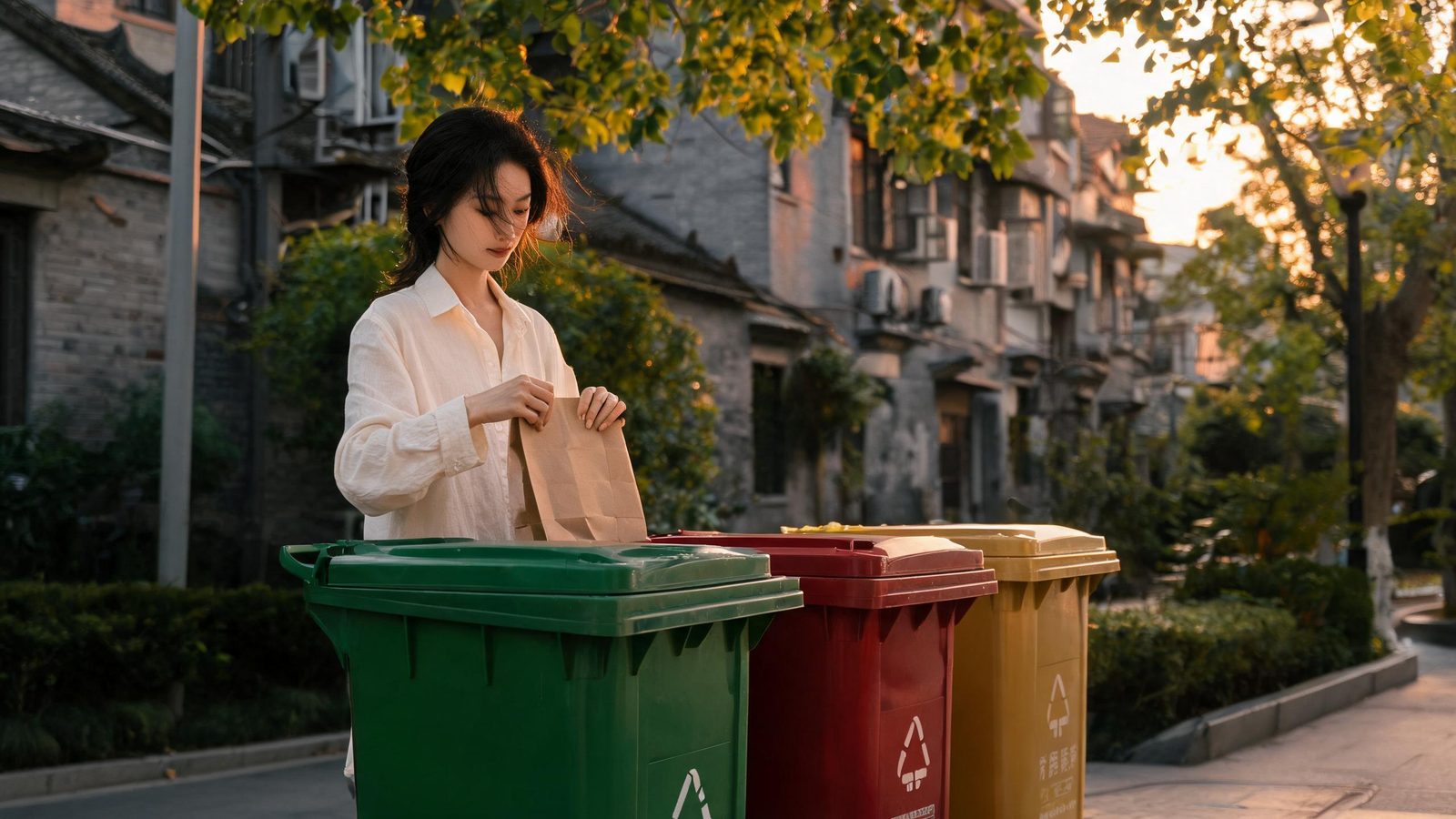
Shanghai sorts household waste into four bins: wet, dry, recyclable and hazardous, and yes, someone may check. Here is the simple version that finally made it click.
The first week I lived here, an ayi at my compound gently took a coffee cup out of my hand, poured the dregs into one bin, dropped the cup into another, and peeled off the plastic lid for a third. I had produced three categories of waste from one drink and gotten all of them wrong. If you have just moved to Shanghai and the four bins downstairs feel like a test you did not study for, this is the plain version I wish someone had given me.
Good to know
- Good for anyone who has stood frozen over four bins downstairs wondering which one the coffee cup goes in.
- The rule in one line wet waste is anything that rots, dry waste is the leftover that does not recycle, and when unsure it is dry.
- The fine individuals can be fined up to ¥200 (~USD 28) for repeatedly refusing to sort, though a first slip usually gets a word from the bin steward, not a ticket.
What are Shanghai's four trash categories?
Shanghai sorts household waste into four categories: wet waste (food scraps), dry waste (residual rubbish), recyclables, and hazardous waste. The system has been mandatory since July 2019 under the city's Domestic Waste Management Regulations, and it applies to every household, office and shop. The Chinese names are the ones you will actually see on the bins, so they are worth learning:
- 湿垃圾 (wet waste), usually a brown or teal bin: food and kitchen scraps.
- 干垃圾 (dry waste), a black or grey bin: general residual rubbish that fits nowhere else.
- 可回收物 (recyclables), a blue bin: paper, plastic, glass, metal, textiles.
- 有害垃圾 (hazardous waste), a red bin: batteries, bulbs, medicine, chemicals.
Get those four Chinese words into your head and eighty percent of the confusion disappears. The rest is knowing which bin the tricky items go in.
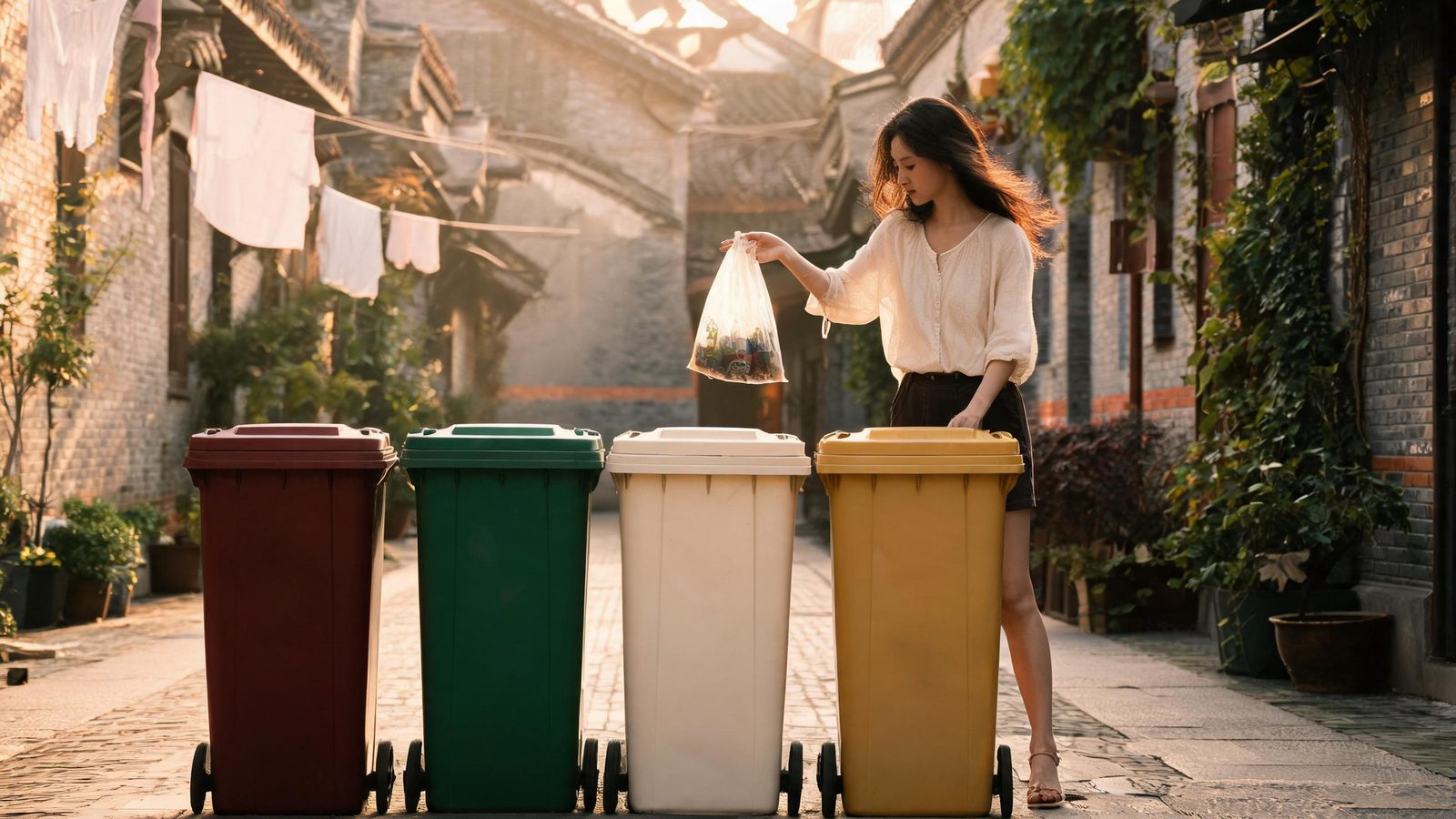
Wet waste vs dry waste: the line that trips everyone up
This is where almost every newcomer stumbles, because "wet" does not literally mean damp. Wet waste (湿垃圾) is food that breaks down easily: leftovers, rice, vegetable peels, fruit, eggshells, coffee grounds, tea leaves, small fish and chicken bones, and wilted flowers. The rule of thumb locals use is whether a pig could eat it or it would rot quickly.
Dry waste (干垃圾) is everything that does not rot and cannot be recycled: tissues, napkins, nappies, cling film, ceramics, disposable chopsticks, cigarette butts, pens, and dust from sweeping. Confusingly, a few "food" items go here because they are too tough to compost: large bones, durian husks, coconut shells, corn cobs and clam or oyster shells all belong in dry waste, not wet.
One more habit worth building: takeaway containers. Scrape the food into wet waste, and if the box is a rinsed plastic tub it can go to recyclables, but a greasy paper lunchbox goes to dry waste. If you order in often, our guide to ordering on Meituan and Ele.me pairs well with getting this part right, because delivery is where most of your daily sorting decisions come from.
What counts as recyclable in Shanghai?
Recyclables (可回收物) cover paper, cardboard, clean plastics, glass bottles and jars, metal cans, and textiles such as old clothes. The key word is clean: rinse the yoghurt pot and flatten the cardboard box. A pizza box soaked in grease is not recyclable and goes to dry waste, while the clean lid of the same box is fine for the blue bin.
Anything with a recycling value, like cardboard, PET bottles and metal, can also be sold. Many compounds have a scrap collector, and apps such as Alipay's recycling mini-programs will send someone to weigh and buy your cardboard and bottles. It is a small thing, but it is a satisfyingly Shanghai way to deal with the boxes that pile up after a big Taobao order.
What is hazardous waste, and where does it go?
Hazardous waste (有害垃圾) is anything that could harm people or the environment: used batteries, fluorescent tubes and energy-saving bulbs, expired medicines and their blister packs, thermometers, paint, and pesticides. These go in the small red bin, which most compounds keep near the main sorting station rather than in every stairwell. It fills slowly, so you might carry a dead battery around for a week before you find the right bin. That is normal. Do not throw batteries into dry waste out of impatience.
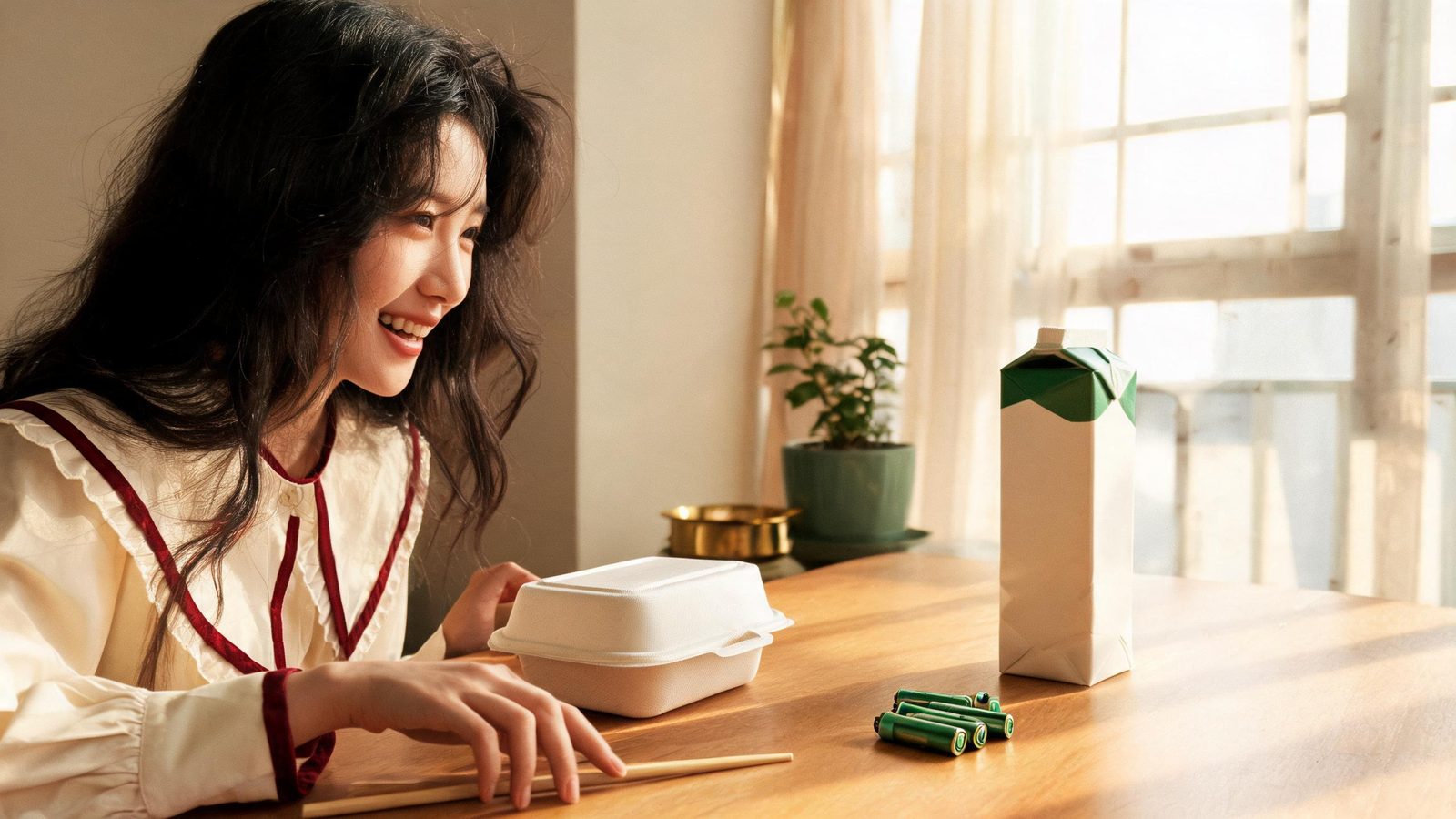
The items expats get wrong most often
These are the ones I see cause confusion at the bins almost weekly:
- Milk and juice cartons: rinse and flatten, then recyclables. Unrinsed, they are dry waste.
- Bubble tea: pour the liquid out, tapioca pearls to wet waste, the cup and straw to dry waste. The cup is not recyclable once it has had a sugary drink in it.
- Large bones and shells: dry waste, not wet.
- Used tissues and wet wipes: dry waste, always, even though they are damp.
- Cooking oil and grease: never down the sink; small amounts soak into dry waste with paper towels.
- Old clothes and shoes: recyclables, or the donation bins some compounds keep.
- Broken ceramics and glass mugs: dry waste (drinking glasses and mugs are usually not recyclable), while clean glass bottles and jars are.
When and where do I take my trash out?
Many residential compounds run timed collection points (定时定点), where the sorting station is only open for set windows, commonly a couple of hours in the morning and a couple in the evening, for example around 7am to 9am and 6pm to 8pm. Outside those hours the bins may be locked or the area supervised. Newer compounds increasingly leave bins accessible all day, and serviced apartments often let you leave sorted bags for staff. Ask your building's property office (物业) or your landlord for your exact times, because they are set locally and vary street by street. If you are still settling in, our guide on renting in Shanghai without getting burned covers how to get answers out of a property office.
Is there really a fine for not sorting?
Yes, on paper. Individuals who refuse to sort can be fined between 50 and 200 RMB (~USD 7 to 28), and businesses face larger penalties. In practice, enforcement for residents usually starts with a friendly-to-firm reminder from a compound volunteer or the property office rather than an on-the-spot fine, and repeated or blatant offences are what draw penalties. The social pressure is the real enforcement mechanism. Nobody wants to be the neighbour the ayi has to correct twice, and honestly, once you get the hang of it, sorting takes about ten extra seconds a day.
How do I check which bin an item goes in?
When you genuinely cannot tell, you have three easy options:
- Alipay or WeChat: open Alipay (支付宝), search 垃圾分类, and use the lookup tool. Type or say an item and it tells you the category. WeChat has similar mini-programs.
- Ask your ayi or the bin volunteer. They sort all day and are usually happy to show you. This is how I learned fastest.
- Follow the pictures. Most bins now carry illustrated labels, and the four colours are consistent across the city, so once you learn them at home you can sort anywhere in Shanghai.
Sorting stops feeling like an exam within a couple of weeks. It becomes muscle memory, the same way tapping your phone to pay or scanning a metro QR code did. For the rest of the daily-life admin that comes with a new Shanghai apartment, our guide to getting around without a car is a good next read.
As the Chinese saying goes, 入乡随俗, when you enter a place you follow its customs. Sorting your rubbish is a small daily vote for the place you have chosen to live, and a city quietly notices who bothers to cast it.
Do I need to buy special bin bags?
No. There is no mandated colour-coded bag system for households the way some cities have. You sort into your own bags at home and empty them into the matching public bins. Some people keep two small bins in the kitchen, one for wet and one for dry, to make it effortless.
What do I do with wet waste if collection is only twice a day?
Keep food scraps in a small lidded caddy or a bag in the freezer between windows if smell is an issue in summer. Shanghai heat turns wet waste fast, so a lid is your friend from June to September.
Is the plastic bag itself wet or dry waste?
Empty the food into the wet-waste bin, then put the bag in dry waste (or recyclables if it is clean and you are diligent). Wet waste should ideally go in bin-liner-free, which is why many stations ask you to tip and keep the bag.
Does the system change in serviced apartments and hotels?
The categories are the same, but staff often do the final sorting, so you may only need to separate wet from dry in your unit. Ask at reception on day one.
Where can I report a compound that has no proper bins?
Raise it with your property office first. The city also runs a 12345 citizen hotline for public-service issues, which has English support and handles waste-facility complaints.