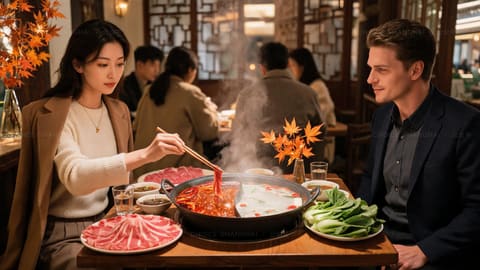
Shanghai's Korea Town runs along Hongquan Lu in Minhang, where barbecue, fried chicken and late soup shops feed the old Korean enclave.
The real concentration of Korean food in Shanghai is Hongquan Lu (虹泉路) in Minhang, the city's Korea Town, a strip of barbecue houses, fried-chicken joints and late soup shops near the old Korean-expat enclave of Longbai. Reckon on about 150 to 250 RMB (USD 22 to 37) a head for barbecue, around 100 RMB (USD 15) for fried chicken and beer, and 40 to 70 RMB (USD 6 to 10) for a soup-and-rice bowl. If Gubei is where you go for Japanese food in Shanghai, Hongquan Lu is the Korean answer, a few metro stops south.
Good to know
- Where to go: Hongquan Lu (虹泉路) in Minhang, Shanghai's Korea Town, densest around the Jingting cluster. Nearest metro is Hechuan Lu (Line 9) or Longbai Xincun (Line 10).
- What you will pay: barbecue 150 to 250 RMB (USD 22 to 37) a head, fried chicken about 100 RMB (USD 15), soups 40 to 70 RMB (USD 6 to 10).
- How to pick: Korea Town turns over fast, so open Dianping and follow the queue of Korean diners rather than a pretty front.
Where Korea Town actually is
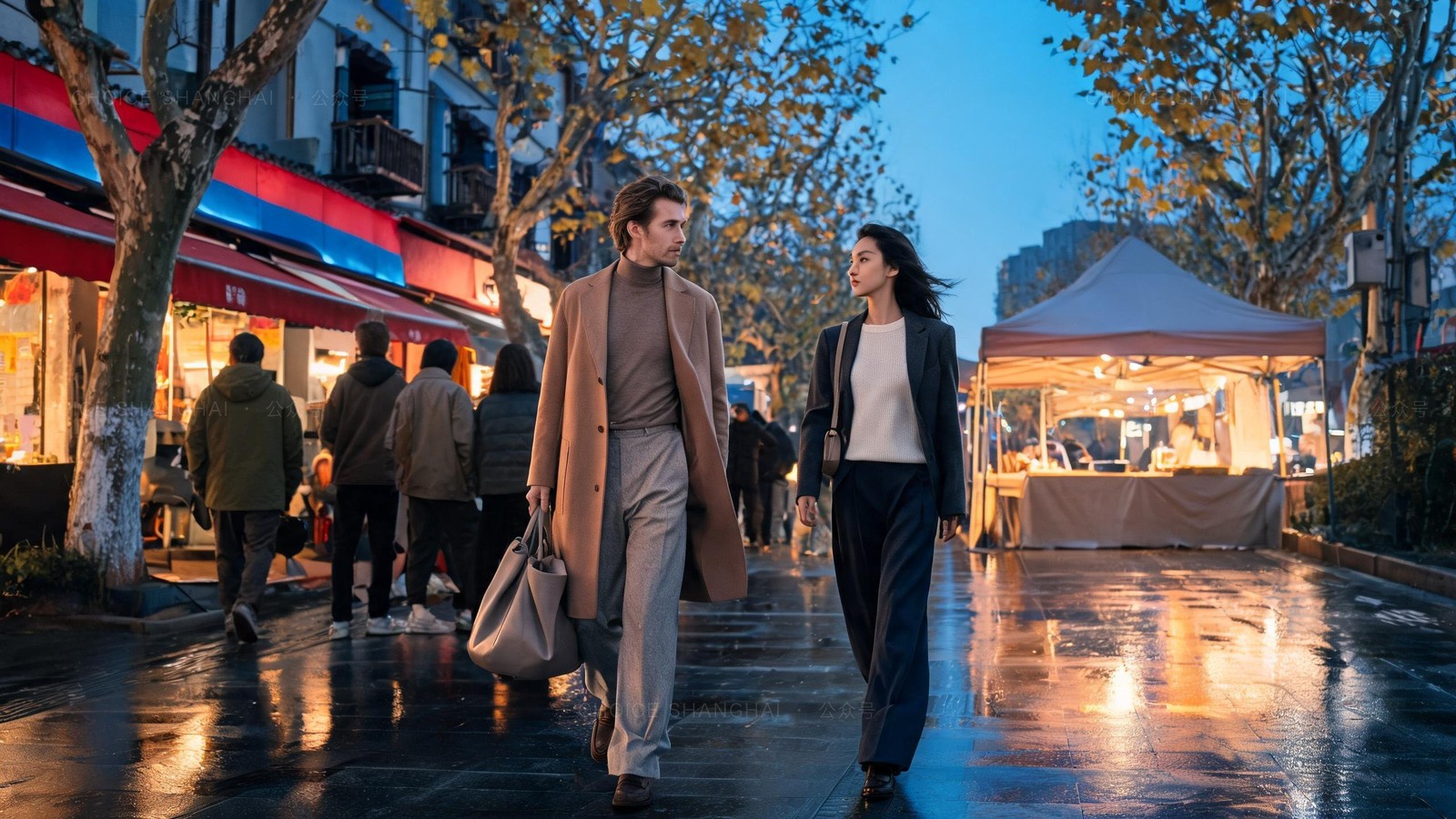
Korea Town in Shanghai sits on and around Hongquan Lu in Minhang, a short way south of Gubei, where Korean families settled from the 1990s and the signage, groceries and restaurants are still Korean first. Take Line 9 to Hechuan Lu or Line 10 to Longbai Xincun and walk in; the densest run of restaurants clusters near the Jingting plazas, where a small outdoor night market of tented stalls fires up in the evening. It is a working neighbourhood, not a tourist set piece, which is exactly why the food is honest.
Korean barbecue, the main event
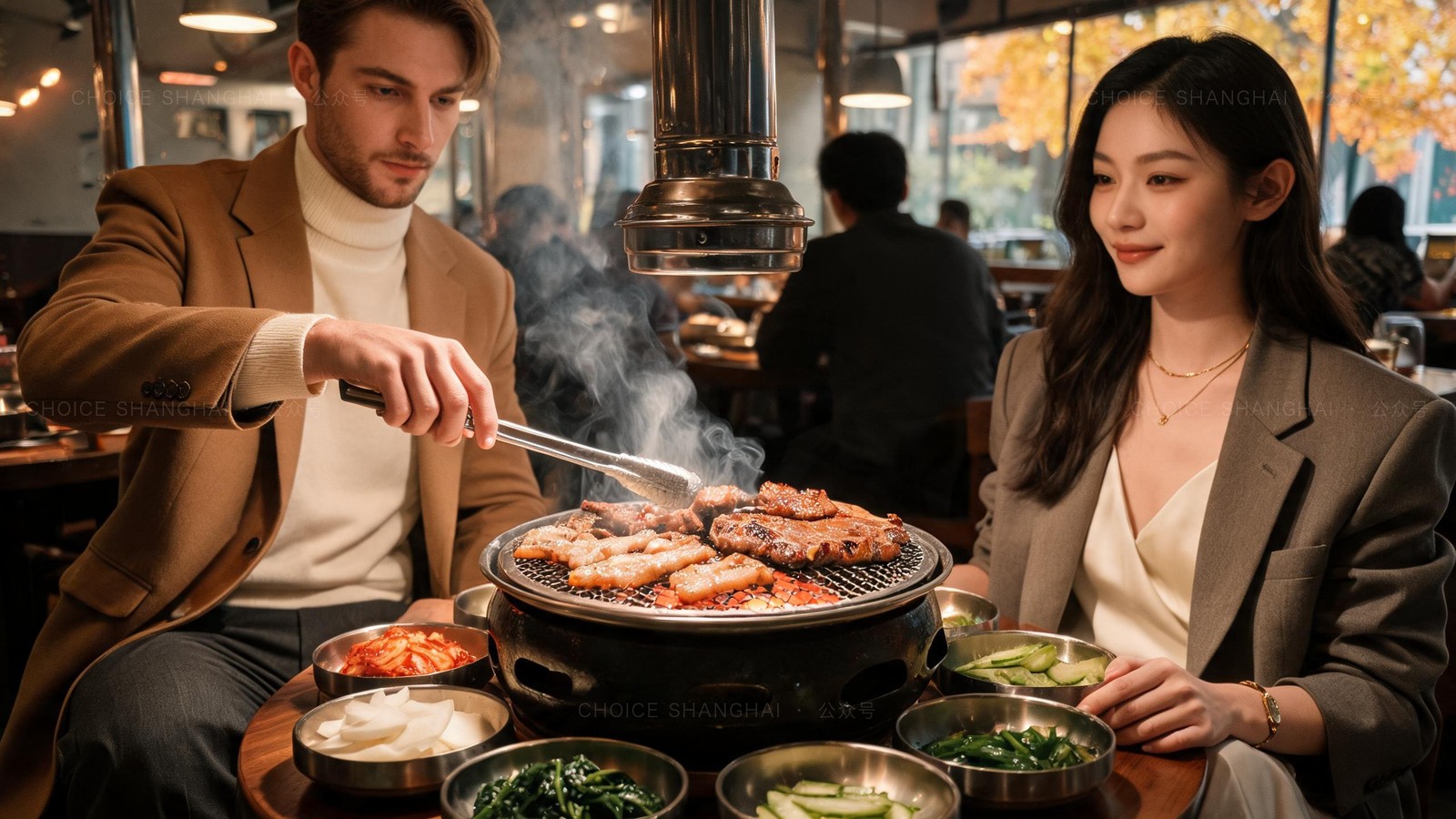
Korean barbecue on Hongquan Lu is the reason most people make the trip, and it runs about 150 to 250 RMB (USD 22 to 37) a head once you add drinks. You grill at the table: samgyeopsal (thick pork belly) is the everyday order, while marinated galbi (beef short rib) is the splurge. The banchan, the little dishes of kimchi, pickled radish and seasoned greens, are free and refillable, so do not over-order meat on the first round. Two people can eat well on two meat portions plus a soup.
Fried chicken and army stew, the comfort order
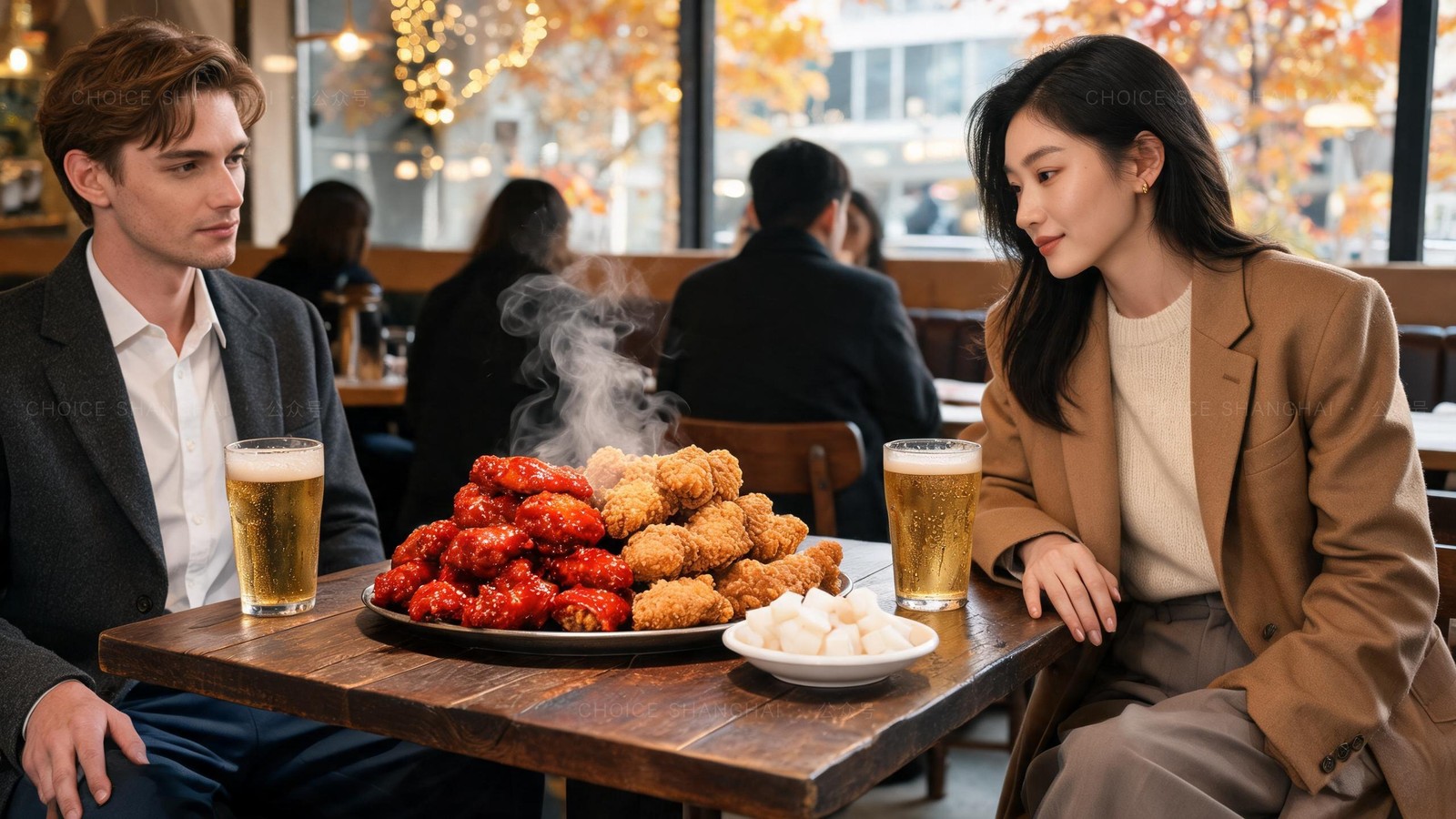
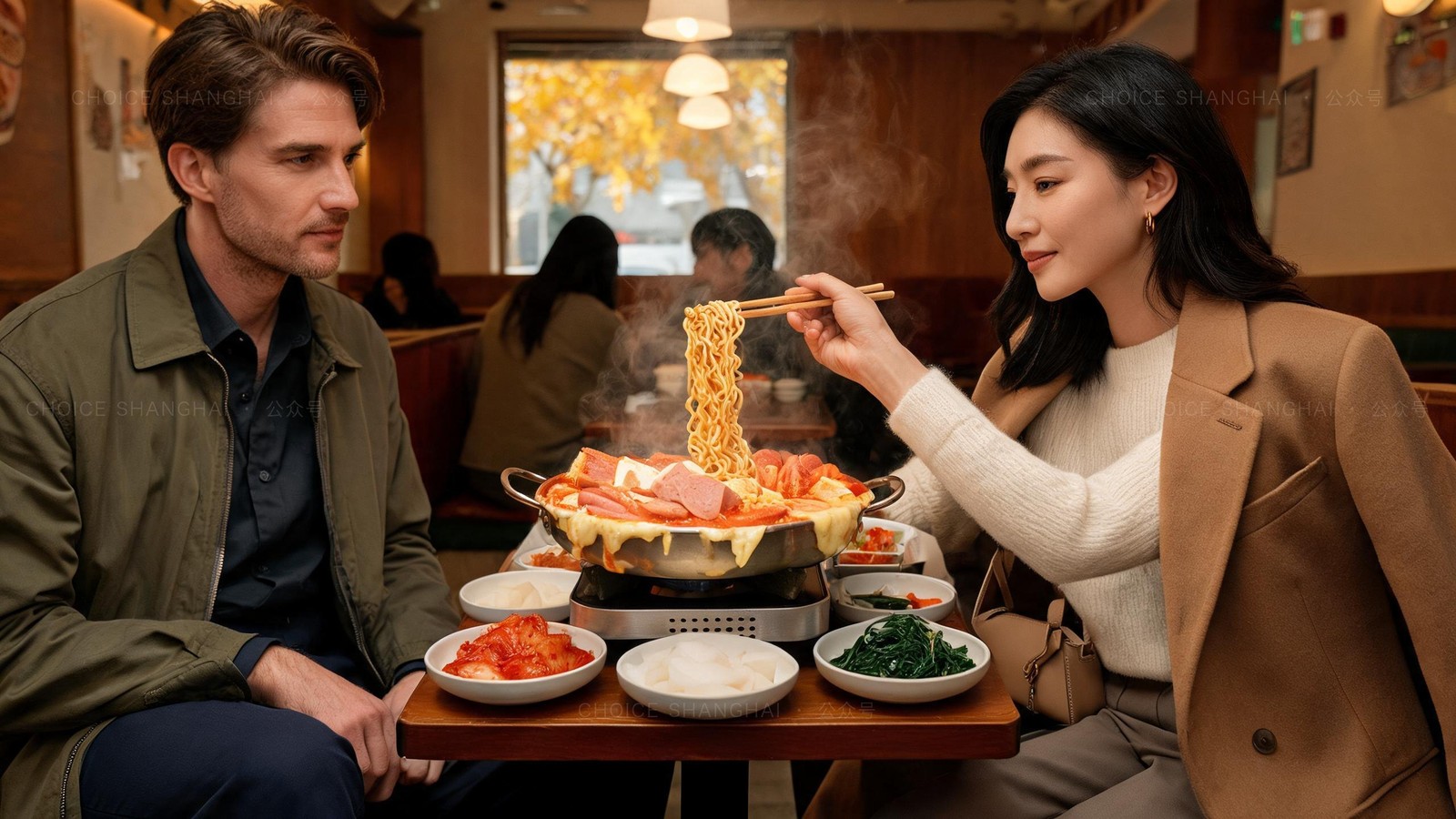
Korean fried chicken and army stew are the comfort end of Hongquan Lu, and both land around 80 to 120 RMB (USD 12 to 18) to share. The chicken comes two ways, glossy sweet-spicy yangnyeom or plain crisp, usually with pickled radish and beer; a long-running spot locals point to is Fuleman (富乐满) on Hongquan Lu, where regulars report about 100 RMB (USD 15) a head, though you should check it is still trading on Dianping before you set out. Army stew, budae jjigae, is a bubbling pot of sausage, tofu, instant noodles and melting cheese built for a cold night.
The soups and the everyday Korean food
Beyond the grill, Hongquan Lu does the quiet everyday Korean food that keeps the neighbourhood fed, mostly 40 to 70 RMB (USD 6 to 10) a bowl. Sundae-gukbap, a rich blood-sausage and rice soup, is the local hangover helps with; a shop that has run on the strip for more than a decade is Cheongjindong (清进洞米肠汤), the kind of place regulars treat as a canteen. Kimchi jjigae, soft tofu stew and bibimbap are everywhere, and most rooms set down banchan the moment you sit. This is the Korean food you come back for on a Tuesday, not a special occasion.
The night market and the groceries
The Jingting night market on Hongquan Lu is the cheapest, most fun way into Korea Town, where 40 to 80 RMB (USD 6 to 12) buys a graze of tteokbokki, a cheese-pull corn dog and fried chicken on a stick, eaten standing under the tents. It runs from late afternoon into the night and is busiest after dark. While you are in the area, the Korean supermarkets stock the gochujang, frozen mandu, banchan and ramyeon that the Western grocery runs never carry, so bring a bag.
What Korean food costs in Shanghai
Here is the honest spread, so you can decide before you go. Prices are per person unless noted, converted at about 6.7 RMB to the US dollar as of October 2026, so treat the dollars as a ballpark.
| What you order | What you get | Per person |
|---|---|---|
| Korean barbecue | Pork belly or marinated beef short rib, grilled at the table, with free banchan | ¥150 to 250 USD 22 to 37 |
| Fried chicken and beer | A sharing platter, half sweet-spicy and half plain, with a draft beer | ¥80 to 120 USD 12 to 18 |
| Army stew (budae jjigae) | A shared bubbling pot of sausage, tofu, noodles and cheese, feeds two | ¥80 to 120 USD 12 to 18 |
| Soups and rice bowls | Sundae-gukbap, kimchi jjigae or bibimbap, a one-bowl meal | ¥40 to 70 USD 6 to 10 |
| A night-market graze | Tteokbokki, a corn dog, fried chicken on a stick, a drink, eaten standing | ¥40 to 80 USD 6 to 12 |
Which one is for you 哪个适合你
If you want the full table-grill night out, go for barbecue on a Friday or Saturday and book or arrive early, because the good rooms fill. If you are feeding two on a budget or warming up after a cold commute, order army stew or a soup bowl and skip the meat. If you just want to wander and graze, go for the Jingting night market after dark and spend 50 RMB (USD 7). And if you are coming from the Japanese side of town, remember the streets are different: Gubei for ramen and izakaya, Hongquan Lu for Korean.
Where is Korea Town in Shanghai?
Korea Town is on Hongquan Lu (虹泉路) in Minhang district, near the Longbai area south of Gubei. The nearest metro stops are Hechuan Lu on Line 9 and Longbai Xincun on Line 10, both a short walk from the main run of Korean restaurants and the Jingting night market.
How much does Korean barbecue cost in Shanghai?
Budget about 150 to 250 RMB (USD 22 to 37) a head for Korean barbecue once drinks are in, grilling pork belly or marinated beef at the table. The banchan side dishes are free and refillable, so two people can eat well on two meat portions and a shared soup rather than ordering round after round.
Do Korean restaurants in Shanghai have English menus?
Many on Hongquan Lu have picture menus or Korean and Chinese only, with limited English, so it helps to order by pointing or to translate with your phone. If reading the menu is the worry, our guide to ordering food in Shanghai when you cannot read the menu covers the apps and phrases that get you through.
Is Korea Town the same as Gubei?
No. Gubei is the Japanese enclave, around Xingyi Lu, while Korea Town is on Hongquan Lu a few metro stops south in Minhang. They are different streets and different crowds, so going to Gubei for Korean barbecue, or Hongquan Lu for ramen, means a wasted trip.
When should you go to Hongquan Lu?
Evenings are when Korea Town comes alive, especially Friday and Saturday after 7pm when the barbecue houses fill and the night market tents are busiest. Weekday lunches are quieter and good for the soup shops. Because listings change often here, check the restaurant is open on Dianping on the day.
As Confucius says in the Analects, 食不厌精,脍不厌细 , one is never put off by food prepared with care, which is the whole spirit of a slow grill and a table of small dishes.
Words, maps and research by the Choice Shanghai team. Please credit us and tag our 公众号 if you share.