
A first consultation at a Shanghai vet runs roughly 50 to 150 RMB, or up to 200 at the international clinics.
A first consultation at a Shanghai vet runs roughly 50 to 150 RMB, or up to about 200 at the international chains, with a basic physical exam around 100 and blood work 50 to 150 on top. Overnight visits between 22:00 and 09:00 add 100 to 200. English-speaking clinics exist in Huangpu, Changning and Pudong, and the number you actually need is the after-hours emergency line, not the front desk.
Pet care is one of the few things in Shanghai with no published price list and no regulated tariff, which is why two clinics can quote you very different numbers for the same sick cat. Here is how the system works before you are standing in it at midnight.
Good to know
- Good for anyone with a cat or dog in Shanghai who wants a vet they can actually talk to.
- What you'll pay ¥50 to ¥150 for a first consultation, more at the international clinics; out-of-hours adds ¥100 to ¥200.
- Make the most of it save the after-hours emergency number tonight, not the front desk line, and keep a carrier where you can reach it in the dark.
What does a vet visit cost in Shanghai?
Consultation pricing is broadly consistent across the city, and the surprises come later on the itemised bill rather than at the door.
In US dollars, a first consultation is roughly USD 8 to 23, blood work USD 8 to 23, and neutering USD 75 to 301. Converted at about 6.7 RMB to the dollar, August 2026, so treat the dollars as a ballpark.
Two honest caveats. Veterinary fees in China are not price-controlled, so a clinic can charge what it likes and the gap between a neighbourhood practice and an international hospital is wide. And first-tier city pricing sits meaningfully above the rest of the country, so any number you read on a national forum is a floor rather than an average. Ask for an estimate before you agree to diagnostics, which is normal here and nobody will be offended.
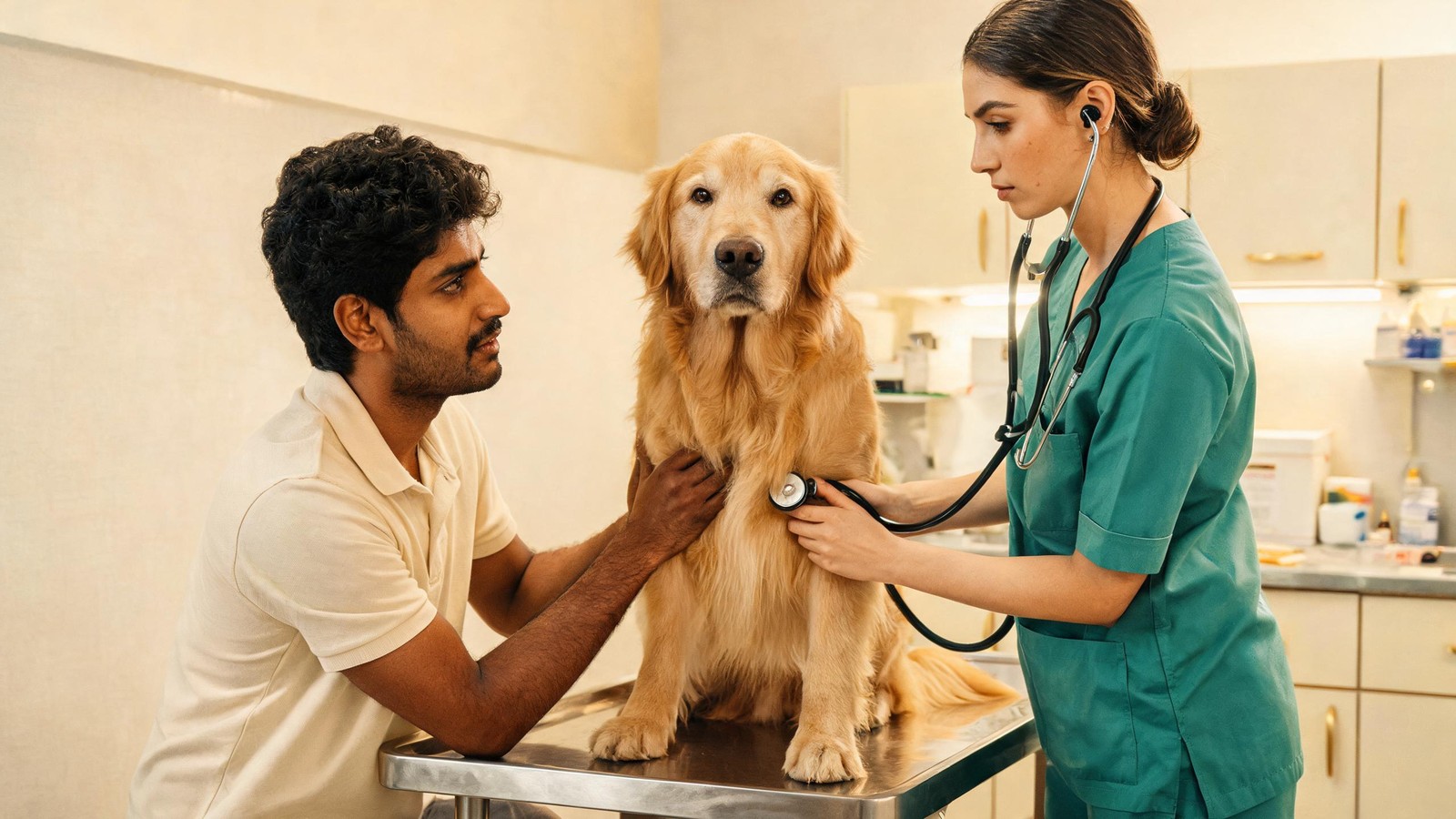
Where do you find a vet who speaks English?
The reliable pattern is a clinic that already serves the international community, which in practice means Huangpu, Changning, Gubei and the Jinqiao side of Pudong.
The clearest worked example is Shanghai PAW Veterinary Clinic, which runs an English-language practice with clinics in Huangpu and a hospital in Pudong, foreign-trained vets on staff, and services from imaging and dentistry through to pet import and export paperwork. Their main line is 021-67337866 and their after-hours emergency number is 138 1668 5486. Check the current branch address on their own site before you set off, since clinic locations move more often than websites get updated.
For anywhere else, three checks tell you what you need to know. Call and ask a question in English before you commit, because a clinic with an English-speaking receptionist and no English-speaking vet is a common and expensive misunderstanding. Ask whether the vet who will see your animal trained abroad or reads international guidelines, which matters more than the size of the waiting room. And check the clinic on Dianping for the volume and tone of recent reviews, since pet owners are unusually candid about being overcharged.
What do you do at two in the morning?
Decide first whether it is an emergency, then call, then travel. Clinics that offer after-hours cover generally publish one mobile number that redirects to the vet on duty rather than staffing a front desk overnight, so the landline you have saved is the wrong one.
The situations that genuinely will not wait until morning are consistent across veterinary practice: severe injury or trauma, breathing difficulty, seizures or other neurological signs, swallowing something poisonous, severe vomiting or diarrhoea, severe abdominal pain, an animal unable to urinate, and difficulty giving birth. If your pet is in one of those states, ring the emergency line on the way rather than arriving unannounced, so the vet is there when you are.
Do the boring preparation now, tonight, while nothing is wrong: save the emergency number in your phone, know which 24-hour clinic is nearest, and keep a carrier where you can reach it in the dark. A taxi driver at 2am will take a cat in a carrier without comment and may refuse a loose animal in your arms.

Routine care, and the paperwork attached to it
Vaccination in Shanghai is not only medical, it is administrative. Rabies vaccination is the piece that connects to your dog licence, and the licence itself, the one-dog rule and the banned-breed list are covered in our guide to bringing a pet to Shanghai. Keep every vaccination record: you will need the history if you ever fly the animal out, and reconstructing it later is painful.
Beyond that, the routine is unremarkable. Annual boosters, a yearly check for an adult animal and twice yearly once they are old, parasite prevention through the humid months, and microchipping if the animal is not already chipped. Food, litter and most equipment are cheaper ordered online than bought at the clinic, and Taobao carries every prescription diet you are used to at home.
Which one is for you 哪个适合你
If your animal is healthy and you want routine care without paying a premium, use a good local clinic and bring a translation app. If you want to discuss a diagnosis in fluent English, go to an international practice and accept the higher consultation fee as the price of that conversation. If something is wrong right now, call the after-hours emergency number rather than choosing a clinic on price. And if you are planning to leave China with your pet, pick a clinic that does import and export paperwork from the start, because the export health certificate is far easier when the same practice holds the whole record.
Laozi wrote 知人者智,自知者明, to know others is wisdom, to know yourself is clarity. Choosing a vet asks for a little of both, reading the clinic and reading your own animal, who cannot tell you where it hurts.
How much does it cost to take a cat or dog to the vet in Shanghai?
Expect 50 to 150 RMB for a first consultation, around 100 for a basic physical exam and 50 to 150 for routine blood work. International clinics sit at the top of those ranges, and an overnight visit adds 100 to 200 RMB.
Are there English-speaking vets in Shanghai?
Yes. Several practices serving the international community employ foreign-trained vets and operate in English, concentrated in Huangpu, Changning, Gubei and Pudong. Shanghai PAW Veterinary Clinic is one, on 021-67337866. Always confirm that the vet, not only the receptionist, speaks English.
Is there a 24-hour emergency vet in Shanghai?
After-hours cover generally works through a dedicated emergency mobile number that reaches the vet on duty, rather than a clinic that is fully staffed overnight. Save that number in advance; the daytime landline will not be answered at 2am.
Why are vet bills so different between Shanghai clinics?
Veterinary pricing in China is not regulated, so each clinic sets its own fees and the range across the city is wide. Ask for an estimate before agreeing to tests or surgery, and ask what each line covers.
Do I need to vaccinate my dog to keep it legally in Shanghai?
Yes. Rabies vaccination is tied to the city's dog licensing system, and you need the vaccination record to register or renew a licence. The licence rules, including the one-dog limit and restricted breeds, are in our pet guide.