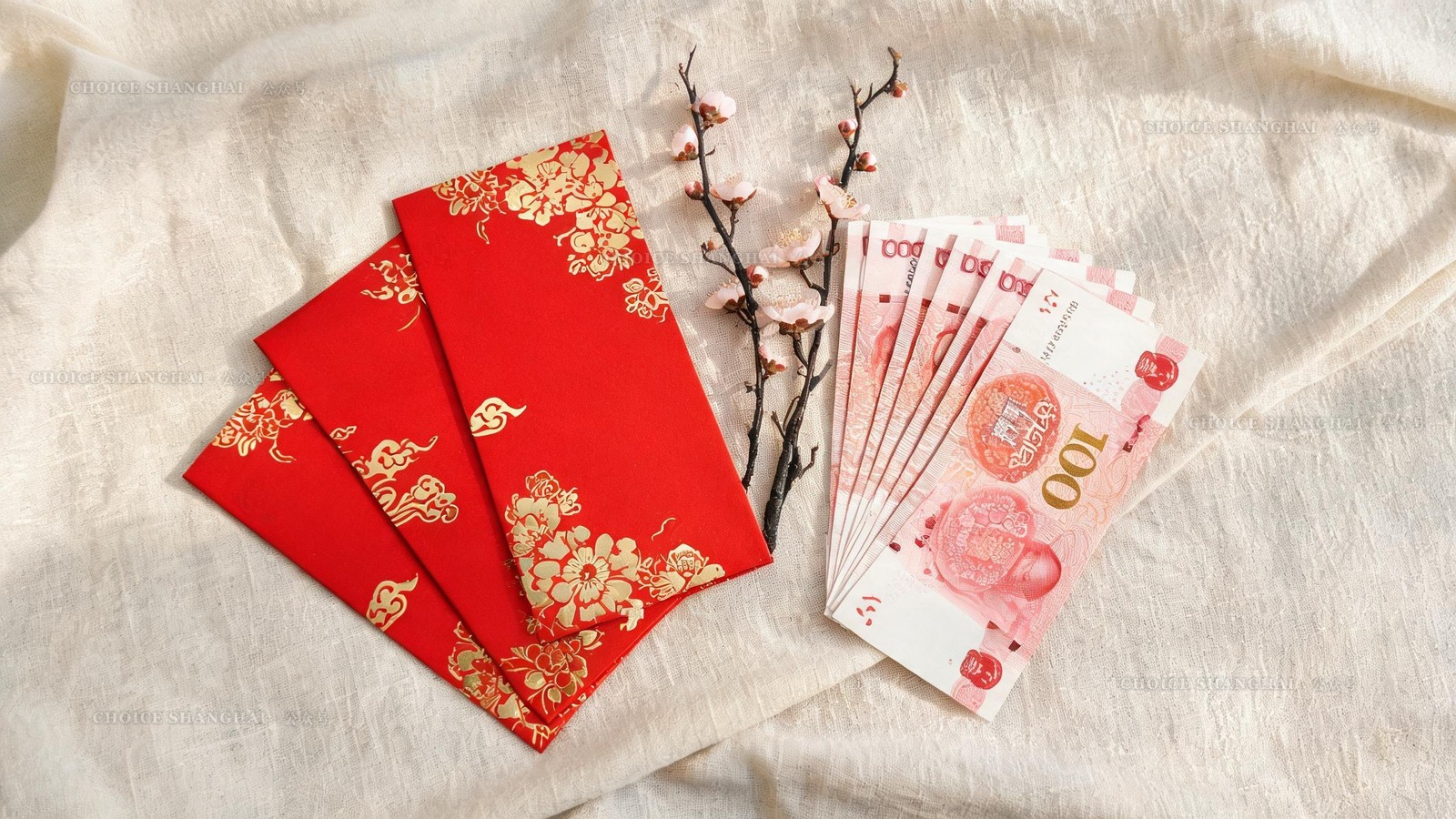
Facing your first Shanghai wedding, a colleague new baby, or Chinese New Year?
How much you put in a red envelope in Shanghai depends on the occasion and how close you are, but the quick answer is this: a wedding runs about ¥800 to ¥2,000 (roughly USD 120 to 300), a new baby about ¥600 to ¥1,200 (USD 90 to 180), and a Chinese New Year envelope for a child about ¥200 to ¥800 (USD 30 to 120). Make the number even, lean on the lucky digits 6 and 8, never use 4, and use crisp new notes. The amount matters less than getting those rules right.
The red envelope, the 红包 (hóngbāo), is how money changes hands warmly in China, and for a newcomer it is a small minefield of numbers and timing. Give too little and you look careless; give a number with a 4 in it and you have accidentally wished someone bad luck. None of it is hard once you know the code, and this is purely about the cash inside. For the physical gifts you carry to a home, our guide to what to bring and never give as a gift in Shanghai is the companion to this one.
Good to know
- Good for Anyone facing a Shanghai wedding invite, a colleague's new baby, or their first Chinese New Year here.
- The rule that beats the amount Even numbers, digits 6 and 8, never 4, always crisp new notes.
- Make the most of it When unsure, ask a close local friend what is normal for your circle; amounts vary by city and group, and Shanghai runs high.
The number rules that matter more than the amount
Before the amount, get the numerology right, because in a red envelope the digits carry as much meaning as the money. Keep the total an even number, since odd amounts are associated with funerals. Build it around 6 (smoothness, 顺) and 8 (wealth, 发): 600, 800, 1,688 and 1,888 are all classic. Avoid any amount containing 4, which sounds like the word for death, so never a total like 400 or 440. The romantic exceptions are 520 (sounds like "I love you") and 1,314 ("forever"), used between couples. Finally, use fresh, crisp banknotes; people queue at the bank before New Year for new notes, and worn or folded bills read as an afterthought.
How much for a wedding red envelope in Shanghai?
A wedding is the biggest red envelope most expats will give, and in Shanghai the going rate sits higher than the national average because the banquets are expensive and the envelope is understood to help cover your seat. For a colleague or a friend-of-a-friend, ¥800 to ¥1,000 (about USD 120 to 150) is a safe floor; going under ¥800 can read as stingy at a city wedding. For a good friend, ¥1,000 to ¥1,600 (about USD 150 to 240) is normal, with ¥1,314 (forever) and ¥1,688 popular picks. For a close friend or family, or if you bring a plus-one, ¥1,800 to ¥2,000 (about USD 270 to 300) and up is expected. Hand the envelope to the gift desk at the door, where someone records who gave what, so keep it sensible and sincere.
| Occasion | Typical amount | Lucky picks |
|---|---|---|
| Wedding, colleague or acquaintance | ¥800 to ¥1,000 about USD 120 to 150 | 888, 1,088 |
| Wedding, good friend | ¥1,000 to ¥1,600 about USD 150 to 240 | 1,314, 1,688 |
| Wedding, close friend or family | ¥1,800 to ¥2,000+ about USD 270 to 300+ | 1,888, 2,088 |
| New baby (full-month) | ¥600 to ¥1,200 about USD 90 to 180 | 666, 888 |
| New Year, a child | ¥200 to ¥800 about USD 30 to 120 | 200, 600, 800 |
| New Year, your parents or in-laws | ¥1,000 to ¥5,000 about USD 150 to 750 | 1,888, 3,000 |
Amounts are what people commonly report in Shanghai and vary by circle; lean higher for close ties. USD converted at about 6.7 RMB to the dollar, September 2026, so treat the dollars as a ballpark.
Amounts are what people commonly report in Shanghai and vary by circle; lean higher for close ties. USD converted at about 6.7 RMB to the dollar, September 2026, so treat the dollars as a ballpark.
What about a new baby, or a housewarming?
For a new baby, the red envelope usually comes at the full-month celebration (满月酒) or when you first visit, and ¥600 to ¥1,200 (about USD 90 to 180) covers most friendships, with 666 and 888 the favourite lucky picks and closer friends giving ¥1,000 (about USD 150) or more. A housewarming or a shop opening is lighter and more symbolic, often ¥200 to ¥600 (about USD 30 to 90) or simply a good gift instead. The same rules apply throughout: even numbers, sixes and eights, no fours, and crisp notes. When in doubt, match what the friend who invited you is giving.
How much do I give at Chinese New Year?
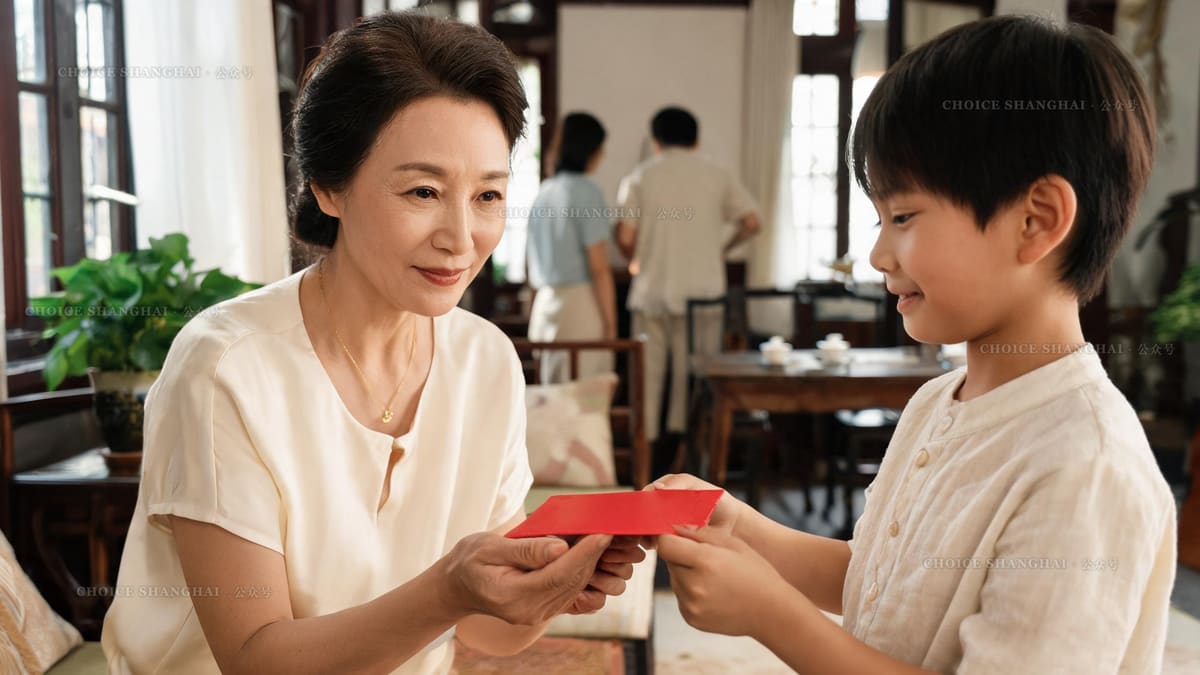
Chinese New Year red envelopes flow downward, from the earning generation to children and elders, so as an adult you give rather than receive. For the children of friends, relatives and colleagues, ¥200 to ¥800 (about USD 30 to 120) each is the usual band, with the closest kids getting more. If you employ an ayi (housekeeper) or have a regular driver, an extra month's pay or a ¥500 to ¥2,000 (about USD 75 to 300) envelope before the holiday is a kind and expected gesture. For your own parents or in-laws, a filial red envelope of ¥1,000 to ¥5,000 (about USD 150 to 750) is common as a sign of respect (孝敬). Our guide to China's public holidays and the New Year rhythm covers when it all lands.
How do WeChat red envelopes work?
Most everyday red envelopes in Shanghai are now digital, sent through WeChat, and the etiquette is lighter and more playful than the cash kind. A single WeChat 红包 is capped at ¥200 (about USD 30) outside the New Year window, which keeps casual ones small. In a group chat you can send a 拼手气 (lucky draw) envelope that splits a sum randomly among whoever grabs it first, a favourite party game where ¥8.88 or ¥88.88 (about USD 1 to 13) is plenty. Between couples, 5.20 and 13.14 carry their romantic meanings. One firm rule: a wedding, a baby or a New Year gift to elders is still given as physical cash in a real red envelope. Digital is for fun and for small thanks, not for the big occasions.
What do I do when I receive one?
Receiving a red envelope has its own quiet etiquette, and the main rule is do not open it in front of the giver. Accept it with both hands and a warm thank you, set it aside, and open it later in private; opening it on the spot to check the amount is considered crude. A polite, light protest before accepting ("哎呀,不用啦" oh you shouldn't have) is normal and expected. If a child in your care is given one, prompt them to say thank you and accept with both hands. And remember the long game: red envelopes run on reciprocity, so a gift received is a gift you return at the giver's next wedding, baby or New Year.
Which situation is yours
If it is a colleague's Shanghai wedding, ¥800 to ¥1,000 (about USD 120 to 150) in a crisp envelope handed to the door desk is exactly right. If it is a close friend's wedding or you bring a partner, go to ¥1,600 to ¥2,000 and pick a lucky number like 1,688. If it is a new baby, ¥600 to ¥1,000 at the full-month party lands well. If it is your first New Year here, keep small crisp envelopes ready for friends' children and something warmer for anyone who looks after your home. When you genuinely cannot judge the level, ask a local friend in that same circle; nobody minds the question and it saves real embarrassment.
The Book of Rites teaches 礼尚往来,往而不来,非礼也, courtesy prizes reciprocity: to give and never receive, or to receive and never give, is not courtesy at all. A red envelope is never really about the money; it is a turn in a long, warm exchange.
Common questions
How much money do you put in a red envelope for a Chinese wedding?
In Shanghai, about ¥800 to ¥1,000 (USD 120 to 150) for a colleague or acquaintance, ¥1,000 to ¥1,600 (USD 150 to 240) for a good friend, and ¥1,800 to ¥2,000 (USD 270 to 300) or more for a close friend or family, or if you bring a guest. Keep the number even, built on 6 or 8, and use crisp new notes.
What red envelope amounts should I avoid?
Avoid any amount containing the digit 4 (like 400 or 440), because 4 sounds like the word for death. Avoid odd numbers, which are linked to funerals, and avoid worn or folded notes. Lucky amounts use 6 and 8, such as 600, 888 or 1,688, and couples sometimes use 520 or 1,314 for their romantic meanings.
How much do you give kids for Chinese New Year in Shanghai?
Usually ¥200 to ¥800 (USD 30 to 120) per child for the children of friends, relatives and colleagues, with the closest children getting the higher end. Use crisp notes in even, lucky amounts and hand the envelope over during the New Year visit. Adults give rather than receive once they are earning.
Is it rude to open a red envelope in front of the person who gave it?
Yes. Accept it with both hands and a warm thank you, then set it aside and open it later in private. Opening it on the spot to check the amount is seen as crude. A light protest before accepting is normal, and reciprocity is expected: you return the gesture at the giver's next big occasion.
Words, maps and research by the Choice Shanghai team. Please credit us and tag our 公众号 if you share.