Invited to a Chinese dinner in Shanghai and quietly panicking about seats, toasts and who pays? Here is the whole evening in order, so you walk in knowing exactly what to do.
Chinese dinner etiquette in Shanghai comes down to a handful of things: sit where you are put and leave the seat facing the door for the host or guest of honour, let the host order, wait for them to start, return a toast rather than starting one, and never fight too hard when they insist on paying, because they will. Get those right and nobody will care that your chopsticks wobble. Here is the whole evening, in order.
The invitation to a real Chinese dinner, a 饭局, is one of the warmest things that happens to an expat in Shanghai, and also one of the most quietly nerve-wracking. There is an order to it that nobody writes down, and getting it a little wrong is completely survivable. Still, walking in knowing the shape of the evening turns a stressful obligation into the night your relationship with a colleague, a client or a partner's family actually changes. This is that shape.
Good to know
- Good for Anyone invited to a business dinner, a client meal, or a partner's family gathering who wants to read the room right.
- The one rule Follow the host. Sit when shown, start when they start, toast back, and let them pay.
- Make the most of it Say yes to the invitation, arrive on time, and bring a small gift if it is someone's home. Turning up is most of it.
Where do I sit at a Chinese dinner?
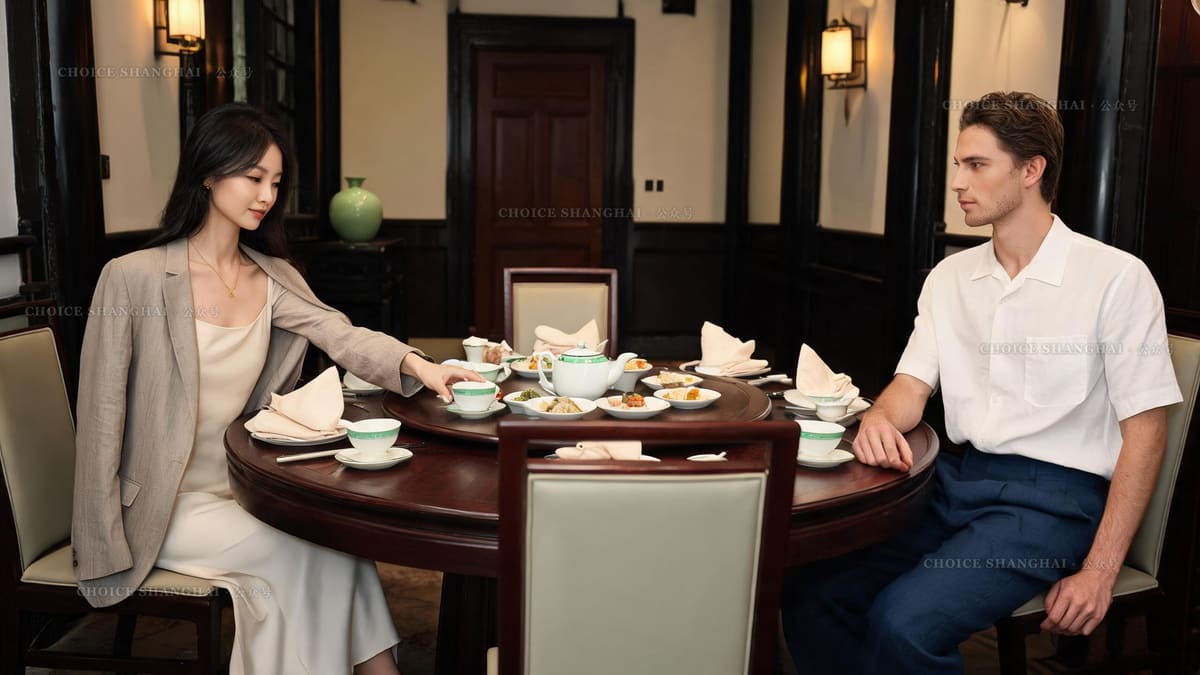
Seating at a Chinese banquet is not random, and where you land signals who matters, so wait to be placed rather than grabbing a chair. The seat of honour faces the door, usually the one furthest from the entrance, and it belongs to the most senior guest or the client; the host takes the seat with its back to the door, nearest the service, so they can direct the meal and settle the bill. As a guest you will be shown where to sit, often to the right of the guest of honour. If nobody directs you, hover, ask "我坐哪里?" (where should I sit?), and let them decide. Sitting yourself in the honour seat by accident is the classic newcomer misstep, and an easy one to avoid by simply waiting.
Who orders, and when do I start eating?
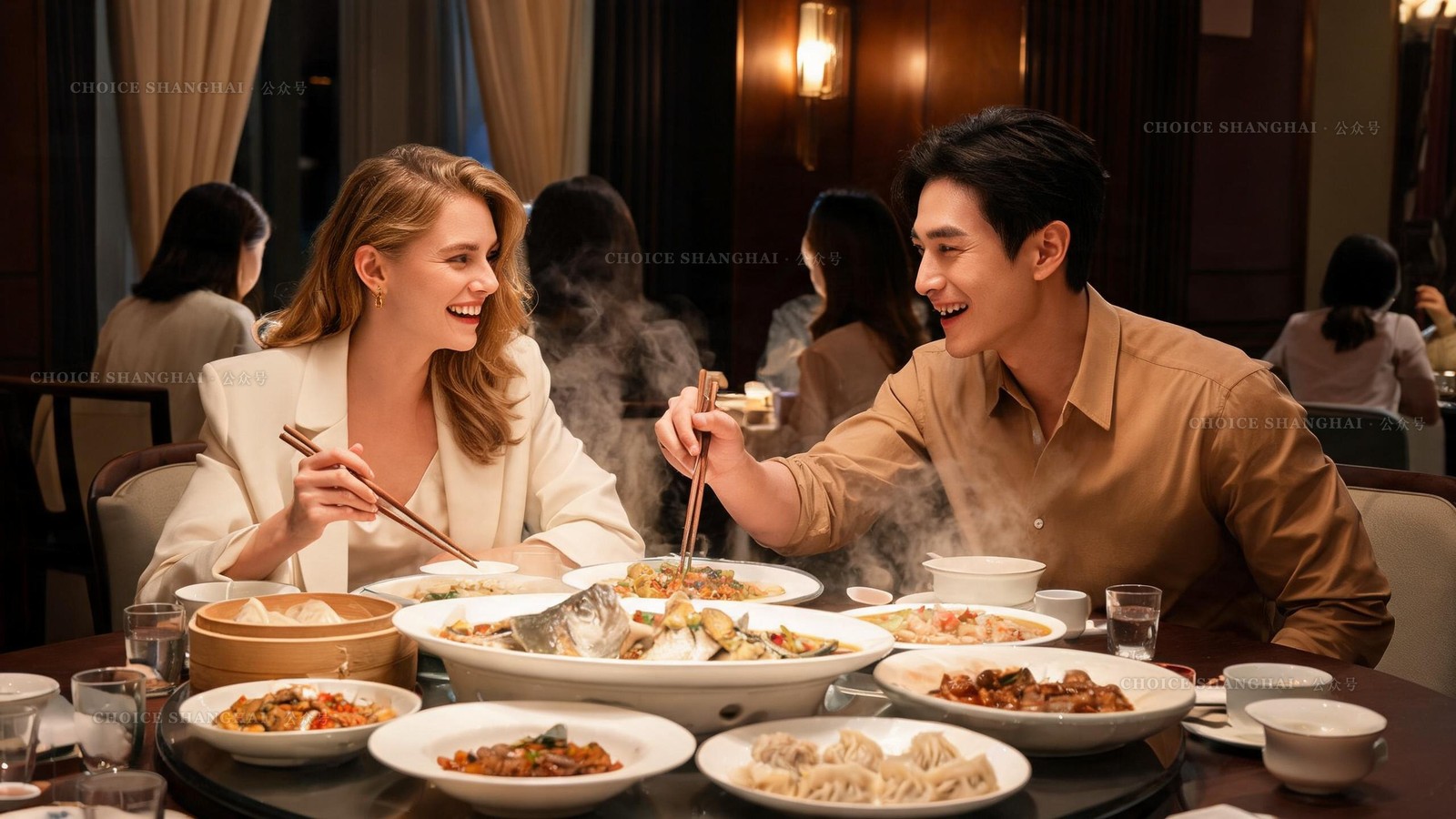
At a Chinese dinner the host orders for the whole table, and you do not need to do a thing except signal what you cannot eat. Dishes are shared from the centre, often on a lazy susan, and the host will order more than everyone can finish on purpose, because a table cleared bare suggests the host was stingy. Wait for the host to invite everyone to begin, or for the senior person to lift their chopsticks first, before you dig in. Tell the host early about allergies or a vegetarian diet ("我不吃..." I do not eat...) so they can order around it. Take from the dishes nearest you, turn the lazy susan gently and never while someone is serving themselves, and leave the last piece on a plate unless it is offered to you.
How does the toasting work, and how do I not get wrecked?
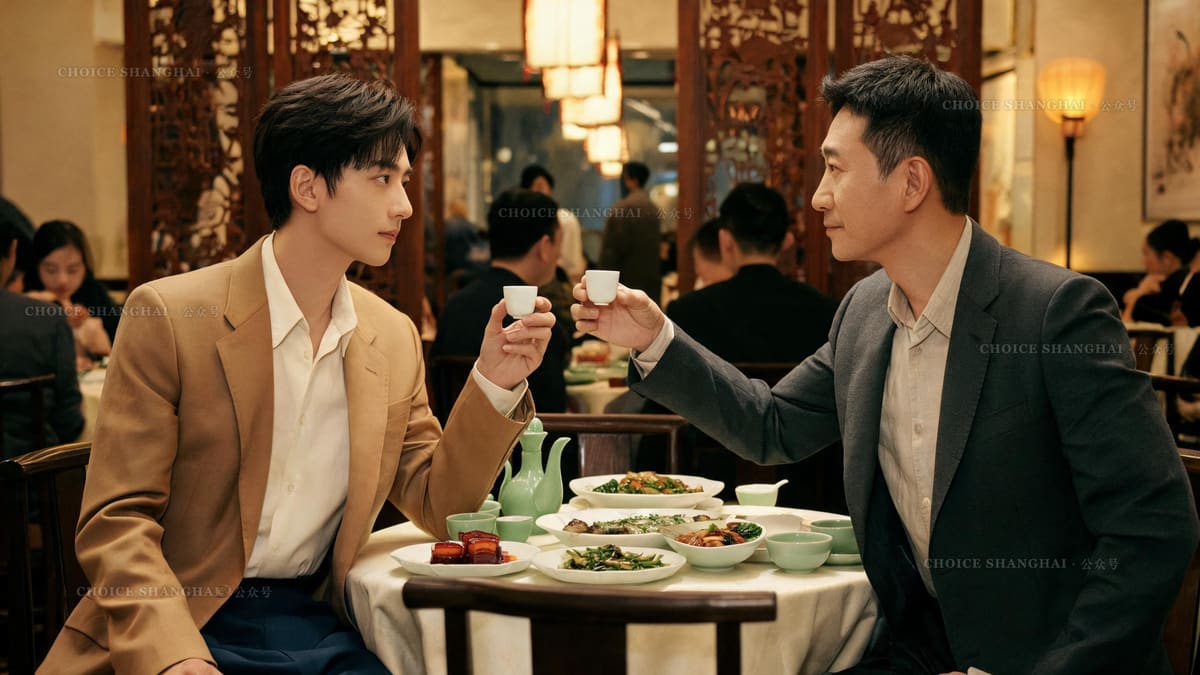
Toasting, 敬酒, is the social engine of a Chinese dinner, and the safest move is to receive toasts graciously and return one to the host rather than launching the round yourself. The host opens with a welcome toast; after that, people toast across the table in rough order of seniority. "干杯" (gānbēi) literally means dry the cup, a full drink; "随意" (suíyì) means as you like, a sip is fine, so listen for which one is offered. When you clink, hold your glass slightly lower than a senior person's as a small sign of respect. The drink is often baijiu, the fierce Chinese grain spirit, and pacing yourself is entirely acceptable.
You can decline alcohol without causing offence, and plenty of people do. Say you are driving, on medication, or simply do not drink, and toast with tea or a soft drink instead; lifting the glass and meeting the toast is what matters, not what is in it. "以茶代酒" (I will stand in for the wine with tea) is a graceful, well-understood line. Nobody worth impressing will push a guest who has clearly said no, and a warm, sober guest reads a great alternative to one who overdid the baijiu to be polite.
What are the chopstick and table rules that actually matter?
Most table manners at a Chinese dinner are common sense, but a few carry real weight, so learn these five and relax about the rest. Never stand your chopsticks upright in a bowl of rice, because it mirrors incense for the dead; rest them on the holder or across your bowl instead. Do not tap your bowl with them, do not use them to point or rummage through a dish, and do not spear food. Serve elders or guests before yourself with the serving chopsticks or spoon provided, top up your neighbour's tea before your own, and when someone fills your cup, a light two-finger tap on the table is the quiet local thank-you. None of this needs to be perfect; the effort is what registers.
Who pays the bill in Shanghai, and should I offer?
Whoever issued the invitation pays, full stop, and at a Chinese dinner the bill is a contest to pay rather than to split. The host will often slip away to settle it before the meal even ends, precisely so there is no awkward moment. You should offer once, warmly and clearly, and then let it go when they refuse, because insisting past a polite round can embarrass your host rather than honour them. Splitting the bill (AA制) is normal among younger friends and casual meals, but at a business or family dinner it is the host's night. The graceful return is to invite them next time and pay then. Tipping is not part of any of this; our guide to whether you tip in Shanghai covers why the bill is the whole gesture.
Do I bring a gift, and what should it be?
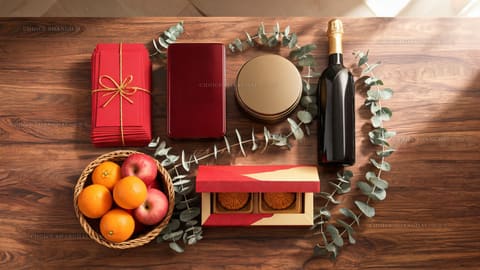
For a restaurant dinner you generally bring nothing, but for a meal at someone's home a small gift is expected and appreciated, so arrive with something modest and thoughtful. Good fruit, nice tea, a box of pastries, or something from your home country all land well; wine or a spirit works for a host who drinks. Skip clocks, sharp objects, anything in sets of four, and white or black wrapping, all of which carry unlucky associations. Present the gift with both hands, expect it to be set aside rather than opened in front of you, and do not be surprised if the host protests before accepting. Our guide to what to bring and never give as a gift in Shanghai has the full list, and if the dinner is a work one, what working in a Chinese company is really like covers the office side of the same customs.
Which dinner is yours
If it is a business or client dinner, follow the host's lead exactly, keep the toasts warm and measured, and never reach for the bill more than once. If it is your partner's family, arrive with a small gift, greet the elders first, eat what you are served with visible appreciation, and let your partner guide you on names and seating. If it is a casual meal with younger friends, relax: seating is loose, AA制 splitting is normal, and the only real rule is to turn up and enjoy it. Whichever it is, saying yes and showing up is the part that counts.
Confucius taught 己所不欲,勿施于人, do not do to others what you would not want done to you. A Chinese dinner runs on exactly that quiet reciprocity: fill another's cup before your own, and the table takes care of you in return.
Common questions
What is the seating etiquette at a Chinese banquet?
The seat of honour faces the door, furthest from the entrance, and goes to the most senior guest or client. The host sits with their back to the door, nearest the service, to direct the meal and pay the bill. As a guest, wait to be shown your seat rather than choosing one, and you will usually be placed near the guest of honour.
Is it rude to refuse alcohol at a Chinese dinner in Shanghai?
No. You can decline by saying you are driving, on medication, or simply do not drink, and toast with tea or a soft drink instead. The gesture is lifting your glass to meet the toast, not what is in it. A warm, clear "以茶代酒" (tea in place of wine) is well understood and nobody reasonable will push you.
Who pays the bill at a Chinese dinner?
Whoever invited you pays, and at a business or family dinner it is not split. The host often settles the bill quietly before the meal ends. Offer once, warmly, then let it go when they refuse; insisting can embarrass them. Return the gesture by hosting them next time. Splitting (AA制) is only normal among younger friends and casual meals.
What should I not do with chopsticks in China?
Never stand chopsticks upright in a bowl of rice, which resembles incense for the dead. Do not tap your bowl with them, point with them, dig through a dish, or spear food. Rest them on the holder or across your bowl between bites. Use the serving chopsticks or spoon for shared dishes when they are provided.
Should I finish everything on my plate at a Chinese dinner?
Not necessarily. The host deliberately orders more than the table can finish, so a completely cleared table can suggest they under-catered. Eat well and take what you like, but leaving a little food is normal and polite. Try a bit of every dish the host offers you, since refusing outright can read as dismissing their choices.
Words, maps and research by the Choice Shanghai team. Please credit us and tag our 公众号 if you share.