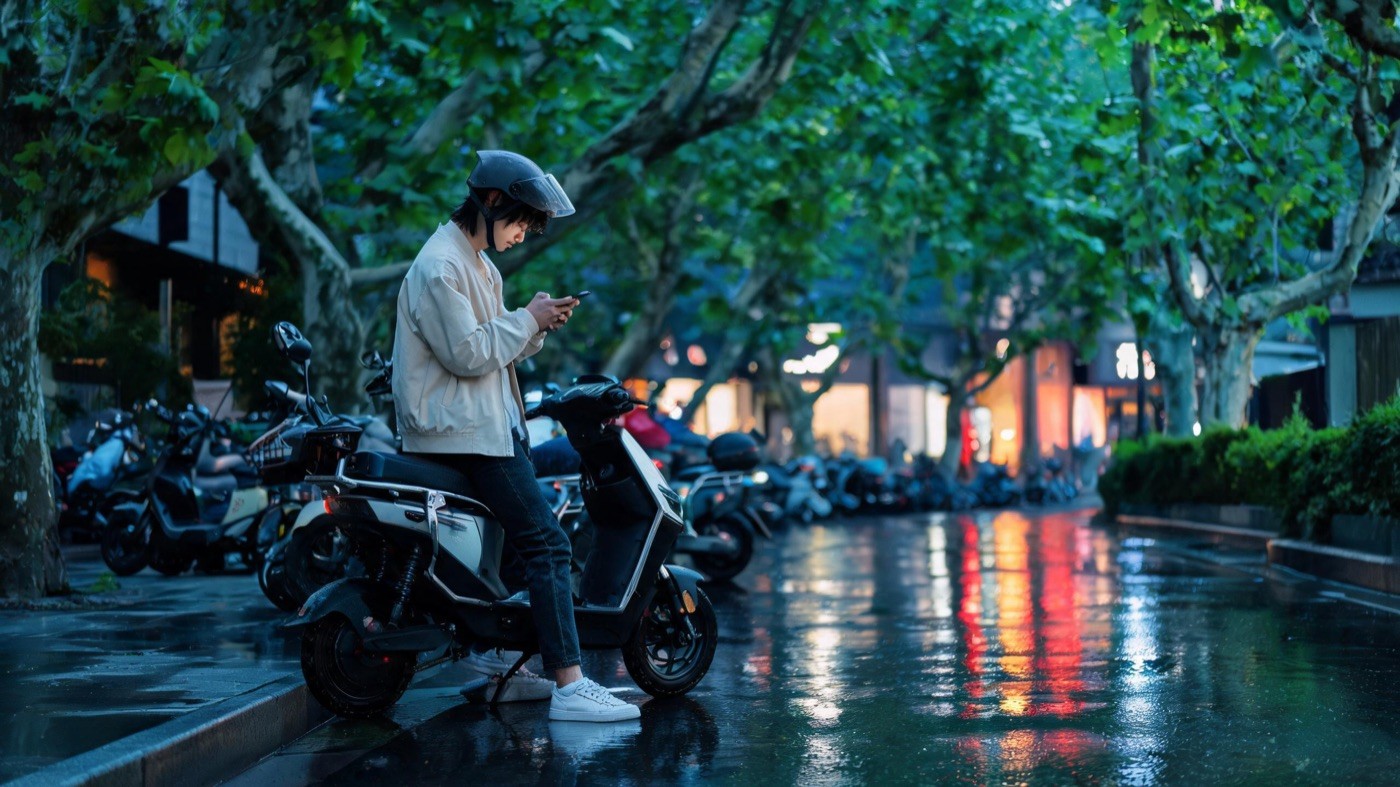
As of August 2026, you do not need a driving licence for a green-plate e-bike in Shanghai, and since May 2026 registration is free.
The bike has to meet the current national standard: 25 km/h (about 15 mph) top speed, under 55 kg with a lithium battery. Riding an unregistered one costs 50 to 200 RMB (about USD 8 to 30) and the police can impound it.
I resisted getting one for two years. The metro is good, the shared pedal bikes are everywhere, and I half-believed e-bikes were a grey area expats should stay away from. Then I moved somewhere that was a twelve minute walk from the nearest station, in a city where August is a wall of heat, and I understood why half of Shanghai is on two silent wheels. The rules are not a grey area at all. They are unusually clear. They just changed twice in the last year, which is why almost every English-language guide you will find is now wrong about the price and wrong about the colour of your plate.
What changed in 2025 and 2026?
Two separate things, and conflating them is the main reason older guides mislead people.
So if a guide tells you to budget 100 to 200 RMB for registration, or describes a blue plate as the normal e-bike plate, it was written before May 2026. Blue now means something quite different.
Which e-bike can you ride without a licence?
The plate colour tells you everything, and you want to know it before you walk into a shop: a salesperson will happily sell you something faster than you are licensed to ride.
If you do not already hold a Chinese driving licence, buy a green-plate bike. Getting a licence for the blue and yellow classes is a separate project, and one I have written about in the Shanghai driving licence guide.

How do you register an e-bike as an expat?

You have 15 days from purchase. The process is genuinely straightforward, and the paperwork is the only part that catches people out.
1. Keep the two documents the shop gives you
The 发票 (fapiao, the official purchase invoice) and the 合格证 (certificate of conformity, showing the bike meets the national standard and carries 3C certification). Without both, you cannot register. Ask for the fapiao explicitly at the point of sale rather than assuming the receipt is one.
2. Bring your passport and your accommodation registration
You need your passport, and your 临时住宿登记, the temporary accommodation registration slip from your local police station. If you have never done that, or you moved and did not redo it, sort it first: I walk through it in the 24-hour police registration guide. Bring photocopies of your passport photo page and visa page as well. Windows here run on photocopies.
3. Book a slot, or let the shop do it
You can book an appointment and pre-fill your details through 随申办, the city government super-app, under the 上海交警 traffic police section. If you would rather not, most dealers will register the bike for you, and since May 2026 the registration fee itself is zero, so ask what the shop is charging for the errand before you agree. The alternative is the non-motor-vehicle window at your district traffic police office. If 随申办 is unfamiliar, here is how to get set up on it.
What does a compliant e-bike cost?
More than you would guess, less than a scooter.
Yadea 雅迪 and Tailg 台铃 are the other two names you will see on every corner.
Buy from a physical shop rather than online. You want the fapiao and the 合格证 handed to you at the same time as the bike, and you want somewhere to take it when the brakes need adjusting.
Is buying second-hand a good idea?
Only if the bike already has a plate. This is the single most expensive mistake available to you here.
A second-hand e-bike that is already registered can be legally transferred to you at the district traffic bureau, with both parties present, both IDs, and the original 行车执照. That is fine, and it is a real way to save money.
A second-hand e-bike that was never registered, typically an old-standard model someone kept in a garage, generally cannot be registered now, because the sale and registration of old-standard bikes ended on 1 December 2025. You would be buying an object you cannot legally ride. Sellers on second-hand platforms are not always forthcoming about this, so if you are shopping on Xianyu, ask for a photo of the existing plate and the 行车执照 before anything else. My Xianyu guide covers how to ask.

Where are you allowed to charge the battery?
Not indoors, and this is enforced seriously. Under Shanghai's non-motor-vehicle safety regulations it is prohibited to park an e-bike or its battery, or to charge either, in building entrance halls, shared corridors, stairwells or any other common indoor area. You also may not carry the bike or its battery into a lift.
Instead, use the managed charging bays and battery-swap points the city is adding to compounds, older ones included. Before you buy, walk around your own compound and find out where yours is, or whether there is one. If there is not, a removable battery you can take to a swap cabinet is worth paying for.
Which one is for you 哪个适合你
If you have no Chinese driving licence and mostly ride short hops to the metro and the market, buy a green-plate e-bike from a physical shop and register it yourself through 随申办. If you already hold a Chinese licence and commute a longer distance across town, a blue-plate e-moped is faster but you ride alone and you carry compulsory insurance. If you are here for under a year, buy second-hand with a plate already on it and transfer it, rather than absorbing the cost of a new bike you will resell in a hurry.
The rules that actually get people fined
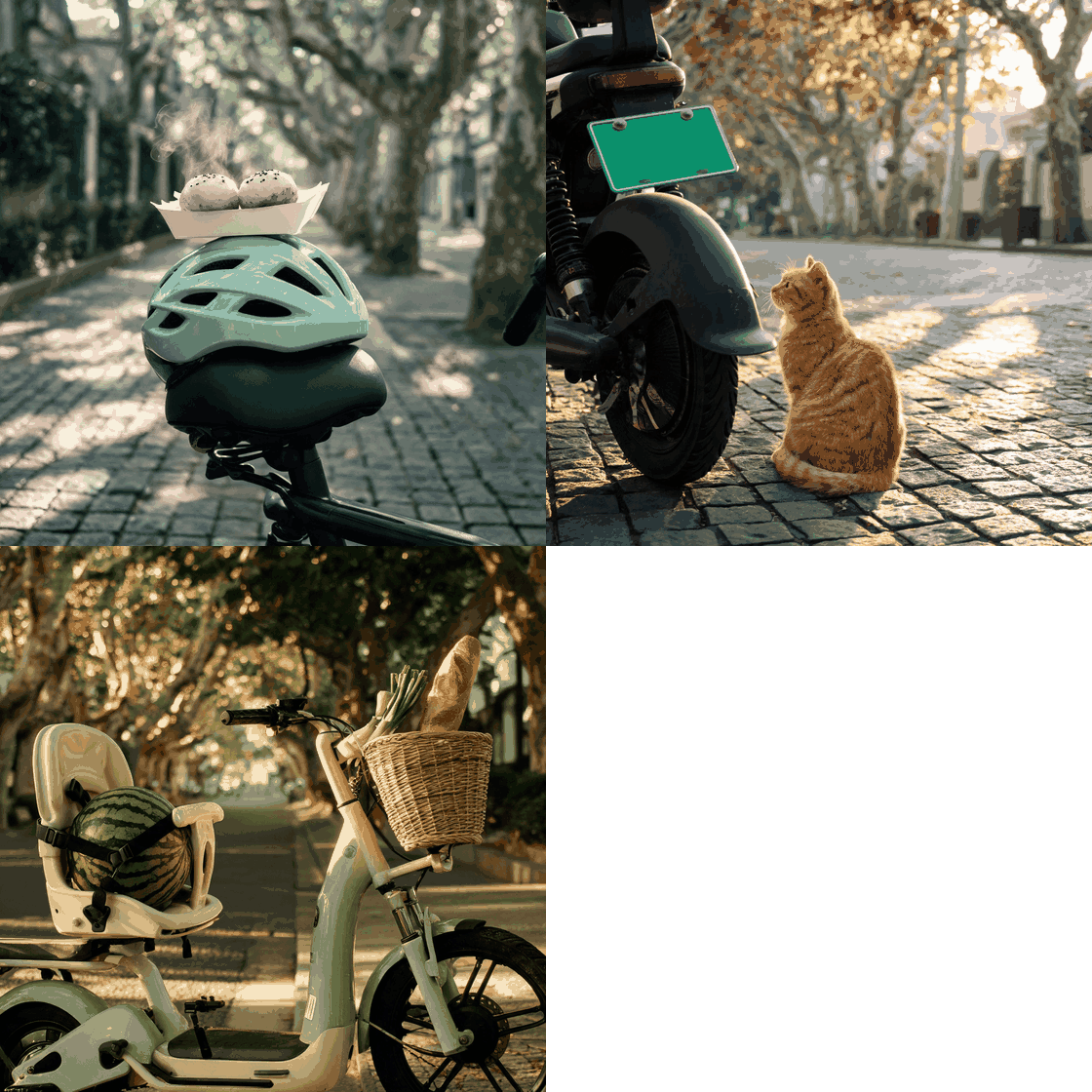
The good news, since May 2026: factory-fit mirrors, cargo racks, certified child seats and small baskets that do not block the plate are no longer treated as illegal modification.
Do you need insurance?
Not legally, for a green-plate e-bike, because it is not a motor vehicle. Compulsory 交强险 applies only to the blue and yellow classes.
Voluntary third-party cover is cheap and common, roughly 50 to 200 RMB a year (about USD 8 to 30) for coverage in the 50,000 to 500,000 RMB range, sold by the large insurers through Alipay and WeChat mini-programs. Shanghai also runs a city-backed household policy, 沪家保, at 89 RMB a year (about USD 13) for the universal version or 189 RMB (USD 28) for the city version, which since its 2024 upgrade includes third-party liability for e-bike charging fires. Given what you are parking downstairs, that is not a bad 89 RMB.
Sun Tzu wrote 知己知彼,百战不殆, know yourself and know the other and you are never in danger; learn which plate is the legal one before you pay, and the ride home is simply yours to enjoy.
Do I need a Chinese driving licence to ride an e-bike in Shanghai?
Not for a green-plate e-bicycle, which is capped at 25 km/h and is legally a non-motor vehicle. The minimum age is 16. You do need a licence for the faster blue-plate e-moped and yellow-plate e-motorcycle classes.
How much does e-bike registration cost in Shanghai?
Nothing. Registration became free nationwide on 1 May 2026, and plates are now valid for 10 years. If a dealer offers to handle it for you, they are charging for the errand rather than the registration, so ask the amount first.
What documents does an expat need to register an e-bike?
Your passport, your temporary accommodation registration from the local police station, the purchase invoice 发票, and the certificate of conformity 合格证 from the shop. Bring photocopies of your passport photo and visa pages too.
Can I still ride my old e-bike on a white plate?
No. The nationwide change on 1 May 2026 invalidated the old white transitional plates, so a non-compliant vehicle still carrying one is no longer legal to ride.
What if my compound has no e-bike charging bay?
Charging indoors is banned, so if your compound has no managed bay yet, buy a bike with a removable battery and use a public battery-swap cabinet (换电柜) nearby, common outside convenience stores and metro exits, where you trade a flat pack for a charged one in seconds. You can also ask your 居委会 (neighbourhood committee) when a bay is coming, since Shanghai is adding them to older compounds. Never run a cable from a window or charge in a stairwell; that is exactly the fire risk the rule targets.
How do you transfer a second-hand e-bike plate in Shanghai?
Both the seller and buyer go together to the district traffic bureau's non-motor-vehicle window with both IDs (your passport), the bike, and the original 行车执照 (vehicle licence), and the plate is reassigned to you on the spot. Only buy a bike that already has a plate: an unregistered old-standard model can no longer be registered, so a plate transfer is the one safe way to buy used.
What is an e-car in Shanghai?
An e-car is an electric car, a whole different animal with its own plates, licence and rules. Not our department today, this guide is strictly about the two-wheeled kind.