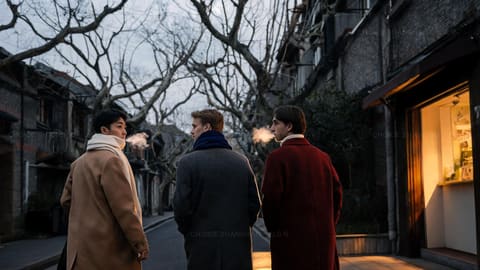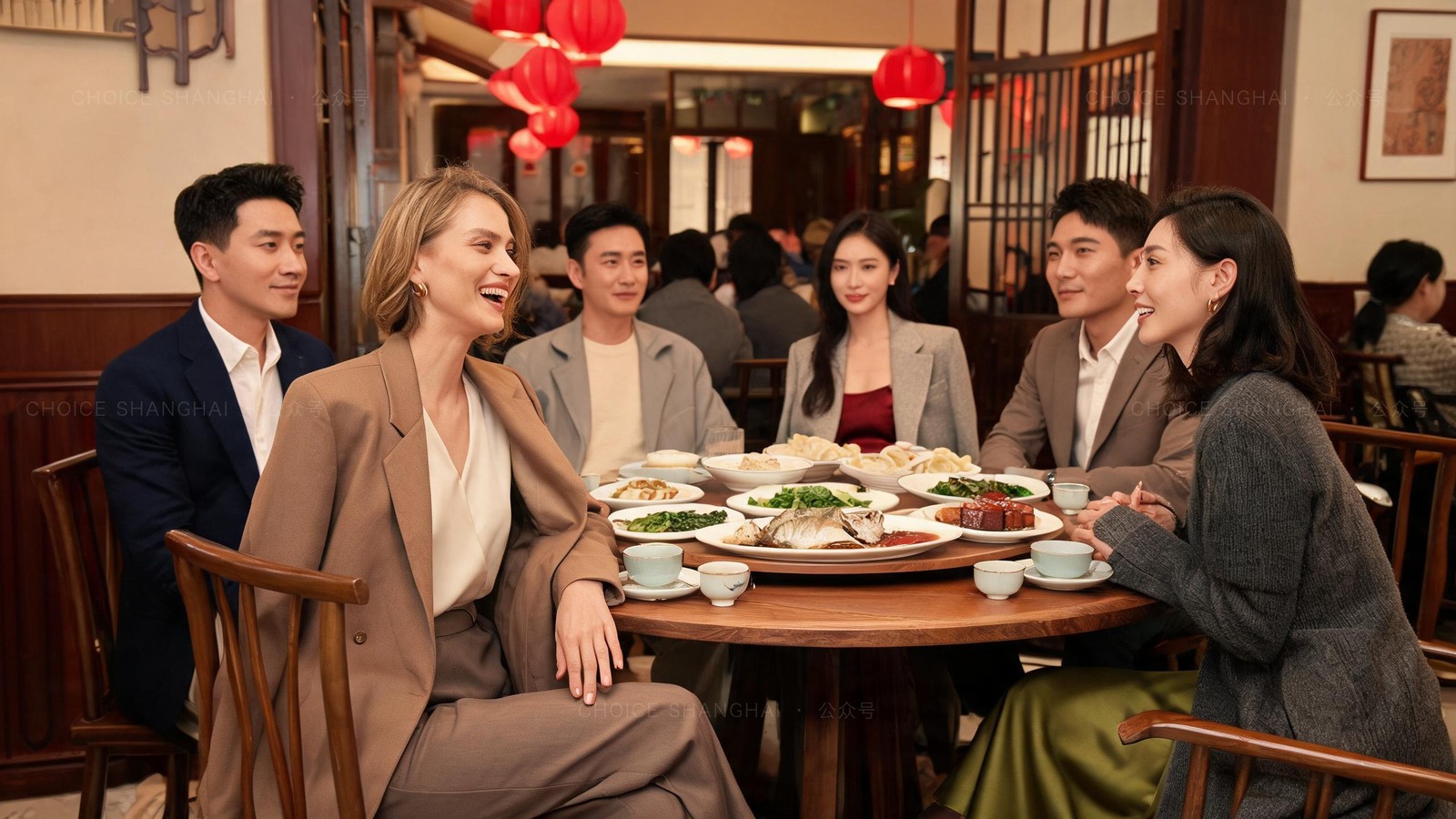
Being the only expat in the room, at the work dinner, the family table, the team karaoke, is one of the defining experiences of living in Shanghai.
Being the only expat in the room, at the work dinner, the family table, the team karaoke, is one of the defining experiences of living in Shanghai, and it unsettles almost everyone at first. You feel watched, slightly on show, unsure of the rules. The honest news is that the attention is usually curiosity, not judgement, and that learning to sit comfortably in it becomes one of the most useful things the city teaches you.
This is not a list of taboos to fear. It is a guide to what is actually happening in those rooms, so the next toast, introduction or second helping lands as warmth rather than a test.
What to expect
- The feeling: noticed. You will be looked at, asked where you are from, and sometimes made the centre of a toast. It fades fast.
- What it usually means: interest and hospitality, often expressed as feeding you and including you, not sizing you up.
- The skill to build: being at ease while visible. Shanghai gives you endless practice, and it is worth more than any phrasebook.
The stare is rarely what you fear it is
The first thing to understand about being the only expat in a Shanghai room is that the glances are mostly curiosity and courtesy, not hostility. You may be called 老外, which sounds blunt translated but lands closer to "our foreign friend", and you will be asked the same opening questions, where you are from, whether you can eat spicy food, how long you have been here. Answer warmly and the ice is gone. The discomfort is almost always yours to let go of, not theirs to inflict.
At the work dinner: toasts, seating and face
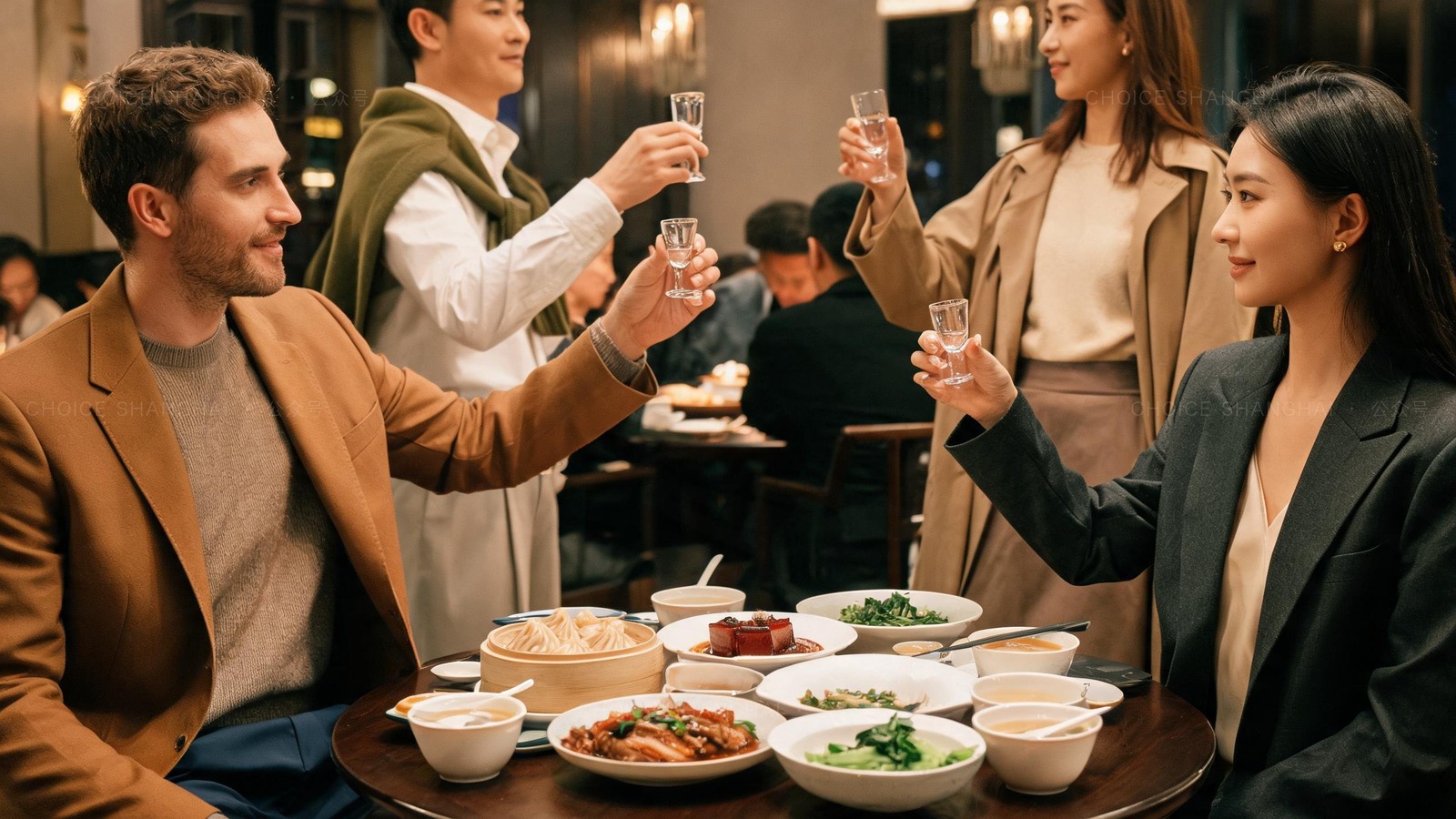
The Shanghai work dinner runs on a quiet grammar of respect, and the only expat at the table is the one most forgiven for not knowing it, so relax. A few things carry you a long way: wait to be shown your seat, because place at a round table signals rank; when you clink glasses in a 敬酒 toast, hold your rim slightly below the senior person's as a sign of respect; and you never have to drink to the bottom, a smile and a sip is a complete answer. The culture of these rooms is drawn out fully in our guide to working in a Chinese company, and if drinking is not your thing, "I don't drink" said warmly is respected more than a forced 干杯.
At the family table, you will be fed into submission
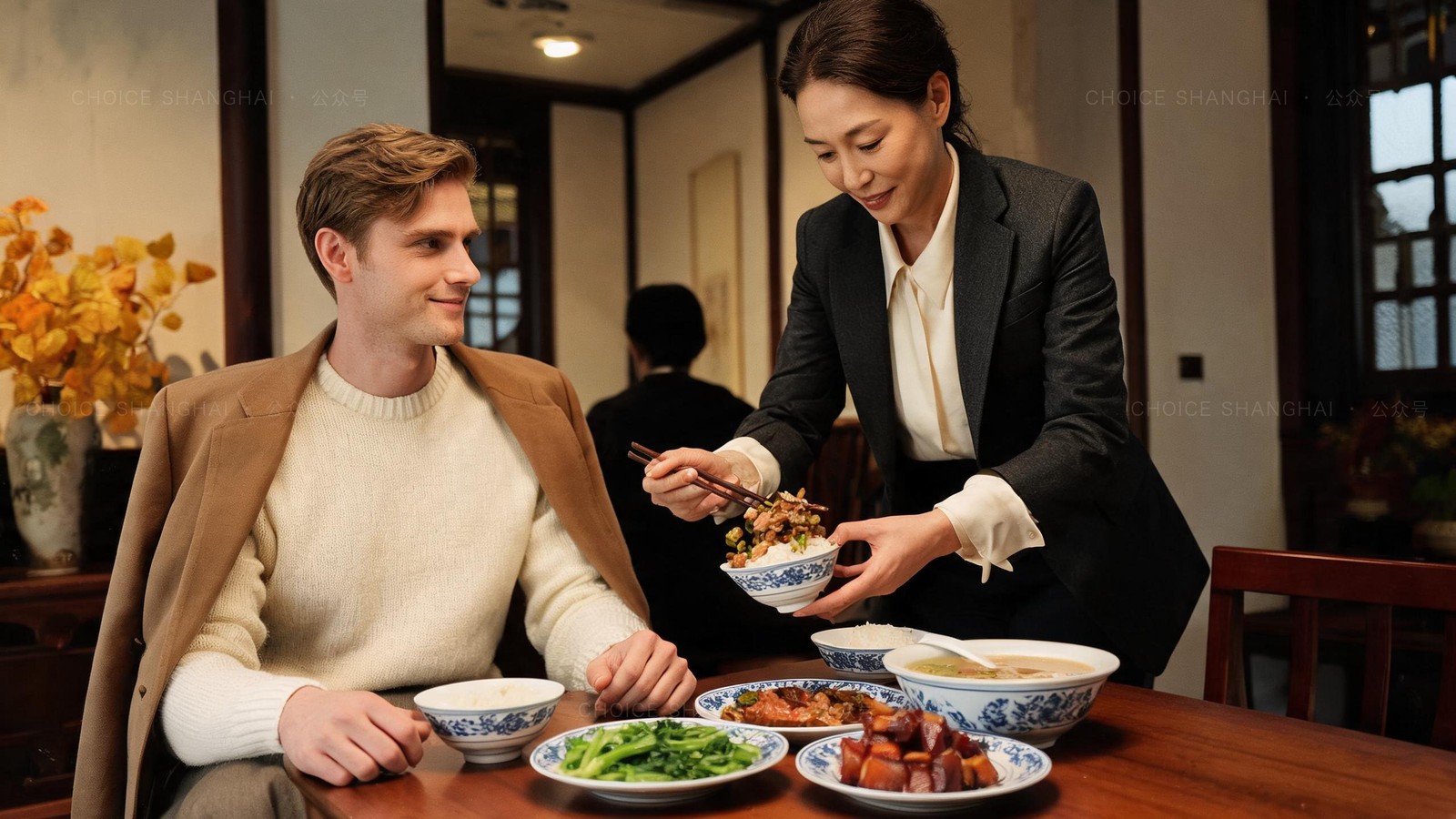
If you are brought to a Chinese family's home or a partner's family dinner in Shanghai, the love language is food, and a lot of it will land in your bowl whether you asked or not. An elder piling your bowl is affection, and the graceful move is to accept, eat what you can, and praise it, not to insist on serving yourself. Bring a small gift, fruit or something from home reads well, and mind the few things never to give (see what to bring and never give). If this is your partner's family, our guide to dating a Shanghai local maps what the dinner really means.
The moment everyone turns to you, decoded
Most of the social panic comes from a handful of recurring moments. Here is what each one is actually asking of you, so you can meet it without freezing.
| The moment | What is really happening | What to do |
|---|---|---|
| A toast lands on you | You are being honoured, not tested | Stand, thank them, sip; glass rim a touch lower than the senior person |
| Everyone asks where you are from | Ice-breaking and genuine interest | Answer warmly, ask it back, name one thing you love about Shanghai |
| Your bowl keeps filling | Affection and hospitality | Accept, eat what you can, praise the dish; do not fight it |
| They switch to Chinese | Comfort and speed, not exclusion | Smile, catch what you can, 听不太懂 (I do not quite follow) is fine to say |
| You are asked to sing at KTV | Full inclusion in the group | Pick anything, badly is perfect; the point is joining in |
Three phrases for the moment the room goes quiet
- 我敬大家一杯 (wǒ jìng dàjiā yì bēi): "a toast from me to everyone." Deploy once and you are a legend for the night.
- 听不太懂,慢一点可以吗 (tīng bù tài dǒng, màn yì diǎn kě yǐ ma): "I don't quite follow, a little slower?" Honest and disarming.
- 太客气了 (tài kè qi le): "you're too kind," for when the feeding and the generosity overwhelm you.
A few more are in our survival Chinese guide, and a little real study pays off fast (learning Mandarin).
What being the only one in the room gives you
The quiet gift of being the only expat in a Shanghai room is that it rewires how you handle being seen. You learn to be the curiosity without shrinking, to laugh at yourself in a second language, and to read a table you do not fully understand, skills that follow you into every meeting and every move after this. It is also, if you let it, the fastest way out of the expat bubble and into a real life here, because the rooms that scare you are the ones where you actually make Chinese friends.
Is it rude to be called laowai in Shanghai?
Usually not. 老外 is informal and overwhelmingly friendly, closer to "foreign friend" than an insult, and most locals use it without a second thought. Tone and context tell you if it is ever meant sharply, which is rare. Taking it in good humour reads as confidence, and bristling at it tends to create the awkwardness it was never meant to cause.
Do I have to drink baijiu at a Chinese work dinner?
No. Drinking is encouraged and toasts are warm, but a clear, friendly "I don't drink" is respected, and sipping instead of downing a 干杯 is completely normal. If you do join in, hold your glass slightly lower than the senior person when you clink, pace yourself, and never feel you must empty the glass. Nobody worth impressing judges a polite non-drinker.
What should I bring to a Chinese family's home in Shanghai?
A small, thoughtful gift: good fruit, pastries, tea, or something from your home country all land well. Avoid clocks, sharp objects and anything in sets of four, which carry unlucky meanings. Present it with both hands, expect it to be set aside unopened, and do not be surprised when your hosts insist you should not have, which is part of the ritual, not a rejection.
How do I handle being the centre of attention as the only expat?
Lean into it lightly. Answer the questions warmly, ask them back, let yourself be toasted, and laugh at your own stumbles in Chinese. The attention is hospitality, and meeting it with ease rather than apology is exactly what turns you from a guest into one of the group. It gets easier every single time, faster than you expect.
The Analects opens with 人不知而不愠,不亦君子乎, to feel no resentment when others do not understand you, is that not the mark of a gentleman. It could have been written for the only expat at the table, quietly learning to be seen without needing to be fully understood.
Words, maps and research by the Choice Shanghai team. Please credit us and tag our 公众号 if you share.