Shanghai Street Food Guide 2026: What to Eat, Where to Find It, and How Not to Burn Your Mouth
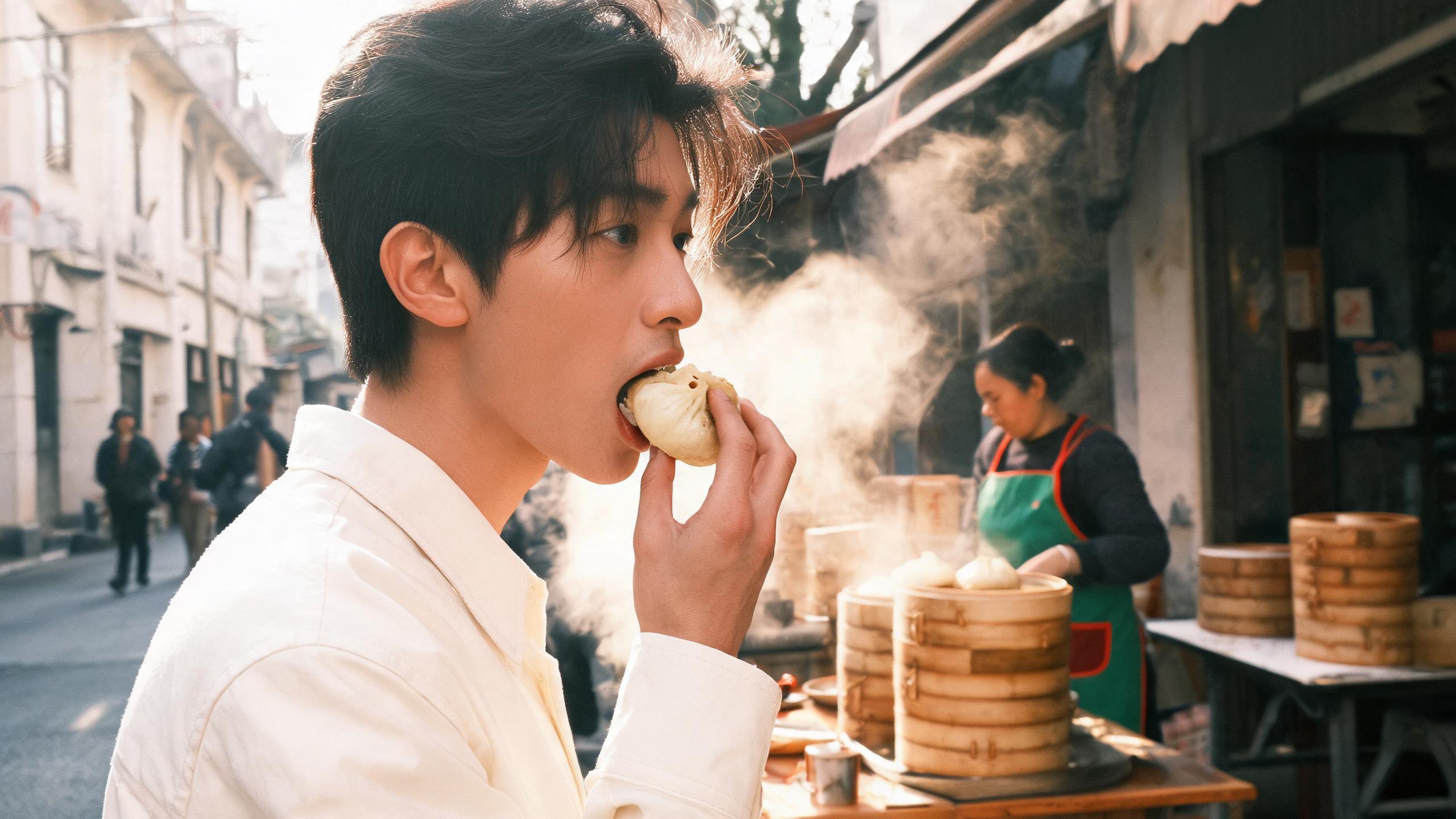
My first xiaolongbao in Shanghai lasted about three seconds. I bit into it like a regular dumpling, the broth exploded across my shirt, and the uncle at the next table handed me a napkin without looking up. He’d clearly seen this movie before. Eight years later, I have a system: where to go, what to order, and how to eat each thing without embarrassing yourself. This is the cheat sheet.
Shanghai has roughly 11,000 years of rice cultivation history and about eight years of me personally eating my way through its sidewalks. The city runs on street food the way other cities run on coffee shops. Every neighborhood has its own breakfast stall ecosystem, its own late-night noodle spot, its own auntie who makes the scallion pancakes that everyone in a three-block radius swears by. Here is what to try, where to find it, and the small details that separate a good experience from a “why is the broth on my shoes” experience.
Xiaolongbao (小笼包): the one everyone comes for
Xiaolongbao are steamed dumplings with a thin wrapper that holds a mix of seasoned pork and a pool of hot broth. They arrive in bamboo baskets, usually eight or ten to an order, and the broth inside is roughly the temperature of a small sun. Respect this.
How to eat them without incident: Pick one up with chopsticks. Place it on your spoon. Nibble a small hole in the side. Let the broth drain into the spoon. Sip the broth. Then eat the dumpling. Dip in black vinegar with ginger shreds if you like. The entire sequence takes about fifteen seconds and prevents the kind of broth-explosion that entertains everyone at the table except you.
Where to go: Jia Jia Tang Bao (佳家汤包), near People’s Square, has been doing this since 1986. The wrappers are paper-thin, the folds are precise, and the line moves fast. A basket of pork xiaolongbao runs about 18 to 25 RMB. The crab roe version costs more (40 to 80 RMB) and is worth trying once. For a fancier sit-down experience, Din Tai Fung has multiple Shanghai locations and English menus, though locals will tell you the neighborhood shops have more character.
Price check: Neighborhood xiaolongbao shops charge 18 to 30 RMB for ten. That’s a full meal for the price of a bad coffee at the airport.
Shengjianbao (生煎包): the noisy, crispy one
If xiaolongbao are the refined cousin, shengjianbao are the loud uncle who shows up to every party with something deep-fried. These pan-fried pork buns have thicker, chewier dough than xiaolongbao, a golden-brown crispy bottom, and are topped with sesame seeds and chopped scallions. They also contain broth. They will also burn you if you don’t pay attention.
Where to go: Yang’s Dumpling (小杨生煎) is the name that comes up first, and for good reason. The original location on Wujiang Road launched the chain, and the Huanghe Road branch near People’s Square is easy to find. Four shengjianbao cost about 8 to 12 RMB. That is not a typo. The same amount would buy you roughly half an oat milk latte in some neighborhoods.
How to eat them: Same broth-management strategy as xiaolongbao. Bite a small hole, sip the juice, then go in. The bottom is meant to be eaten last, it’s the crispy payoff. If you eat the bottom first, the structural integrity of the bun collapses and you’re holding a soup accident.
Cong you bing (葱油饼): the scallion pancake
A cong you bing is a pan-fried flatbread loaded with scallions. It’s flaky, slightly oily, fragrant, and costs about 5 to 8 RMB. You can eat it while walking. It does not contain hidden broth. It will not betray you. For people who have been burned (literally) by soup dumplings, the scallion pancake is a safe re-entry point into Shanghai street food.
Where to go: Mu’s (穆氏葱油饼) on Xikang Lu has been making these for roughly 25 years. The line is part of the experience. A Da Scallion Pancakes (阿大葱油饼) near the Starbucks Roastery in Jing’an reopened in 2025 and still draws a crowd. For no-line options, look for any sidewalk stall with a flat griddle and a stack of dough balls, these are everywhere in the morning hours and nearly impossible to get wrong.
Ci fan tuan (粢饭团): the breakfast rice roll
Ci fan is what Shanghainese eat for breakfast when they need to eat with one hand while speed-walking to the metro. It’s a log of warm sticky rice wrapped around a you tiao (fried dough stick), pork floss, pickled mustard greens, and sometimes a preserved egg. The combination shouldn’t work. It absolutely works.
When to go: Breakfast stalls open around 6:30 AM and the good ones are cleared out by 9. If you show up at 10 AM looking for ci fan, you will find an empty stall and a philosophical lesson about early mornings in Shanghai.
Where to go: The intersection of Xiangyang North Road and Changle Road has a cluster of morning stalls. Any residential neighborhood with an older demographic will have a ci fan auntie within a five-minute walk. The price is 6 to 10 RMB. Ask for the savory version (咸的, xian de). Some stalls offer a sweet option with sugar and sesame, which is fine, but the savory version is the one locals queue for.
The food streets: where to go when you want everything
Shanghai has a few concentrated food streets where you can sample multiple things in one walk. These are the ones worth your time:
- Yunnan South Road (云南南路): About 250 metres long, over 30 stalls and small shops. This is the classic Shanghai snack strip near People’s Square. Expect xiaolongbao, wontons, grilled skewers, and sweet dumplings. Crowded on weekends, manageable on weekday afternoons. Metro: Dashijie (Line 8/14).
- Huanghe Road (黄河路): A few blocks from Yunnan South Road. This is where Yang’s Dumpling originated and where Jia Jia Tang Bao draws its daily line. The old-school signs and narrow shopfronts make it feel like a street that hasn’t changed much in thirty years, because it hasn’t. Metro: People’s Square (Line 1/2/8).
- Wujiang Road (吴江路): More polished than the other two, with a mix of chain shops and independent stalls. Good for a first-timer who wants variety without full sensory overload. The original Yang’s Dumpling location is here. Metro: Nanjing West Road (Line 2/12/13).
- Shouning Road (寿宁路): This one comes alive after dark. Crayfish, grilled lamb skewers, cold beer, plastic tables on the sidewalk. It’s loud, messy, and exactly as fun as it sounds. Peak from May to October when crayfish are in season. Metro: Laoximen (Line 8/10).
More dishes worth trying
Once you’ve handled the classics, branch out:
- Jianbing (煎饼): A thin egg crepe filled with crunchy fried dough, chili sauce, scallions, and pickled vegetables. The morning commute food of half of northern China, widely available in Shanghai. 8 to 15 RMB. Find them at any stall with a round griddle and a woman who makes them faster than you can follow.
- Chao nian gao (炒年糕): Stir-fried rice cakes with vegetables and a savory sauce. Chewy, slightly sweet, deeply satisfying. A common side dish at noodle shops. 12 to 20 RMB.
- Tang yuan (汤圆): Sweet glutinous rice balls in a warm soup, filled with black sesame or peanut paste. A dessert-slash-snack that is easy to love. The Ningbo-style versions are larger and more generous with the filling. 8 to 15 RMB.
- You dun zi (油墩子): Deep-fried patties filled with shredded radish. Golden, crunchy, and about 3 to 5 RMB each. These are the kind of thing you eat four of before you realize you’ve eaten four of them.
- Da bing and you tiao (大饼油条): Sesame flatbread sandwiching a fried dough stick. Carbs wrapped in carbs. The structural engineering of comfort food. 4 to 8 RMB at any breakfast stall.
Practical tips: the survival section
Payment: WeChat Pay or Alipay at every stall. Cash works too, but most vendors prefer a quick scan. If you haven’t set up mobile payment yet, our payment guide walks you through it in ten minutes.
Language: You do not need Mandarin. Point at what you want. Hold up fingers for how many. The vendor will type the price on a calculator or hold up their phone with the number. Nod. Pay. Eat. This system has been working for the roughly 26 million non-Shanghainese people who moved here before you.
Timing: Breakfast stalls: 6:30 AM to 9 AM (the serious window). Lunch street food: 11 AM to 1 PM. Late-night food streets: 6 PM onward. Some stalls close by 2 PM and simply don’t exist in the afternoon. If a stall is there in the morning and gone by lunch, it means the food was good enough to sell out.
Hygiene: The stalls with the longest lines tend to have the fastest turnover, which generally means fresher food. If a place is busy and the food is visibly cooked to order in front of you, that’s a solid sign. Bring your own tissues and wet wipes, napkin supply at street stalls ranges from “minimal” to “philosophical concept.”
Stomach strategy: Start with one or two items per stall. Shanghai street food is cheap enough that you can visit three or four stalls in a single morning and try everything. Treat it like a self-guided tasting tour, not a sit-down meal. Your stomach (and your Instagram) will thank you.
Frequently asked
What is the most popular street food in Shanghai?
Xiaolongbao (soup dumplings) and shengjianbao (pan-fried pork buns) are the two signature dishes. Xiaolongbao are steamed with paper-thin wrappers and broth inside, typically 18 to 30 RMB for ten. Shengjianbao are pan-fried with a crispy golden bottom, usually 8 to 12 RMB for four.
Where is the main street food area in Shanghai?
Yunnan South Road near People’s Square is the classic food street, about 250 metres of stalls. Huanghe Road, a short walk away, has well-known shops including Yang’s Dumpling and Jia Jia Tang Bao. Both are central and easy to navigate without Chinese.
How much does street food cost in Shanghai in 2026?
A scallion pancake costs 5 to 8 RMB. Four shengjianbao run 8 to 12 RMB. A basket of ten xiaolongbao is 18 to 30 RMB. A ci fan rice roll is 6 to 10 RMB. You can eat a full street food meal for well under 30 RMB.
More guides →