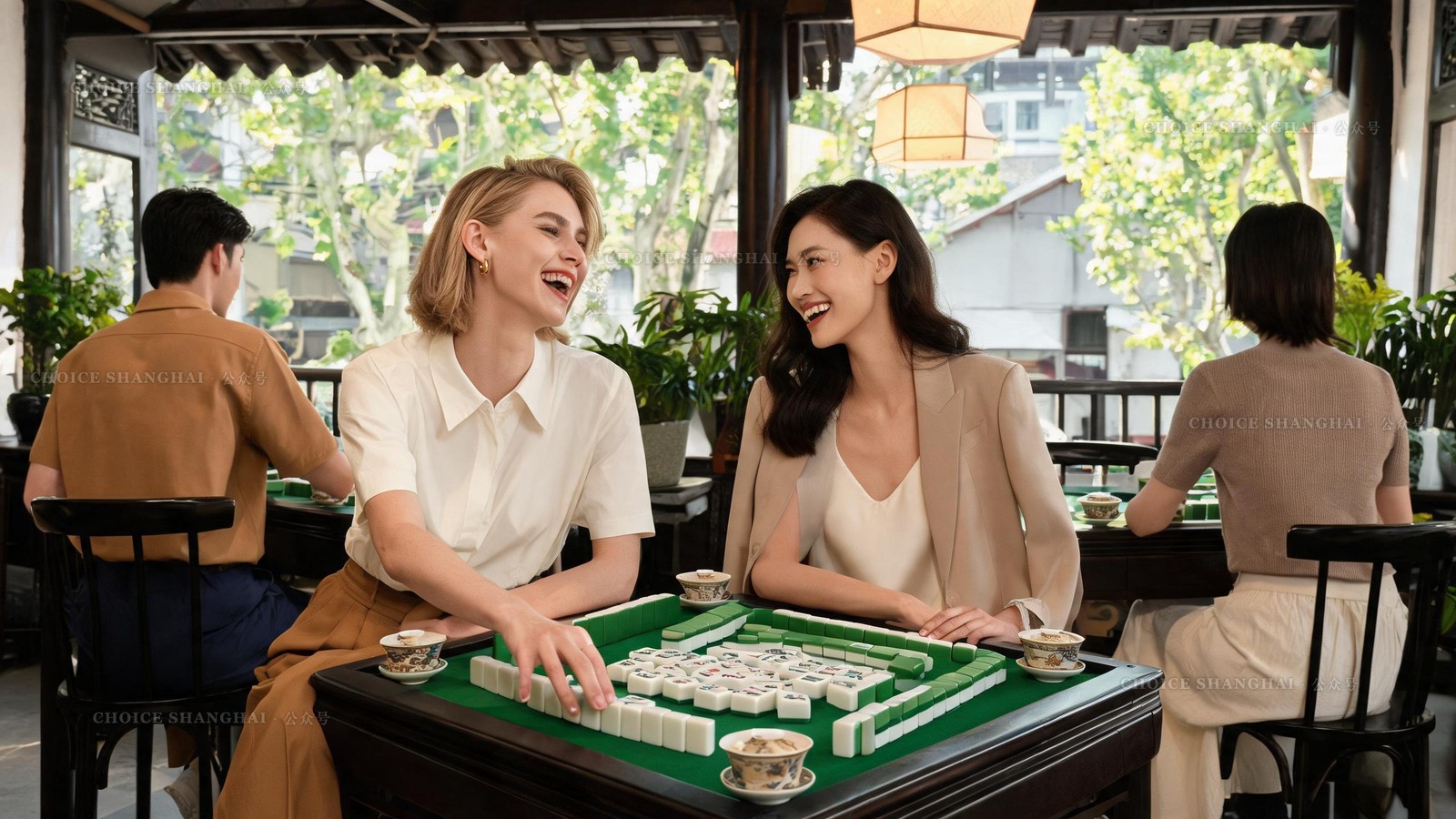
Want a real way into local life in Shanghai? Learning mahjong is it.
Learning mahjong in Shanghai is one of the fastest ways to stop being a guest in this city and start being a regular. The goal of the game is simple: be the first to build a complete hand of four sets and a pair from the tiles you draw and discard. You do not need Chinese to play, only the patience to learn a dozen tile types and the willingness to lose your first few rounds cheerfully. Do that, and doors open that no app ever will.
Mahjong (麻将, májiàng) is the clatter you hear drifting out of teahouses, community centres and old lane houses all over Shanghai. To locals it is less a game than a social glue, the thing families play at New Year and neighbours play on a slow afternoon. For an expat it is a shortcut into real friendship: sit down at a table, and the usual language wall drops, because the game carries the conversation. Here is how to actually learn it, where to play, and how to keep it fun rather than fraught.
Good to know
- Good for Anyone who wants a genuine way into local life, at any level of Chinese.
- What it costs A table in a 棋牌室 (games room) runs about ¥30 to ¥80 an hour (about USD 4 to 12); a teahouse seat with bottomless tea is roughly ¥50 to ¥150 a head (about USD 7 to 22).
- Make the most of it Learn the tiles at home on an app first, then play for tiny or no stakes with patient friends.
What is mahjong, and why bother learning it?
Mahjong is a four-player tile game of skill, memory and a little luck, and the reason to learn it in Shanghai is social rather than strategic: it is the single most reliable way an outsider gets folded into a local circle. A table needs four people and a couple of hours, which is exactly the recurring, low-pressure setup that turns acquaintances into friends. Colleagues invite the person who can make up a table; in-laws warm to the partner who sits down and plays. It travels further than small talk, because you are doing something side by side rather than performing a conversation. If you are working on your local circle in general, it pairs perfectly with our guide to making actual Chinese friends in Shanghai.
The goal, the tiles and a winning hand
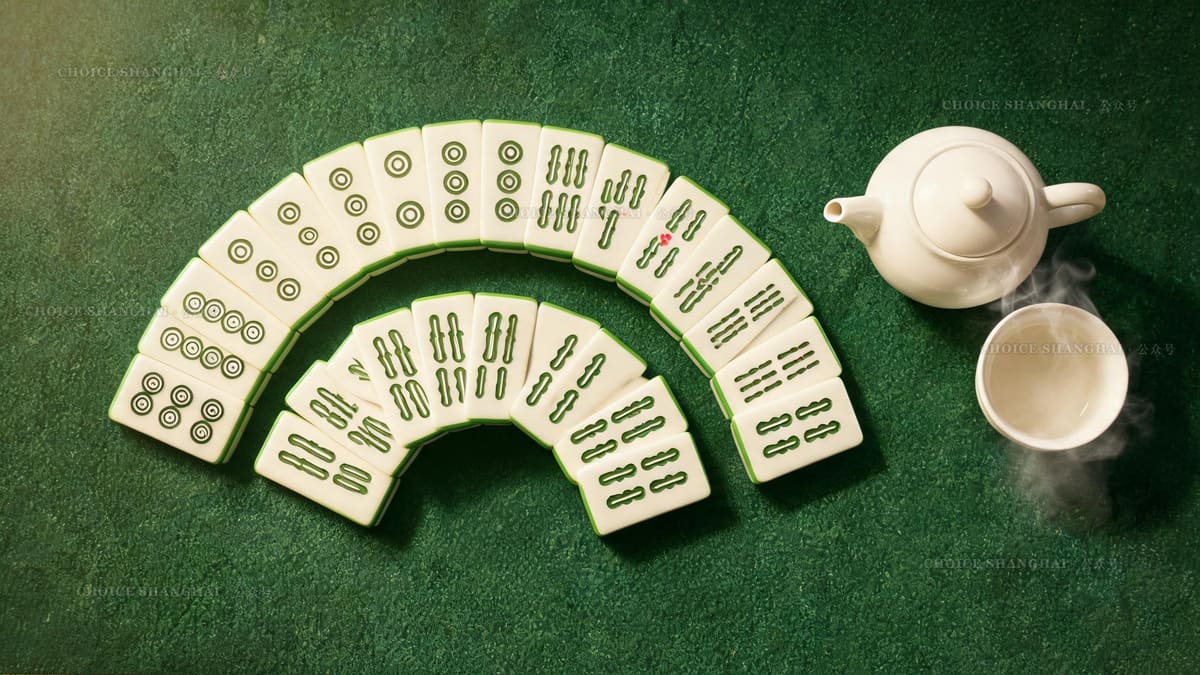
A game of mahjong is a race to complete your hand, and the winning shape is almost always four sets plus one pair, built from 13 tiles as you draw and discard. The tiles come in three number suits, one to nine each: characters (万), circles or dots (筒), and bamboo (条). Add the honour tiles, the winds (east, south, west, north) and dragons (red, green, white), and in most sets a handful of bonus flower tiles. A set is either three of a kind (a pung, 碰) or three in a run of the same suit (a chow, 吃); collect four of those and a matching pair, declare 胡 (hú, a win), and the round is yours. That is the whole engine. Everything else is scoring and local flavour.
How is Shanghai mahjong different from the game I might know?
Mahjong rules change from city to city, and Shanghai mahjong has its own habits worth knowing before you sit down. Compared with the American or Japanese versions many expats have met, the local game is faster and more forgiving: the scoring is simpler, hands are built quickly, and the flower tiles usually just earn a small bonus rather than driving elaborate patterns. Shanghai tables often play without some of the trickier rules found elsewhere, which is why it is a friendly place to learn. The catch is that every table has house rules, so the honest move is to ask before the first hand, "你们怎么算?" (how do you score?), and let a regular walk you through their version. Nobody expects a newcomer to know the local scoring cold.
How does a game actually flow?
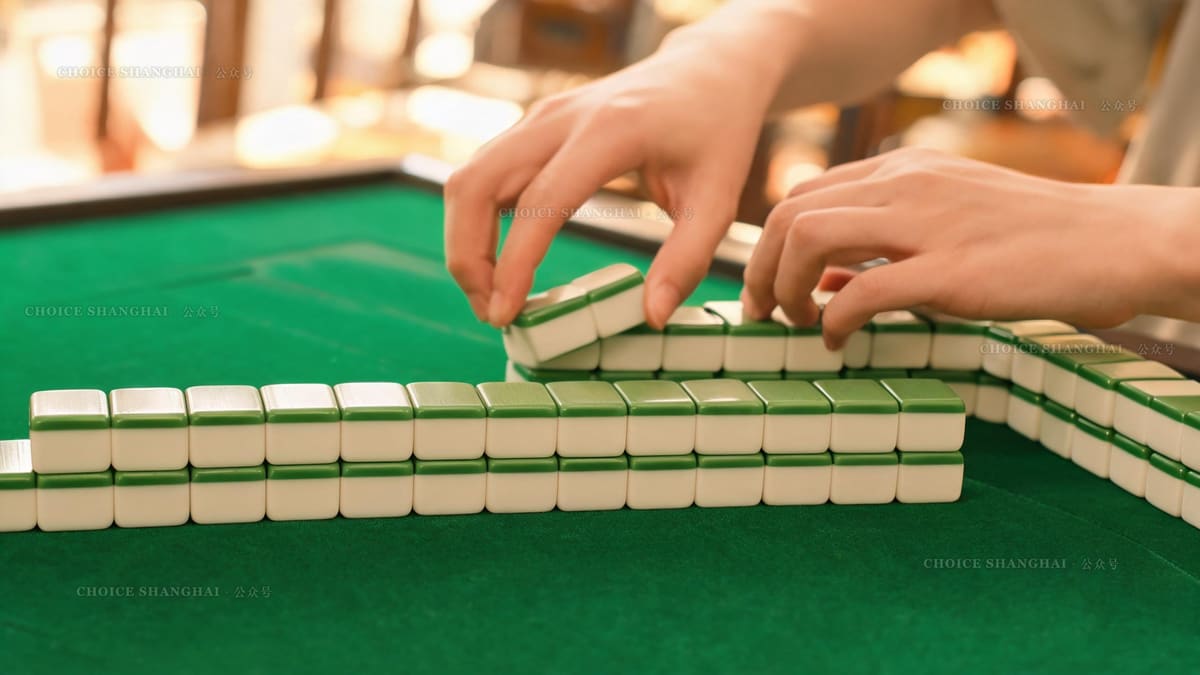
Once you know the goal, the rhythm of a game is easy to follow, and you learn it in one sitting by watching. Players build a square wall of tiles, break it, and each draws a starting hand; then, going around the table, everyone draws one tile and discards one, hunting for their four sets and a pair. When someone discards a tile you need, you can claim it out loud, 碰 to complete a triplet or 吃 to complete a run, and 杠 for a fourth matching tile. The moment your hand is complete you call 胡 and reveal it. A single hand takes only a few minutes, a full sitting runs a couple of relaxed hours, and the etiquette is simply to keep up, stack your wall neatly, and not dawdle over discards.
Where can I learn and play mahjong in Shanghai?
You have more ways into a game in Shanghai than you would guess, and the easiest first step is to learn the tiles alone before you ever sit at a real table. Start with a mahjong app (search 麻将 in your app store, or play the widely-used Chinese versions) to drill the tiles and the flow with no pressure. Then find a real table: dedicated games rooms (棋牌室) rent tables by the hour and are all over residential Shanghai; many teahouses keep automatic mahjong tables you can book with a pot of tea; and a growing number of cafes and expat-friendly bars host beginner nights. To find one near you, search 棋牌室 or "mahjong" on Amap or Dianping, read the recent reviews, and pick a clean, well-lit one. Better still is an invitation to a friend's table, which is worth saying yes to every single time.
What are the etiquette and the money rules?
Mahjong in China carries a social code and a legal line, and the safe, gracious way to play as a newcomer is small stakes or none at all. Casual family mahjong for tiny amounts, 小赌怡情 (a little flutter lifts the mood), is a normal part of the game, but organised, high-stakes gambling is illegal, so never join a big-money table with people you do not know well. Keep any stakes symbolic, treat winning and losing with the same light shrug, top up the tea, and let a beginner off the hook rather than pouncing on their mistakes. Being a warm, unbothered player matters far more than being a sharp one, and it is what gets you invited back.
Which way in is yours
If you have never played, spend a week on an app learning the three suits and the winning shape, then ask a patient friend for a slow, no-stakes teaching game. If you know a Western or Japanese version, sit in on a local table, ask their house rules first, and adjust; the bones are the same. If you just want the social side, say yes to the next invitation and offer to make up the fourth seat, mistakes and all. Whichever route you take, the tiles do the introducing; you only have to keep turning up.
Sun Tzu wrote 知己知彼,百战不殆, know yourself and know the other, and you will never be in danger. It is battlefield advice, but it is also mahjong, and a fair bit of life in a new city: watch what is discarded, hold your own tiles lightly, and you will do just fine.
Common questions
Is mahjong hard to learn?
Not to start. The goal, four sets and a pair, and the draw-and-discard flow can be picked up in a single afternoon, and an app lets you drill the tiles with no pressure first. The scoring takes longer to master, but Shanghai tables are forgiving and regulars will walk a beginner through their house rules. You can enjoy your first real game within a week of practising.
Is playing mahjong for money legal in Shanghai?
Casual mahjong for tiny stakes among friends is a normal, tolerated part of the game, but organised, high-stakes gambling is illegal in China. As a newcomer, keep any stakes symbolic or play for none, and never sit at a big-money table with people you do not know well. The social version is what you want, and it is where the friendships are anyway.
Where can I play mahjong in Shanghai as a beginner?
Search 棋牌室 (games room) or "mahjong" on Amap or Dianping to find hourly table rooms and teahouses near you, and pick a clean, well-reviewed one. A growing number of cafes and expat-friendly bars also run beginner nights. Nothing beats a friend's table, so accept any invitation to make up a fourth seat.
How long does a game of mahjong take?
A single hand takes only a few minutes, and a relaxed full sitting usually runs about two hours, which is part of why it works socially. You can join for a short stretch or settle in for the afternoon; either way, keeping up a steady pace with your discards is the main courtesy to the table.
Words, maps and research by the Choice Shanghai team. Please credit us and tag our 公众号 if you share.